Today we had a free morning to explore Ravello and check out the lemoncello shops.
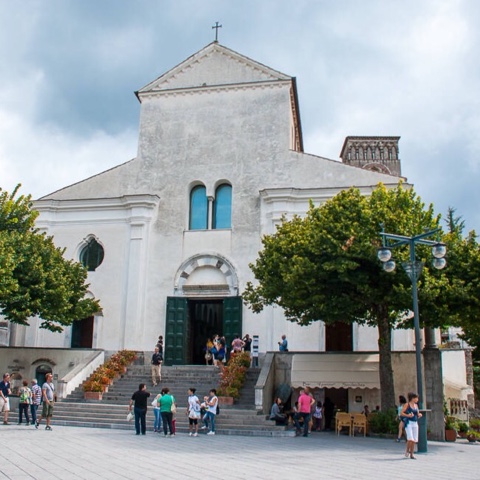
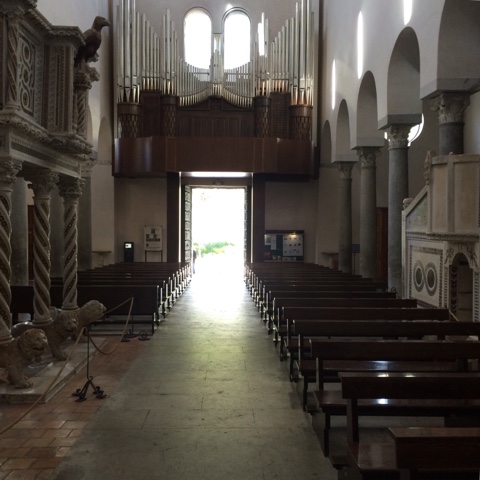
We started with the central plaza and the Cathedral of Ravello, which was interesting because the floor ascended from the front door to the altar.
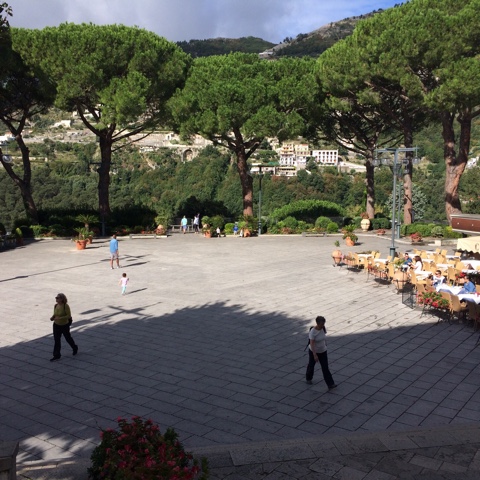
The cathedral looked out towards the main plaza which was quiet now but by noon was buzzing with people coming and going.
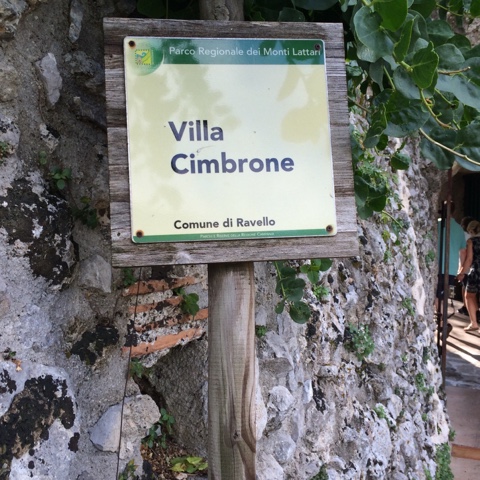
The next stop was the Villa Cimbrone.
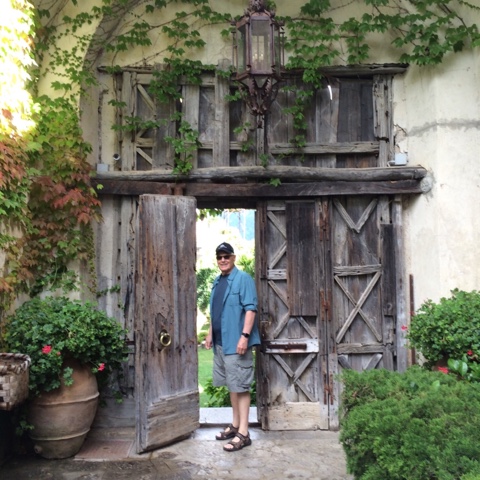
The villa dates from the 11th century, was once a monastery, and is now a hotel with extensive grounds. Its location on a promontory high above the Tyrrhenian Sea gives it a commanding view of Ravello. This is the interesting front gate.
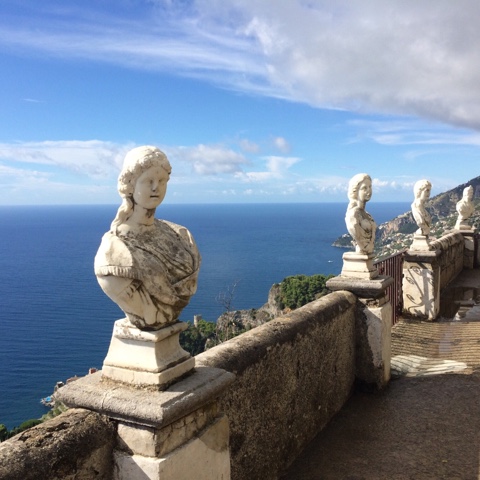
The walkway to the terrace.

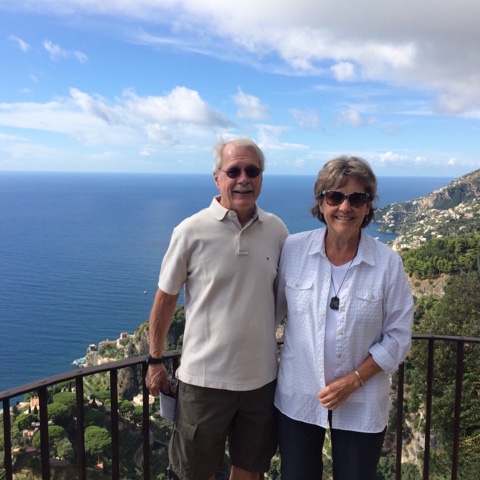
On the Terrace of Infinity.
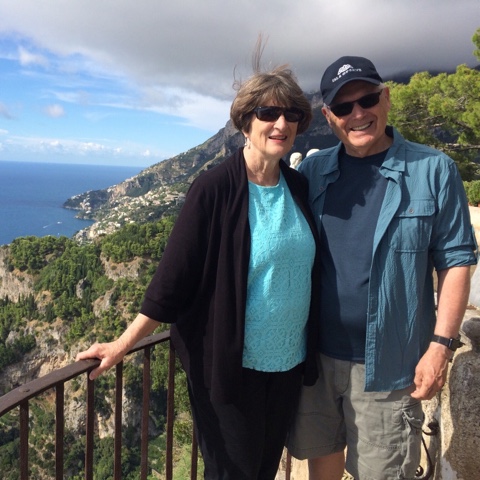
We pause for a photo.
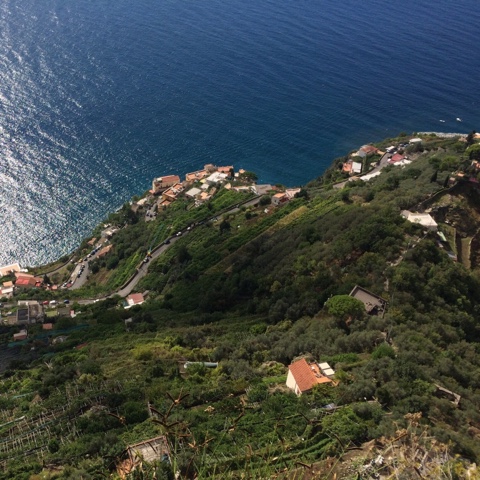
Looking down from the terrace.
Tom and Cindy on the terrace.
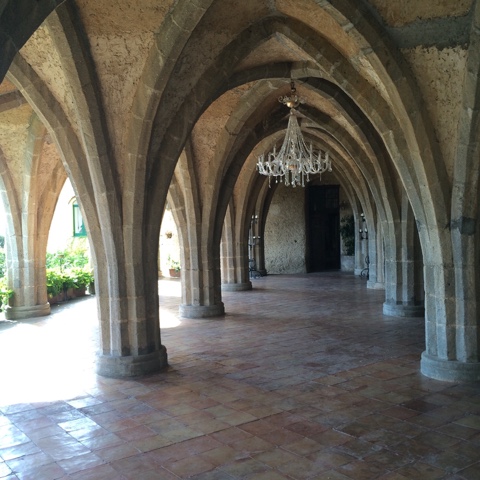
The rebuilt Moorish Cloister.
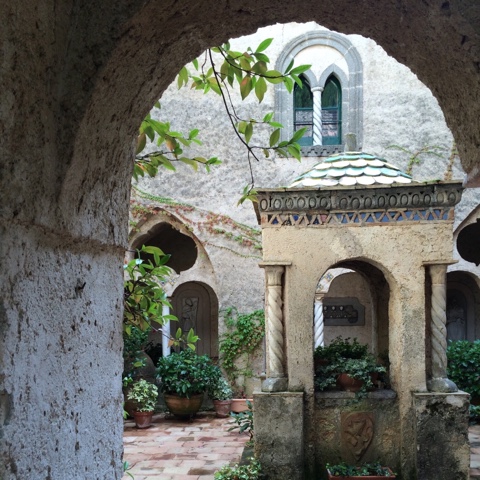
The inner courtyard. Many famous people have stayed here in the past including Virginia Wolfe, D. H. Lawrence, Greta Garbo, John Maynard Keynes, and T.S. Eliot among others.
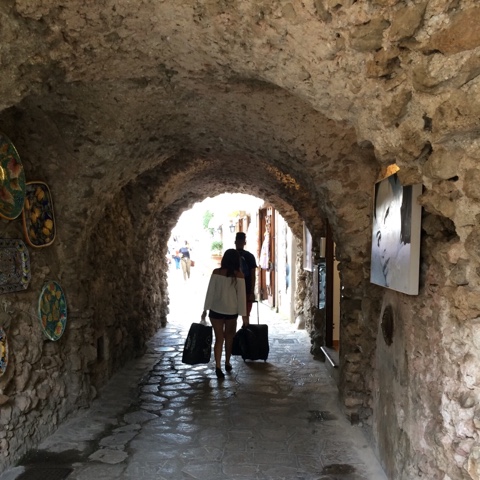
We walk back to the plaza area for a little shopping.
Our 10K afternoon walk started from the hotel in Ravello then on to Pontone and ended in Amalfi. First, we walked around the Dragon Valley to reach the other side of town. Our focus today was to walk among the deserted paper mills of the Valle dei Mulini and along the streams and river that supported the mills during the 18th century.
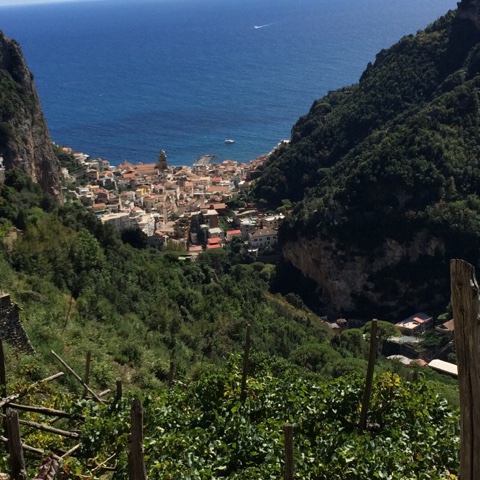
From there, we descended into the valley,
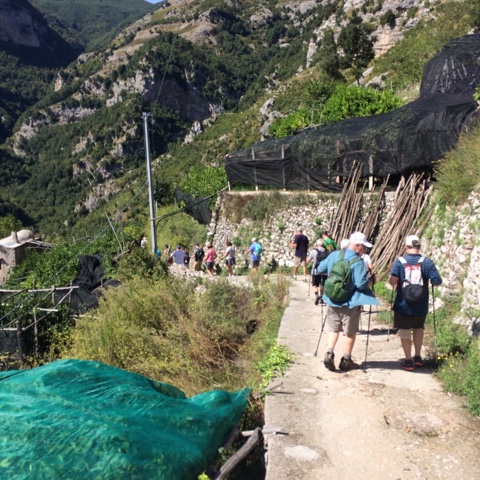
The paved path quickly became dirt and forest.
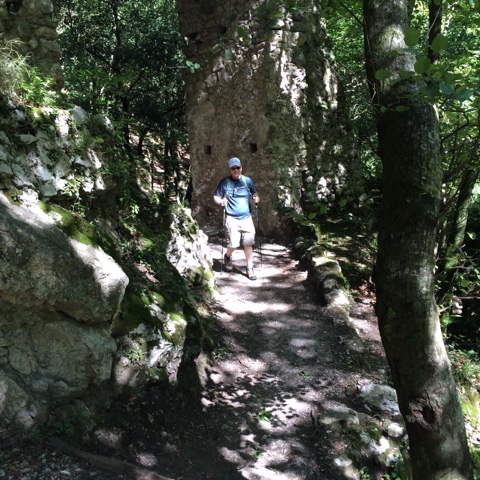
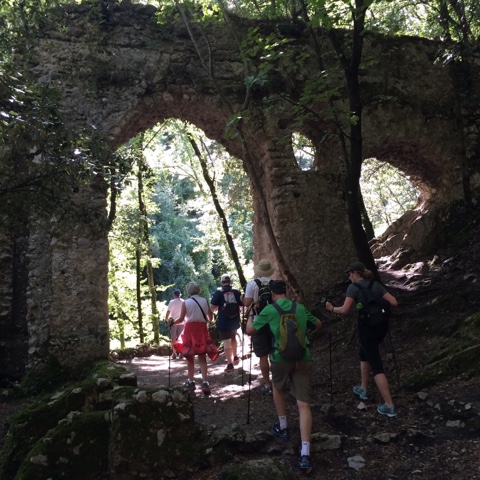
We reached the remains of an old aqueduct which was once part of the paper-making industry used to carry water from the Canneto River.
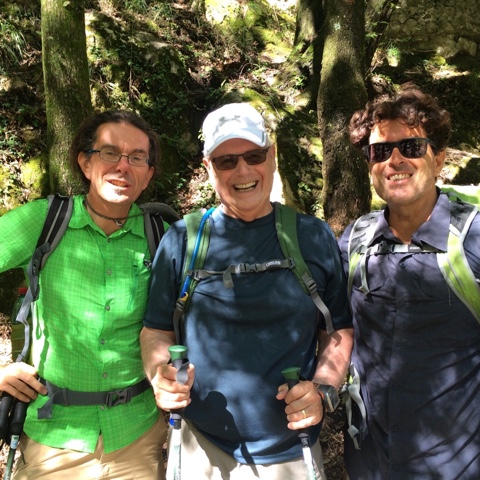
We paused for a break and a drink and I took a photo of Ross and our guides, Marcello and Vincenzo.
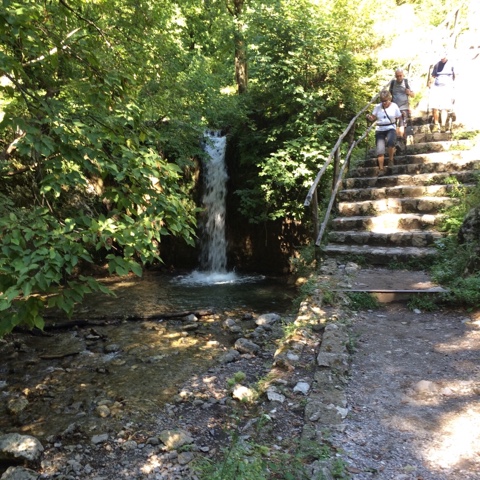
Some “civilized” steps by a waterfall.
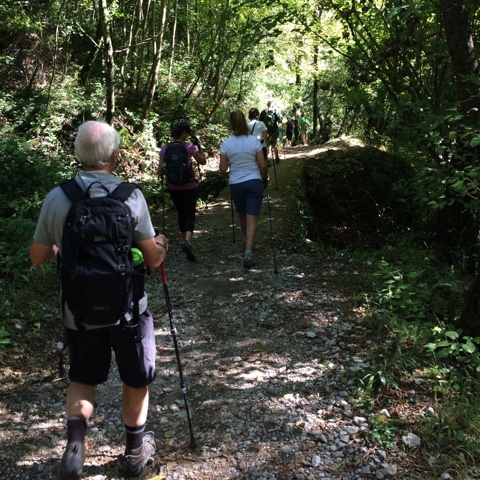
Most of this trail was a gradual descent down the valley. We had some nice shade for this walk mostly provided by the ubiquitous chestnut trees.
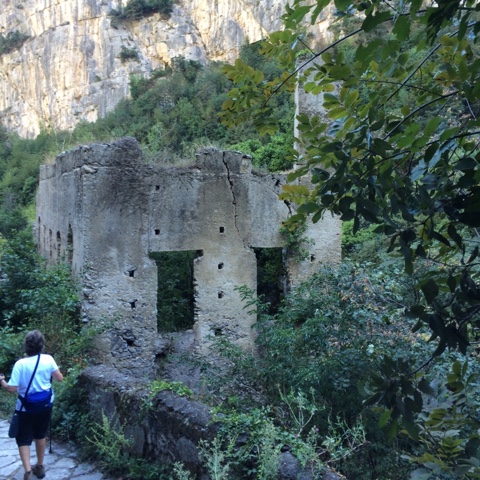
Cindy walking by the ruins of the Ironworks that once produced the metal parts needed by the paper mills.
We also found a place along the trail that prepared organic food for hikers and Ross checked out the lemon slush.
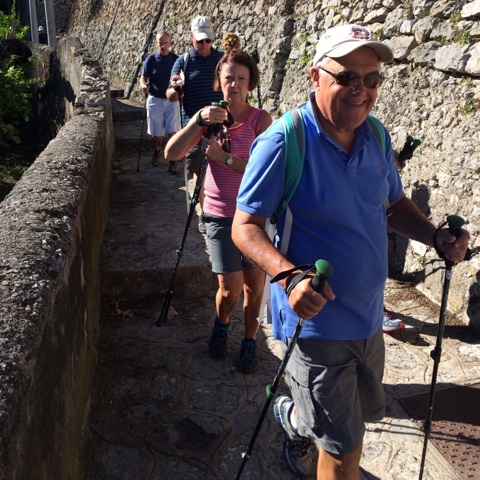
Back on pavement, we are closer to Almafi now.
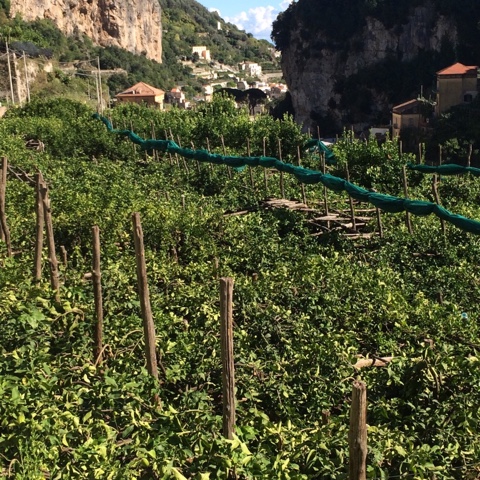
We stopped to admire a lemon grove.
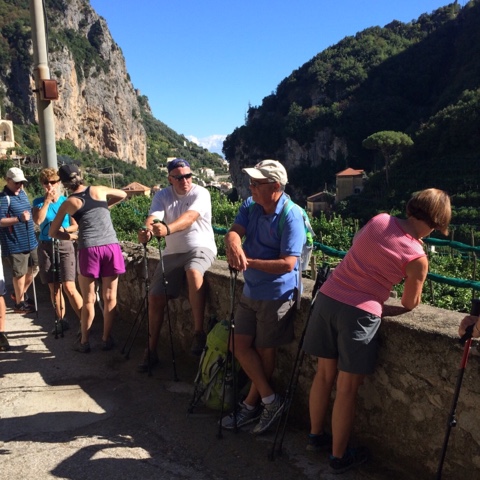
Vincenzo explained that the lemon trees are bent over as they grow to become more like a vine to help with the picking. Poles made from chestnut trees are water resistant and are used to support the lemon trees and allow pickers to stand on them too. Lemons from the Amalfi Coast are very succulent and Vincenzo said that as kids, they ate the whole lemon.
On the outskirts of Amalfi, we visited the Paper Mill Museum.
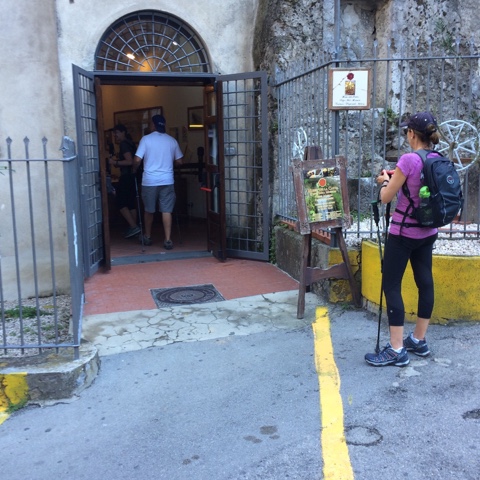
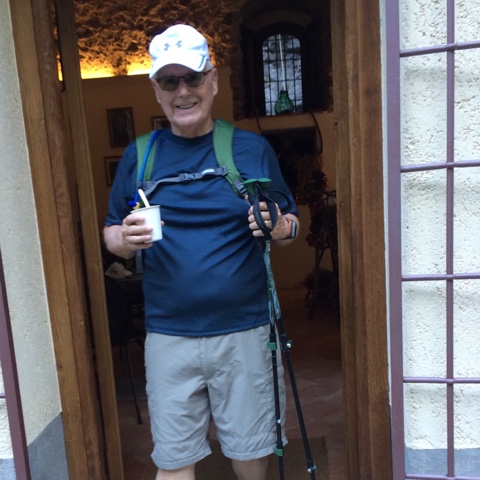
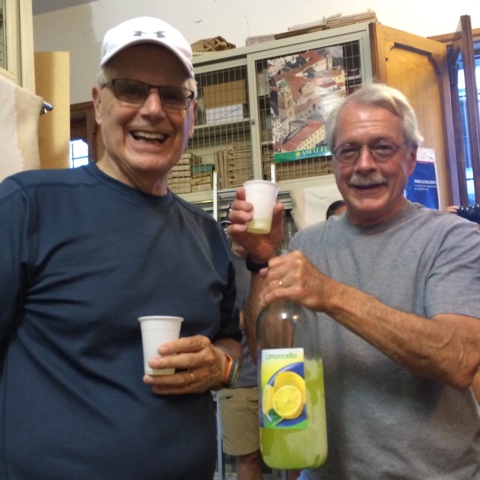
Our group is welcomed to the museum with a sample of limoncello which Ross and Tom are eager to try.
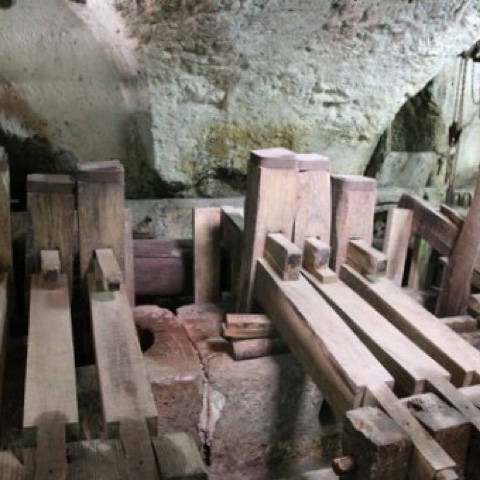
After we separated ourselves from the limoncello, we learned that water was used to turn a paddlewheel which in turn drove these pistons to break down the cloth needed in paper making.
Initially material was scarce, but when the plague of the Black Death ravaged Europe, clothing became available to use. The broken-down material was placed in the large stone vat in more water.
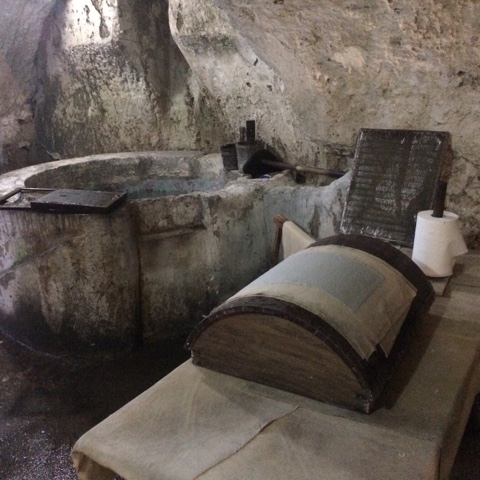
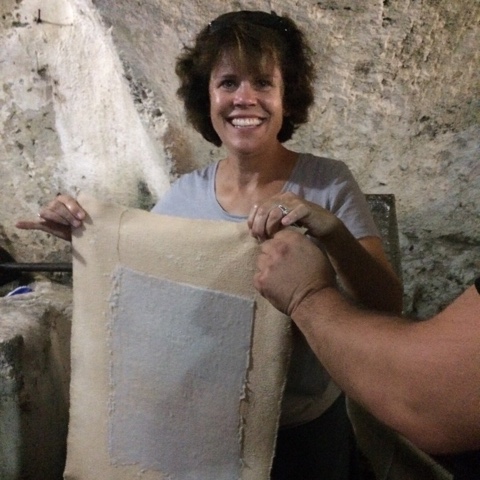
Jen scooped up some of the material from the vat and has a piece of paper ready for drying.
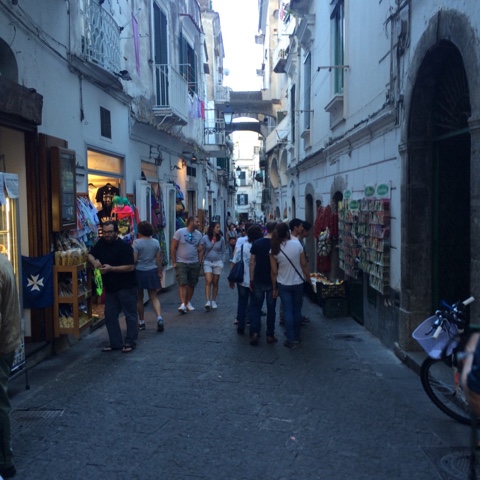
After the paper museum, we walked through downtown Amalfi.
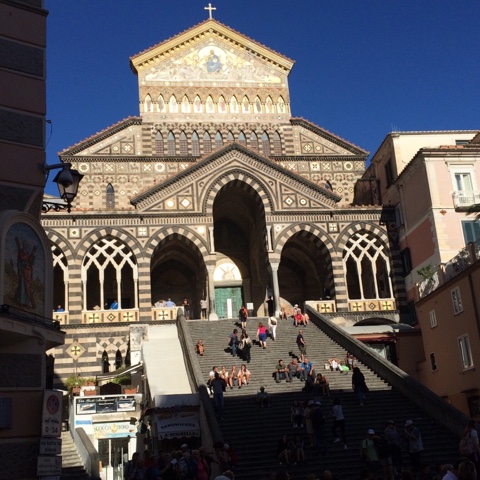
We stopped to look at the Amalfi Duomo. Big church.
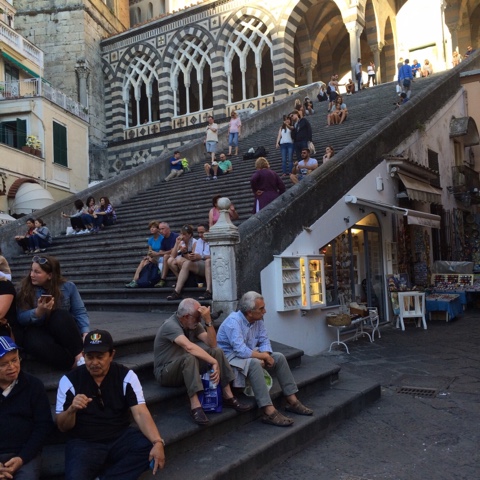
Then we met our group at the steps for the ride back to Ravello and had dinner at the hotel. Relatively easy day.
 Adventures with Sheila