I have been in Spain once before but it was only for a layover in Madrid. It was memorable though because I spent the entire time lying on the airport floor, sick as a dog, waiting for our flight home. This time, we hoped; would be different. Last fall, nephew Tom, friends Marylou and Jerry, and Ross decided we should take Vermont Bicycle Tours (VBT) easy/moderate trip to southern Spain.
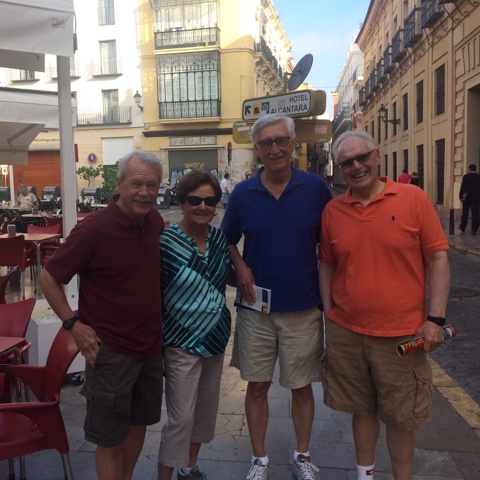
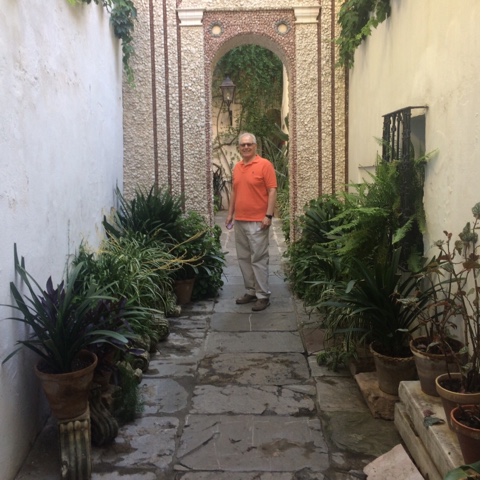


Walking to the church or anywhere was not an easy task. The streets are narrow – to keep the heat down – and multitudinous and branch off in all directions. You could get lost here too. I frequently turned around to take photos of landmarks to chart my way back. But we got there and the inside of the Cathredral was impressive.

The gold-leaf altar.

Another inside view.


The Giralda Bell tower of the Cathredral was originally built as a minaret during the Moorish period. A Renaissance style top, the top one-third of the tower, was added by Spanish conquistadors after the expulsion of the Muslims.

If you build it, they will climb it. So our group did – sans me. A series of ramps, tall enough to allow a person to ride up on horseback, goes up the nearly 100-meter structure with a view of the city from the top.


Then we went by the arena and a statute of a famous bullfighter.


The upper levels are still used by King Juan Carlos when in Seville.

Part of the courtyard.

Ross was most impressed by the Plaza de España built for the 1929 World’s Fair to showcase Spanish culture. Individual alcoves along the curved wall represent each of the provinces in Spain.

It has also served as a location for films including Lawrence of Arabia and one of the Star Wars episodes.

Next stop was the 12-sided Torre del Oro, also known as the Tower of Gold, a former fortress on the Guadalquivir River. It was constructed around 1200 under Muslim rule as part of the defense against the Christian Castilians.

A beautiful sight in Seville were the Jackaranda trees. Their purple blooms were everywhere. Not indigenous here – they were introduced from Argentina.

Another ubiquitous sight in most restaurants was the display of hams.

After our stay in Seville we had a better appreciation for the history and cultural development of Andalusia. Initial occupation was frequently Roman, followed by the Visigoths (pagan Germanic tribes), followed by Arabs (Islam), followed by Spaniards (Catholic) and religious edifices as well as governance centers reflected the architectural history of each of these occupations. It’s a lot more complicated than this but we need to leave Seville for now and start the biking part of the trip.
 Adventures with Sheila