We were supposed to have a short bike ride this morning but wind and rain canceled that. Just as well since it gave us more time to explore the city. After a hearty breakfast, we go outside the hotel to wait for the ferry.

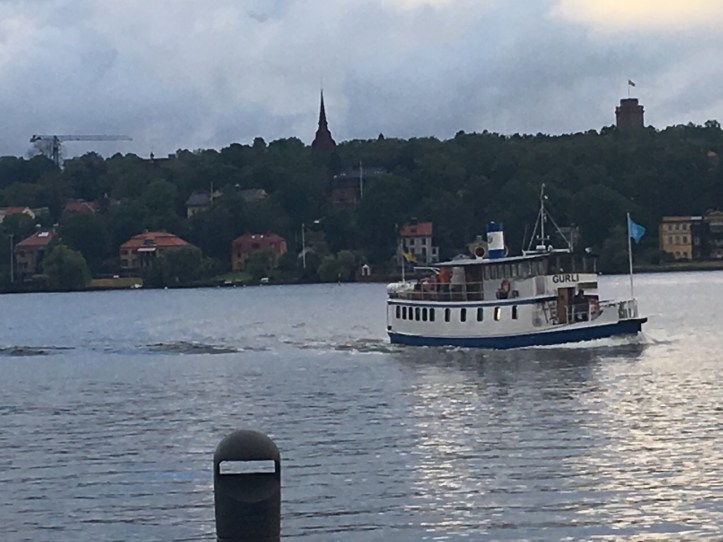
We caught the ferry, traveled across Stockholm Bay, and in a few minutes arrived at southern Djurgârden Island also known as Museum Island.
First stop was the Vasa Museum for a look at a very different ship with lots of history. First impression was Pirates of the Caribbean and the Black Pearl.
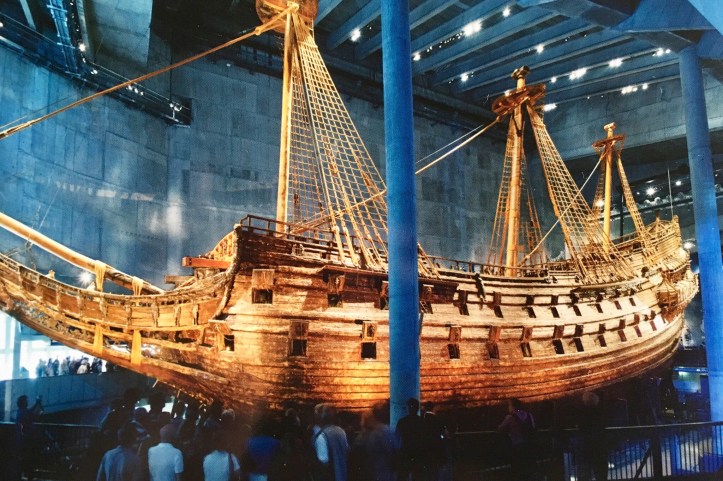
This museum is totally focused on a war ship built in the 1600s by King Gustave Adolf for a major role in the Swedish Navy. The ship foundered after just sailing 1,400 yards during its maiden voyage in 1628. It was over 200 feet long, carried 64 bronze cannons most of which were 24-pounders, and could convey 145 sailors plus 300 soldiers. More than 100 sailers were on board for the first trip along with some of their wives and children. Thirty lives were lost in the disaster; fifteen bodies were discovered during the salvage effort.
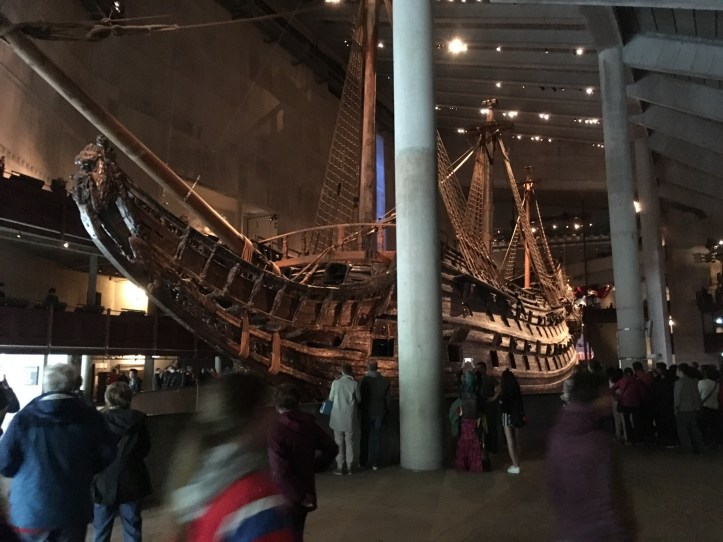
It was salvaged in 1961 after 333 years at the bottom of the Stockholm Harbor. Because it was in the cold water of the Baltic Sea, it was able to be restored with 98 percent of its original parts. Its sinking was attributed to the ship’s design which made it top heavy. Our guide told us that before its first voyage, some sailors ran fore to aft on the deck several times and thereby determined that the ship was unstable.
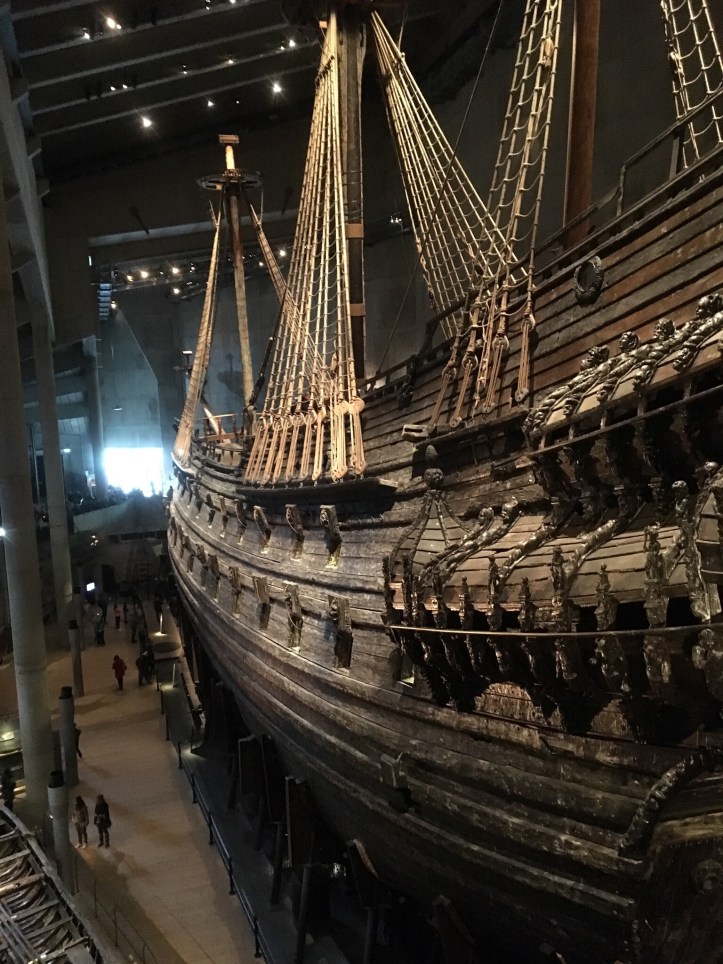
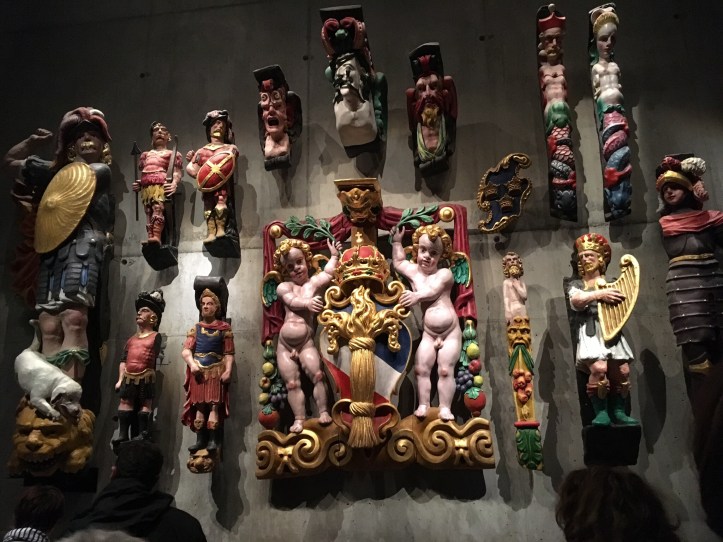
The addition of over 700 carved sculptures added to the weight and instability of the vessel.
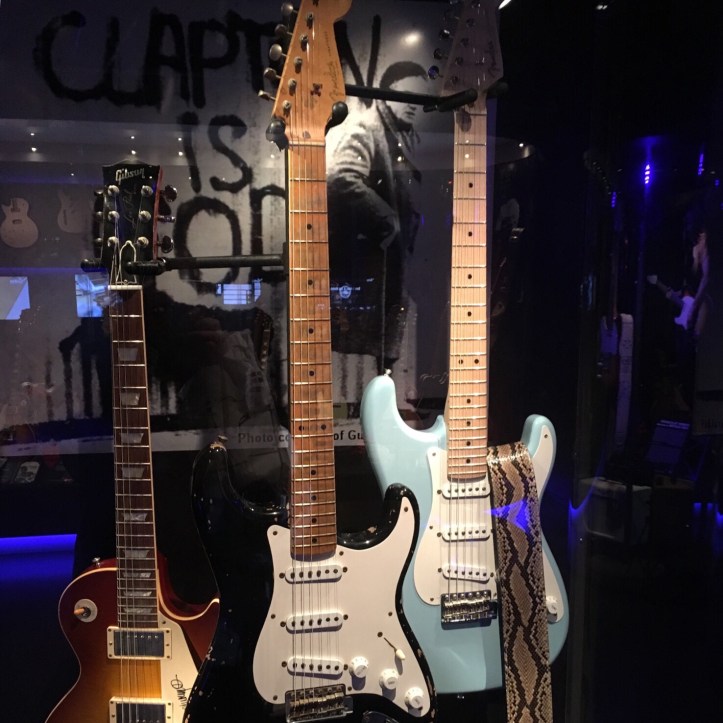
Then we went to the ABBA Museum. The first section was a temporary display of guitars of famous musicians. These are Eric Clapton’s. The white one in the middle is the one he used when composing Layla. Close up, you can see cigarette burns.
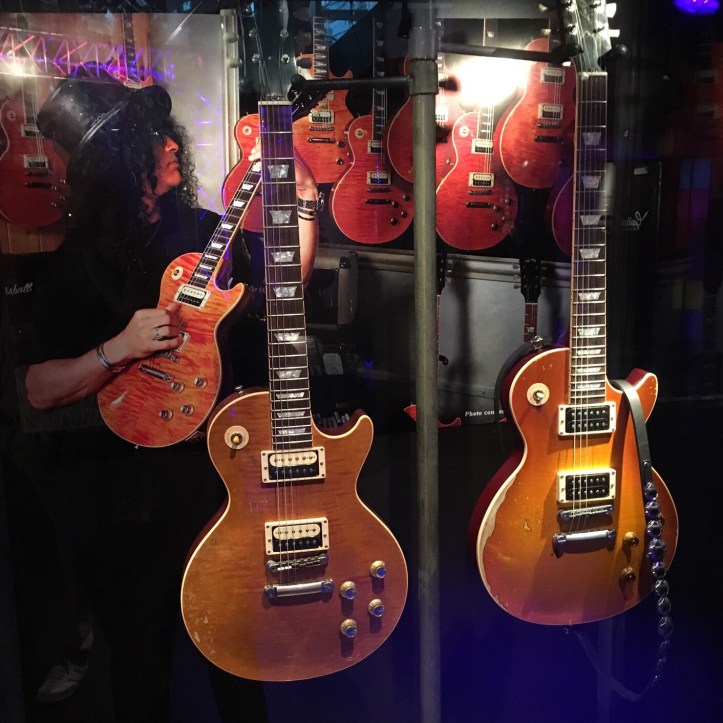
These belong to Slash.
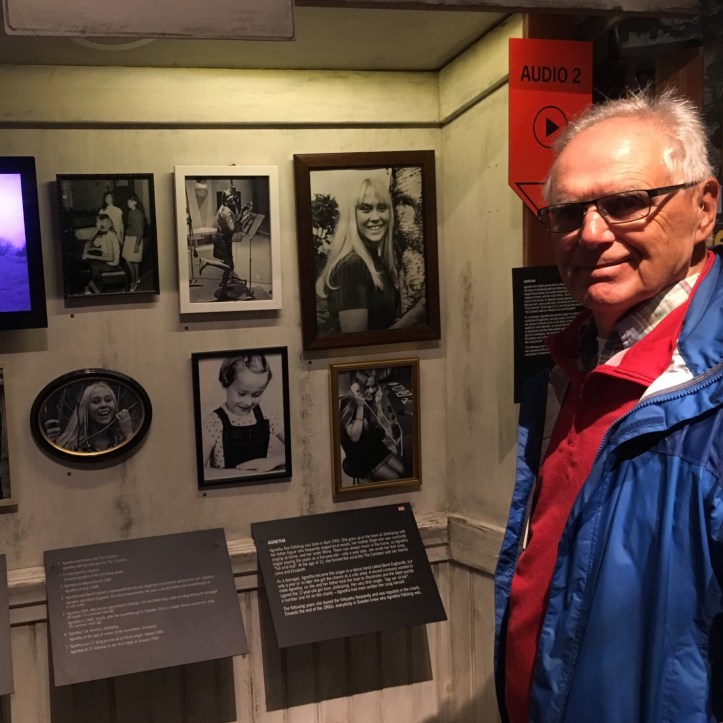
The rest of the museum told the story of how ABBA got together,
showed videos of their Eurovision win in 1974 with Waterloo and the outfits they wore in that performance,
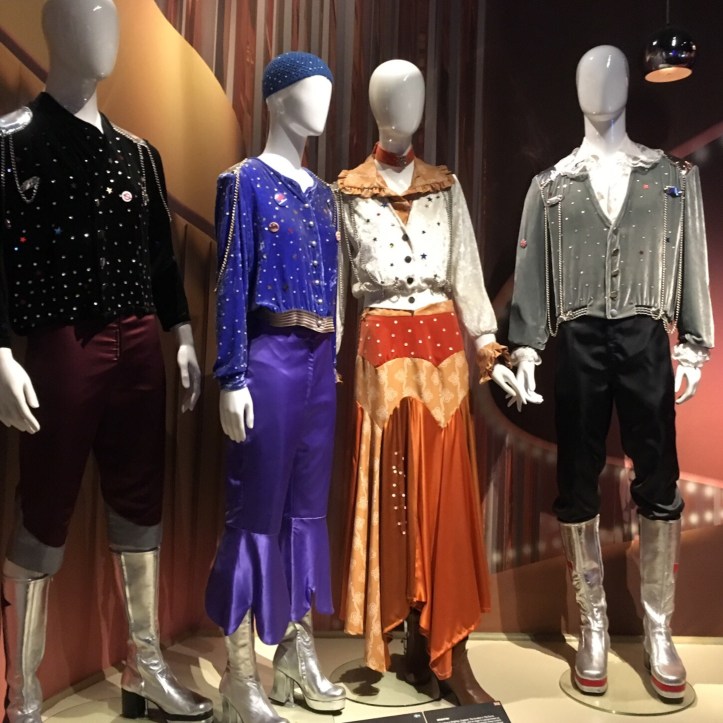
and displayed lots of other original costumes.
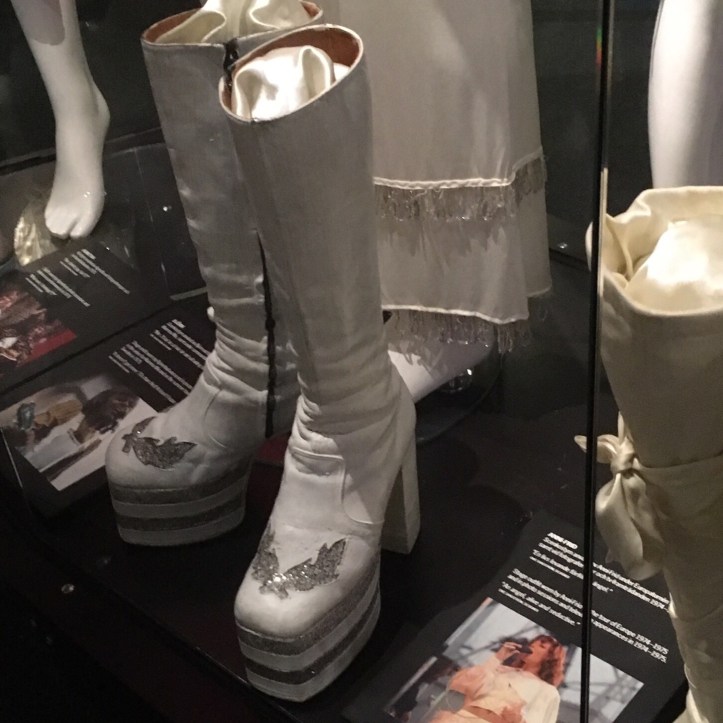
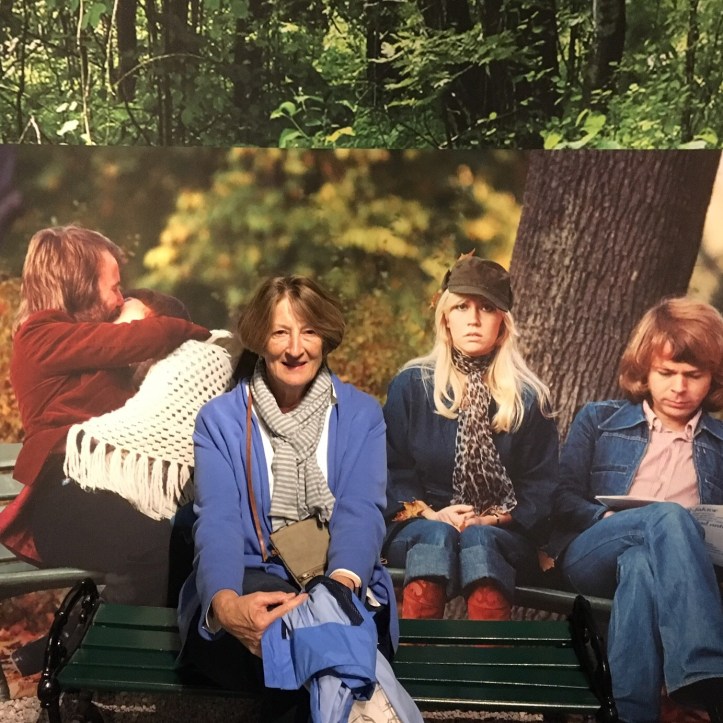
There were also several interactive events including singing on stage with a mock-up of the group or just sitting in the park. Really fun visit.
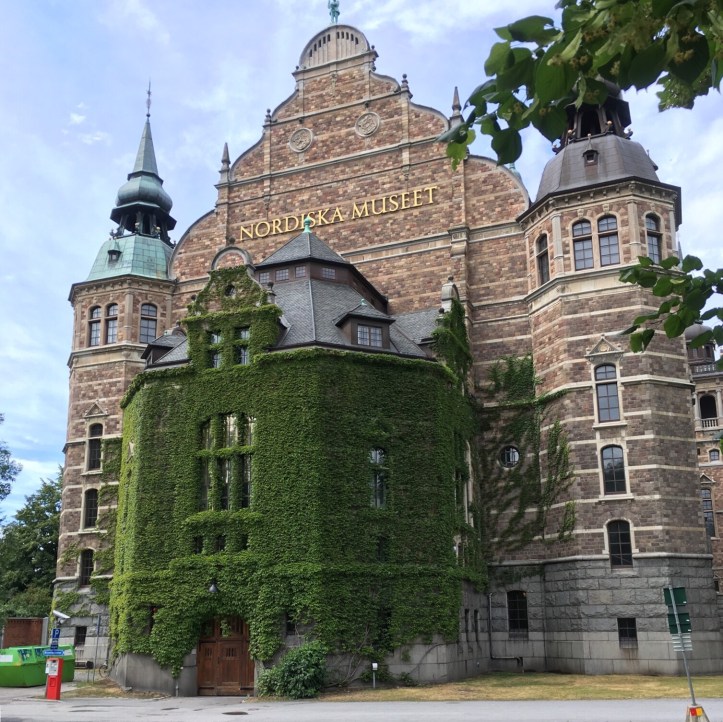
Next stop was the Nordic Museum but we decided we only had time to check out the gift shop.
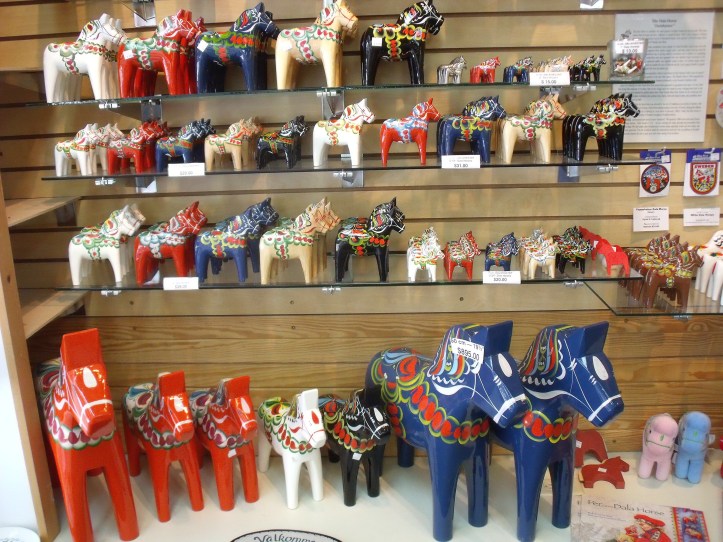
In the gift shop we learned about the Dalecarlian or Dala horse, a carved, painted, wooden statue of a horse that originated in the province of Dalarna in the 1600s.
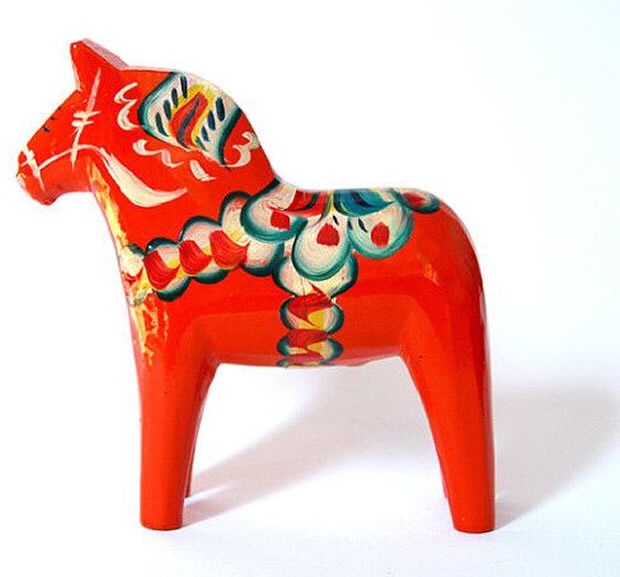
Mostly a toy for children, it’s now a symbol of Sweden. The carving of these horses flourished in the 19th century when they became important to rural families to barter for food and other goods. The display of carvings at the New York’s World Fair in 1939 resulted in mass production and in the Dala horse becoming a national symbol.
After the ferry trip back to the hotel we get cleaned up for dinner and are shuttled to the home of a local family in the countryside.
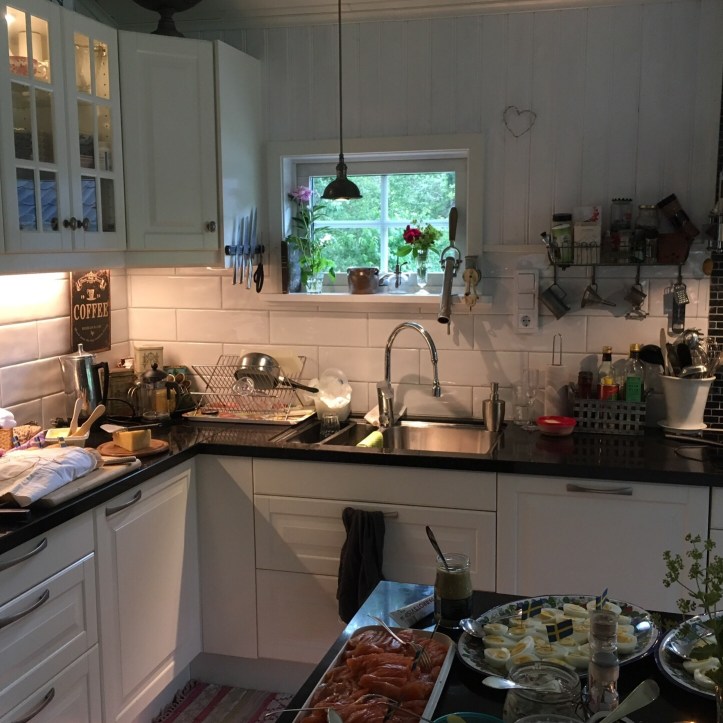
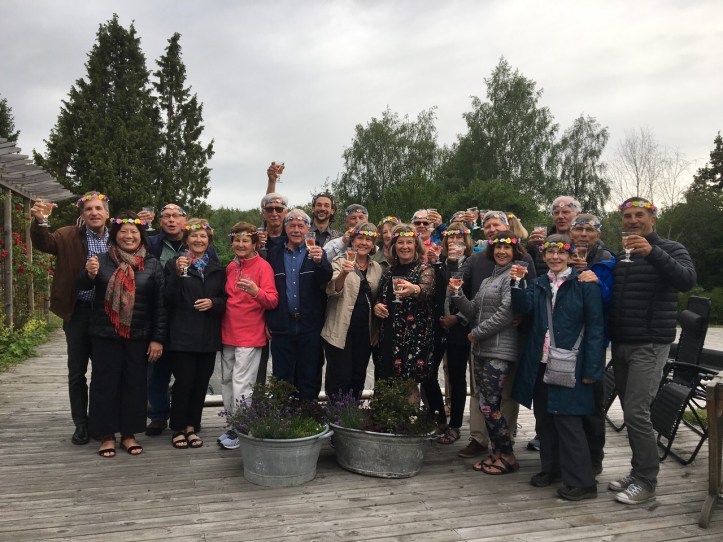
We had wonderful food – lots of herring and vegetables – in a beautiful setting and celebrated Midsummer’s Eve.
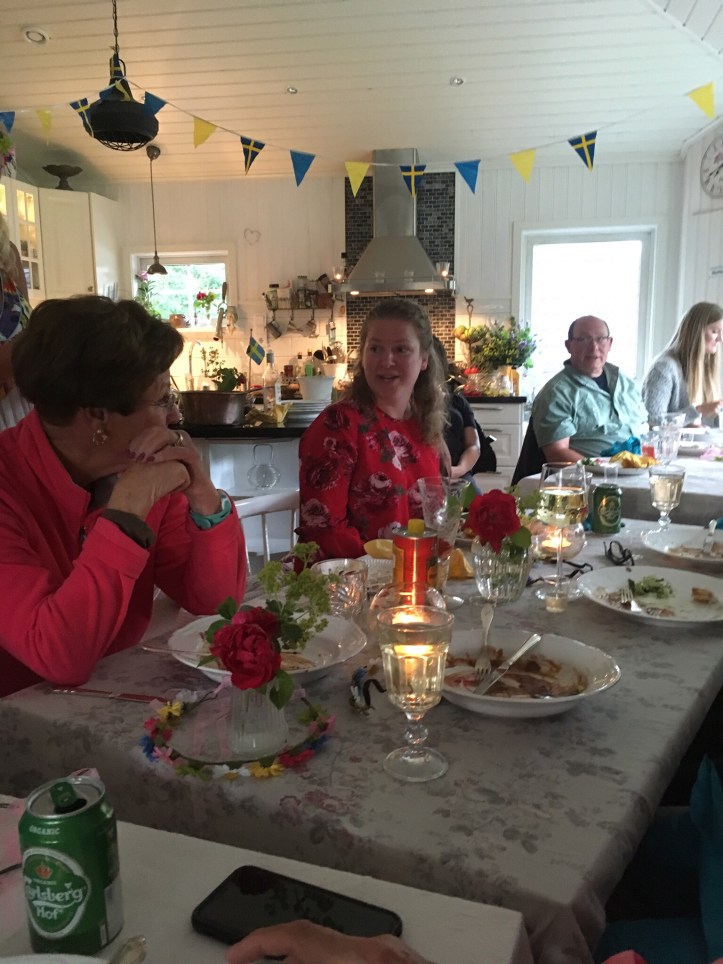
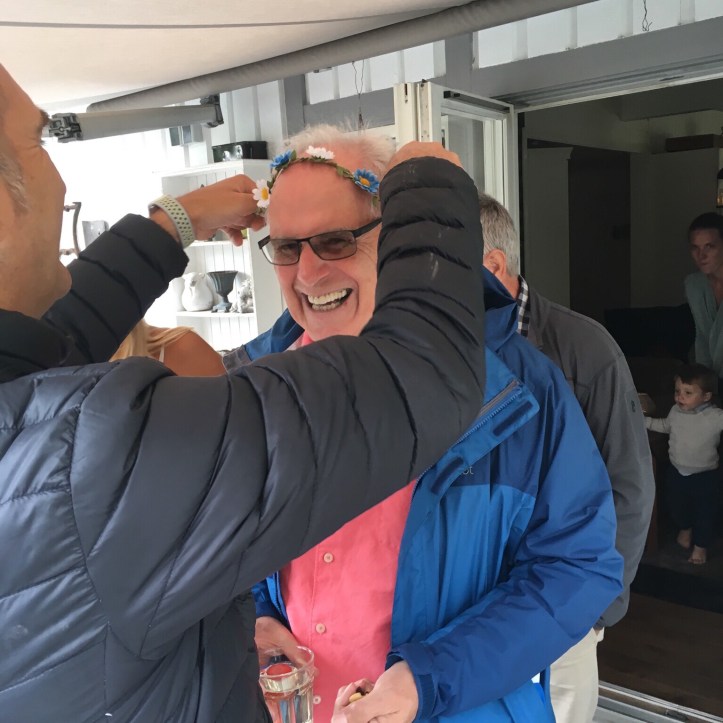
Then it was time for traditional “games” after being adorned with our festive headdresses.
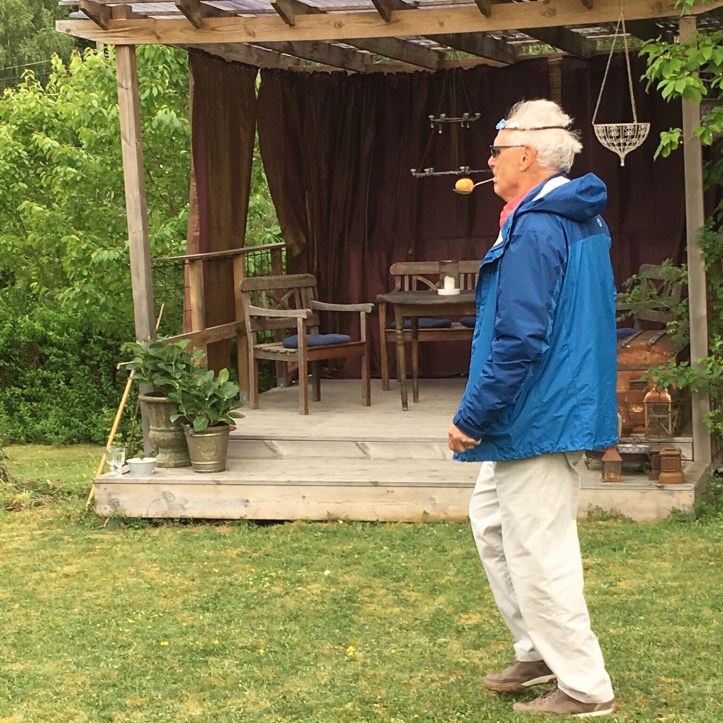
Ross competed in the event “carrying an egg on a spoon.”
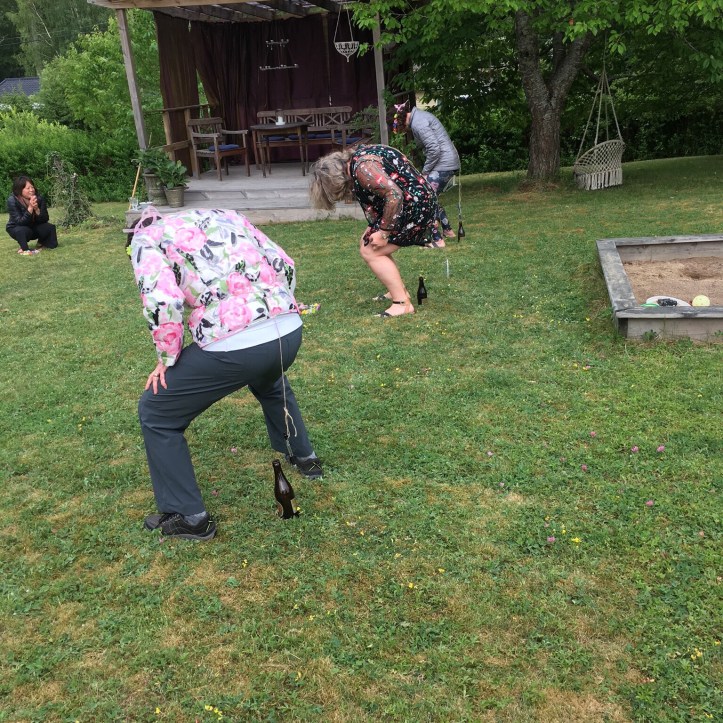
I’m not sure what this team event was called, but it had something to do with getting the pencil into the bottle.
The final event was about group cross-country skiing.
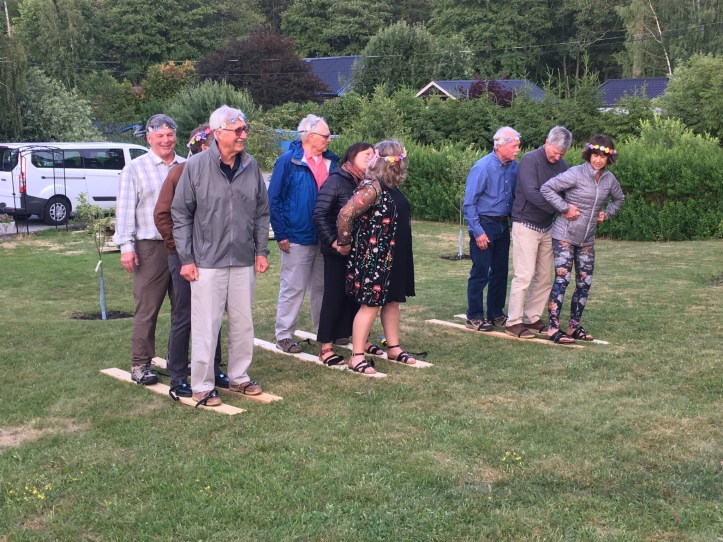
It required a coordinated effort for each team to walk to the finish line but usually ended up looking like this.
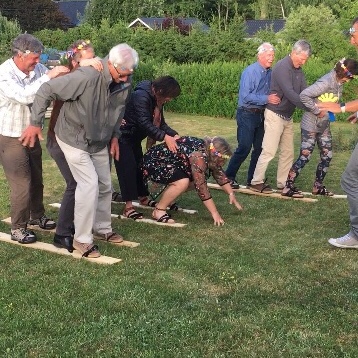
Great fun, however, was had by all and we had a new appreciation for Midsummer’s Eve. Skoal!
 Adventures with Sheila