We started the day with a tour of Honfleur. This included the Sainte Catherine Church by our hotel with the steeple and bell across the street from the main church.
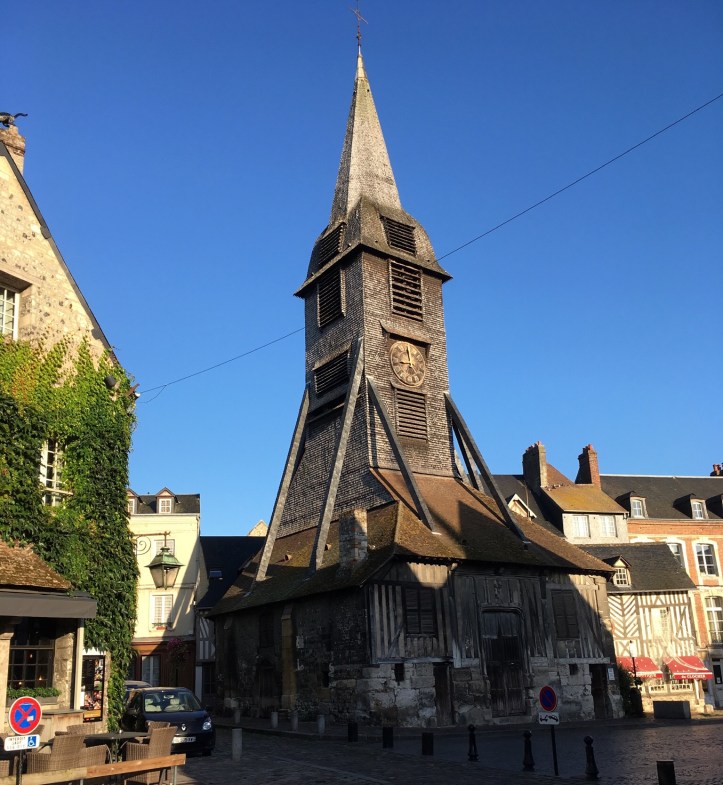
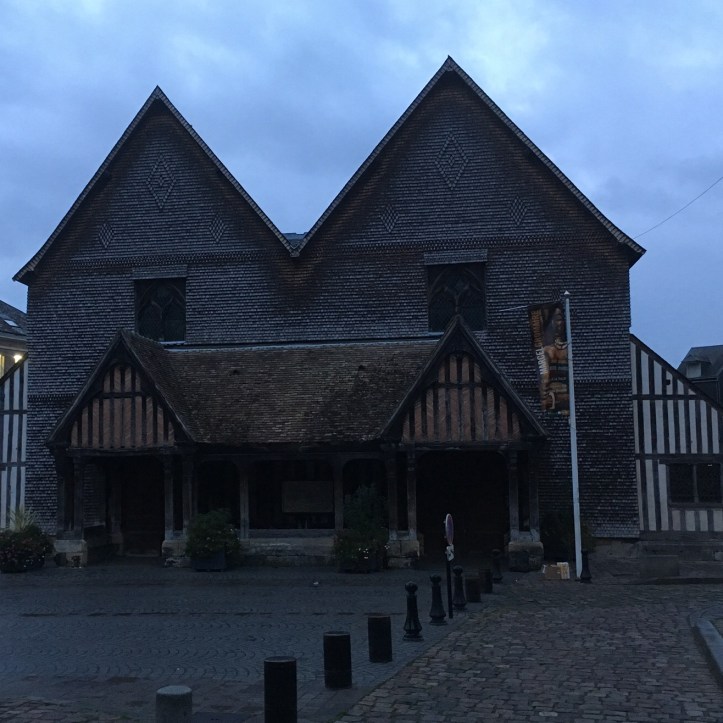
They were separated because the church had a thatched roof when it was built and could not support the steeple and bells. Today, it’s the largest wooden church in Europe.
We then looked at some half-timbered houses which are characteristic of Normandy and a legacy of the Middle Ages.
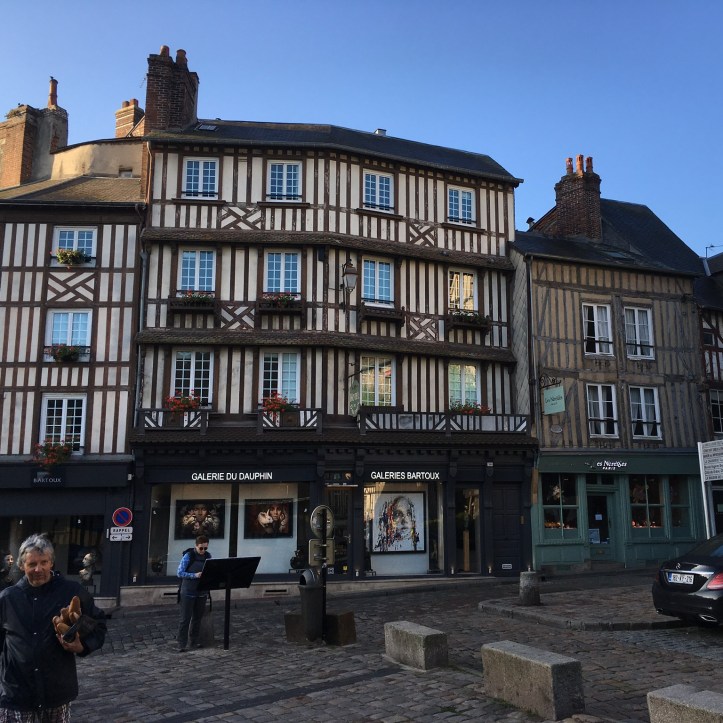
These houses, of which many are now converted to shops, were built by families who made their wealth in commerce. The houses were packed tightly together around the desirable Vieux Basin, now home to yachts instead of commercial ships and fishing boats.

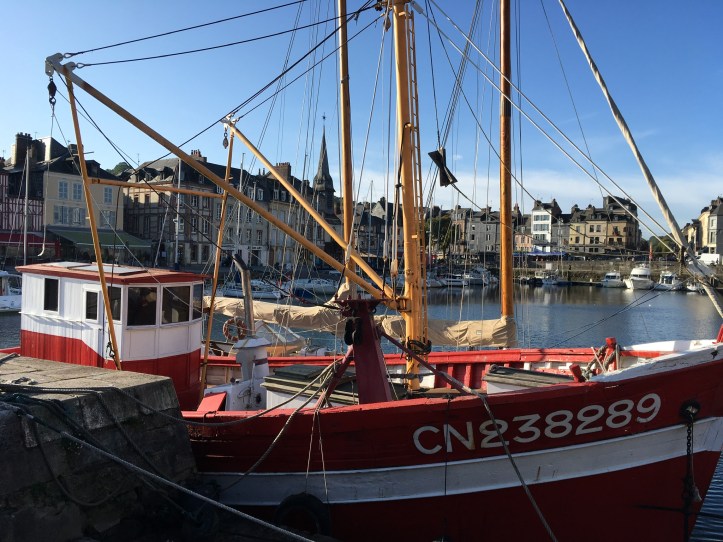
Except for this fishing boat. Honfleur was settled by Vikings and is still very much a fishing town. Many seamen headed to the New World from here in the 17th century including Samuel de Champlain who founded Quebec.
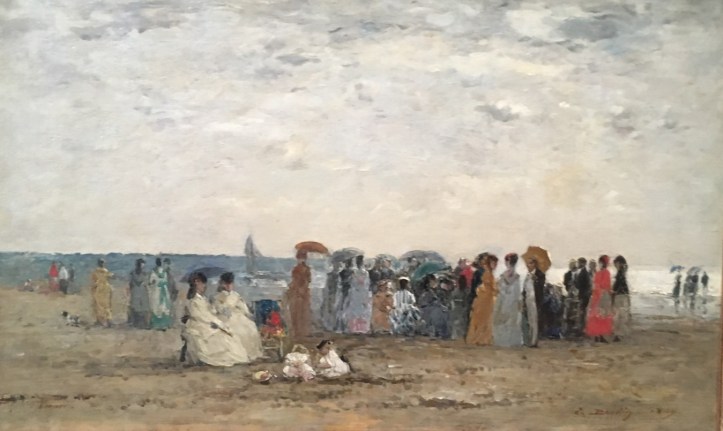
Our guide also talked about how this area was such an inspiration to Monet and other impressionist painters. The artist Eugène Boudin was born in Honfleur in 1824 and was one of the first French landscape painters to paint outdoors. Later in Paris we saw one of his paintings of the Normandy Coast.
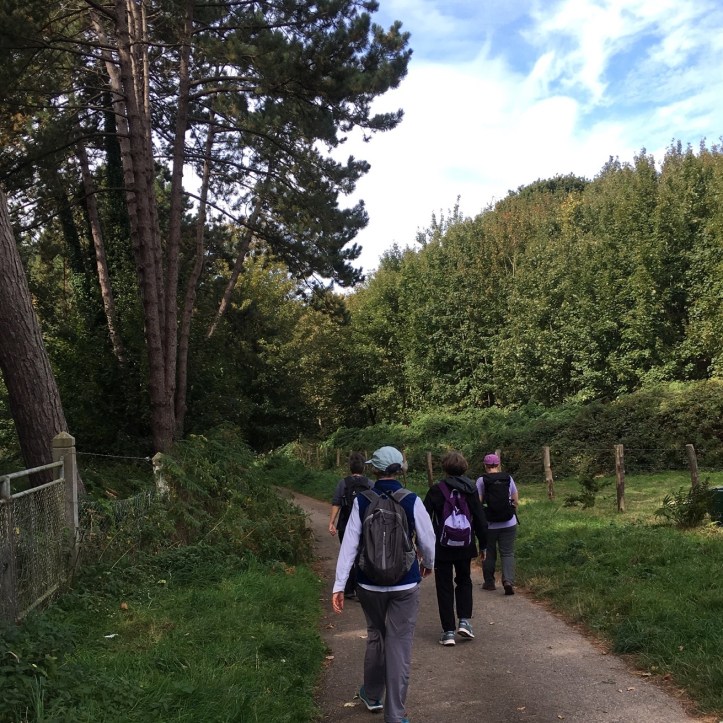
Back at our hotel we changed into hiking boots and boarded our shuttle. We drove through the Pays de Caux area for about an hour then had a picnic lunch inside a shelter in a small park. Our hike started from there and we descended along a forest trail.
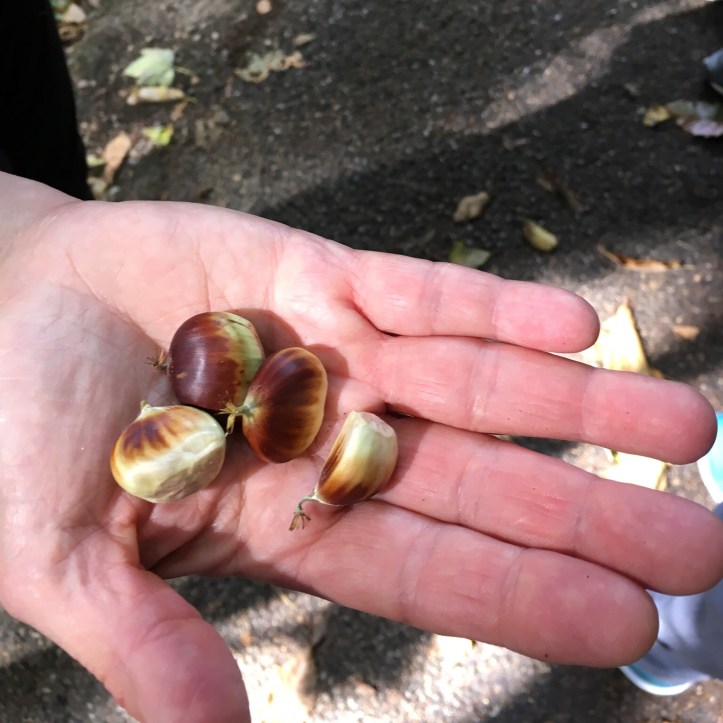
We stopped briefly to crack open and look at chestnuts.
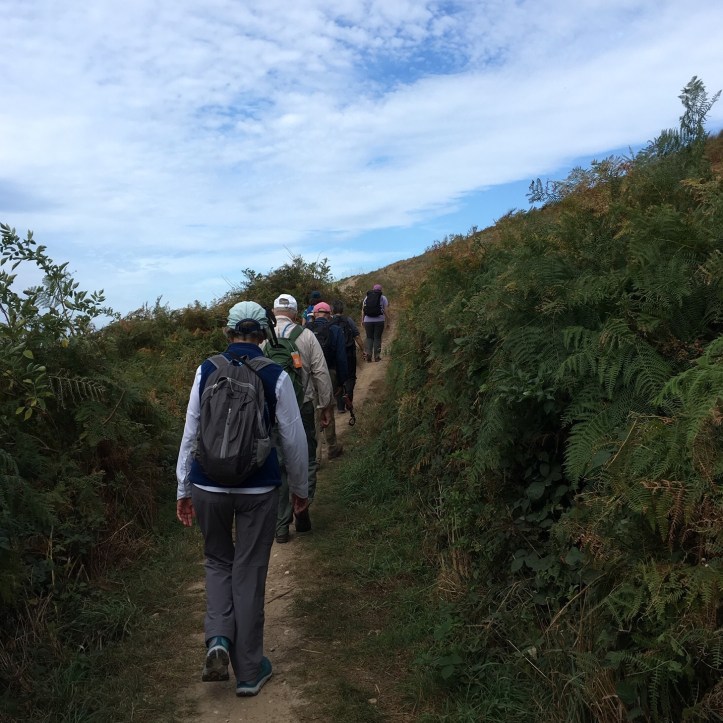
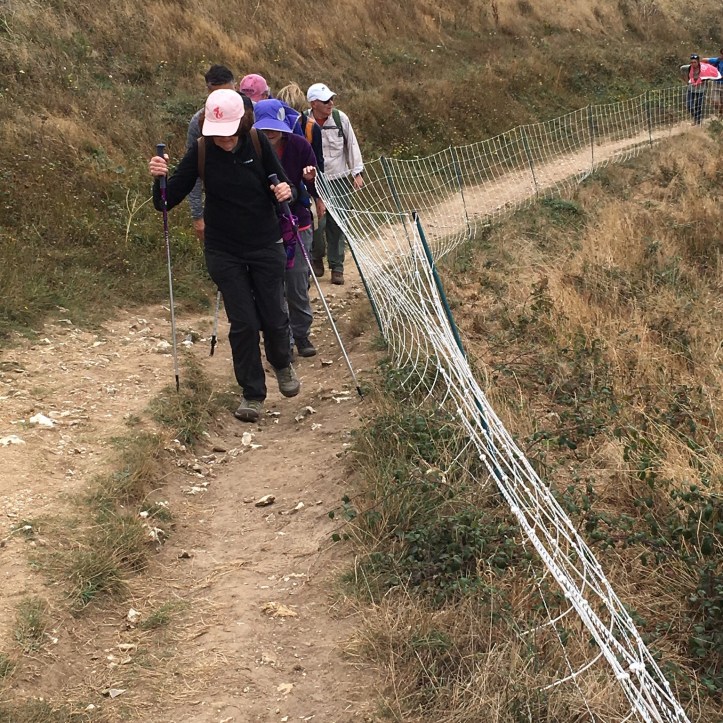
We then had a climb up through gorse.
The climb continued through an open area.
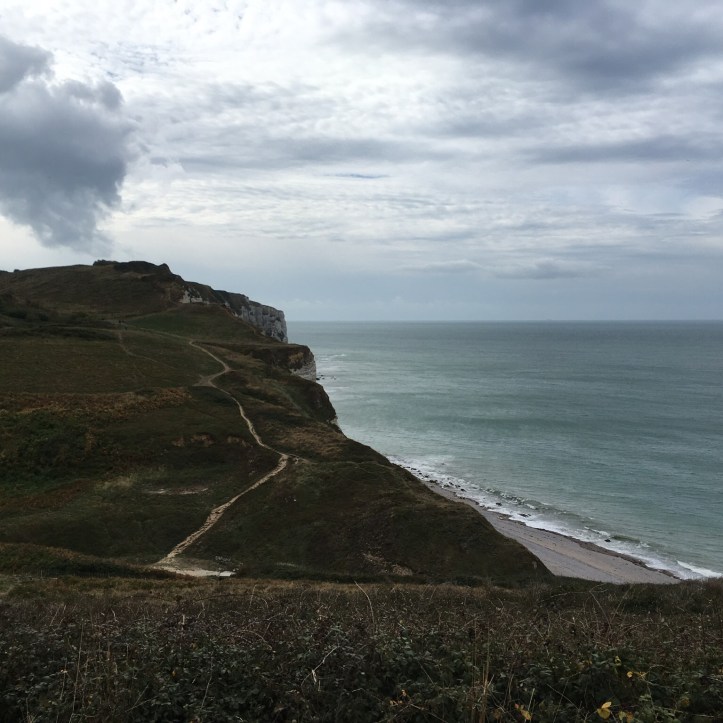
We finally came out on top of a cliff overlooking the English Channel or as it is called in France, La Manche. This means sleeve in French and describes the shape of the channel.
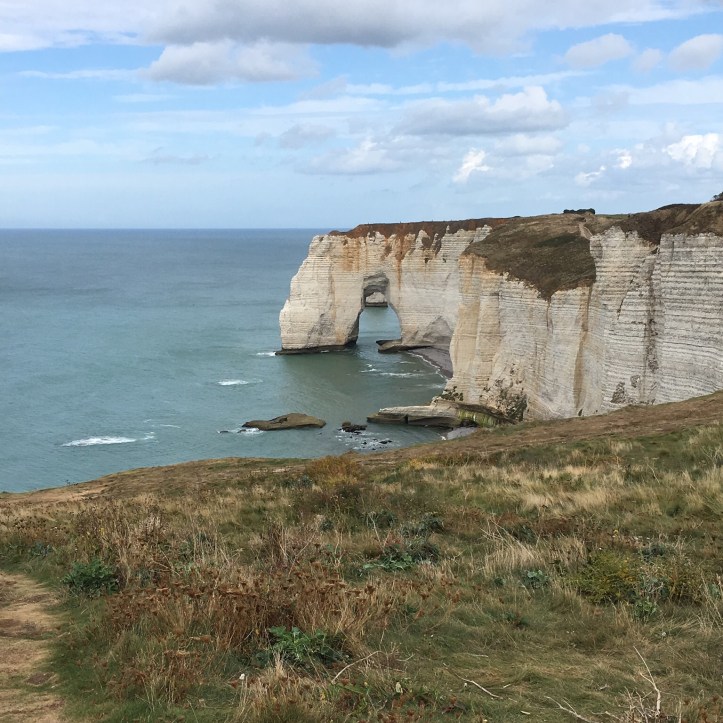
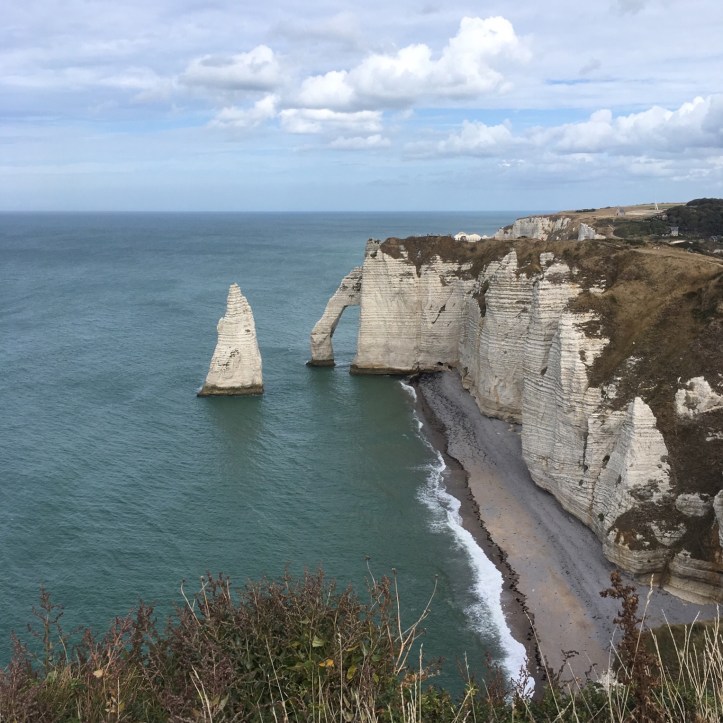
These were the Cliffs of Étretat which our guide told us were one and the same with the White Cliffs of Dover. All were joined up at some point in time several million years ago. We walked along the rock cliffs and came to the Manneporte rock arch.
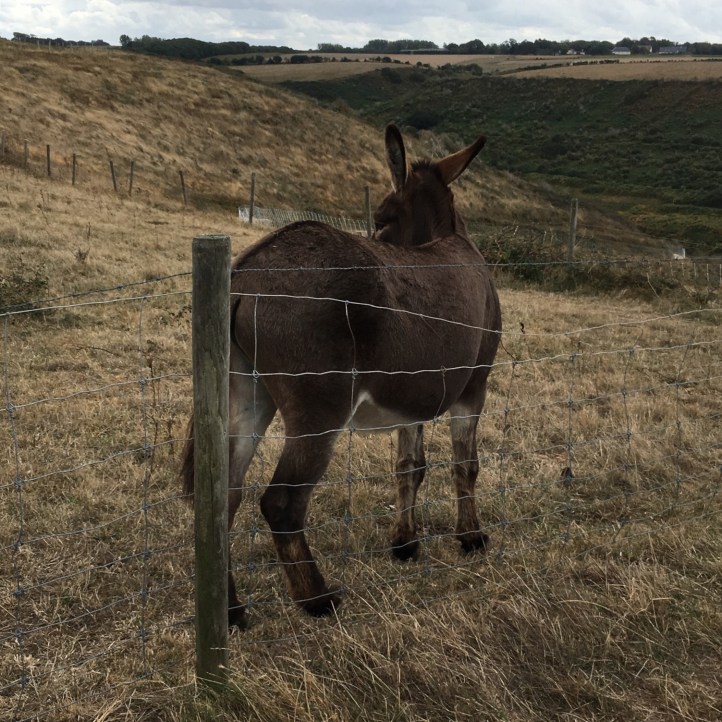
We stopped for photos and also saw a pasture with several donkeys, one of which wanted to put on a show for us. He brayed, ran through the field, rolled in the grass, and then stood by the fence and would not look at us.
Next we had a steep downhill.
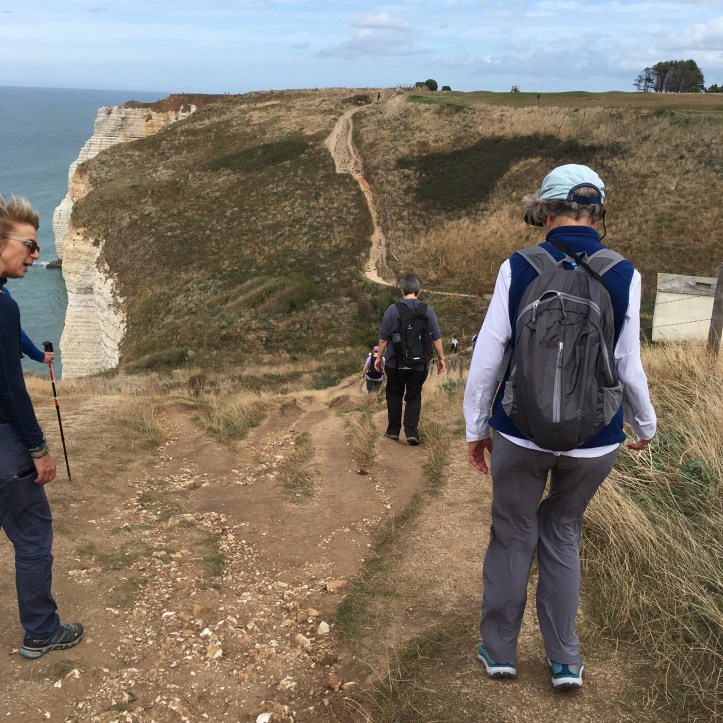
We were too busy maneuvering this to pay attention to the next uphill section.
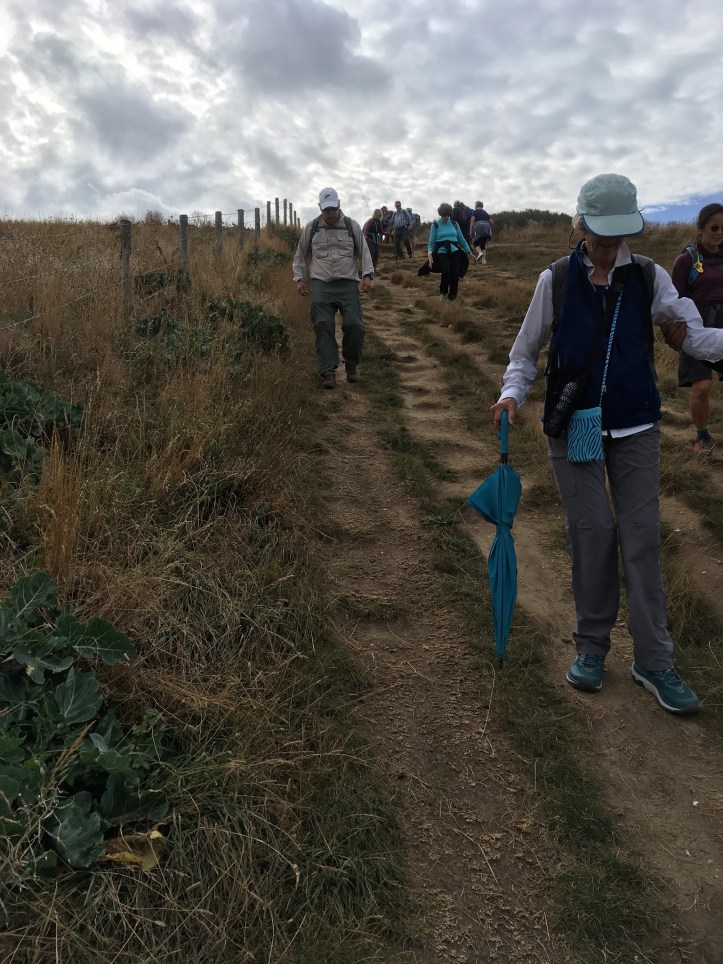
Looking back from where we came.

Now we could see the Porte d’Aval arch and the Aiguille or “needle.”
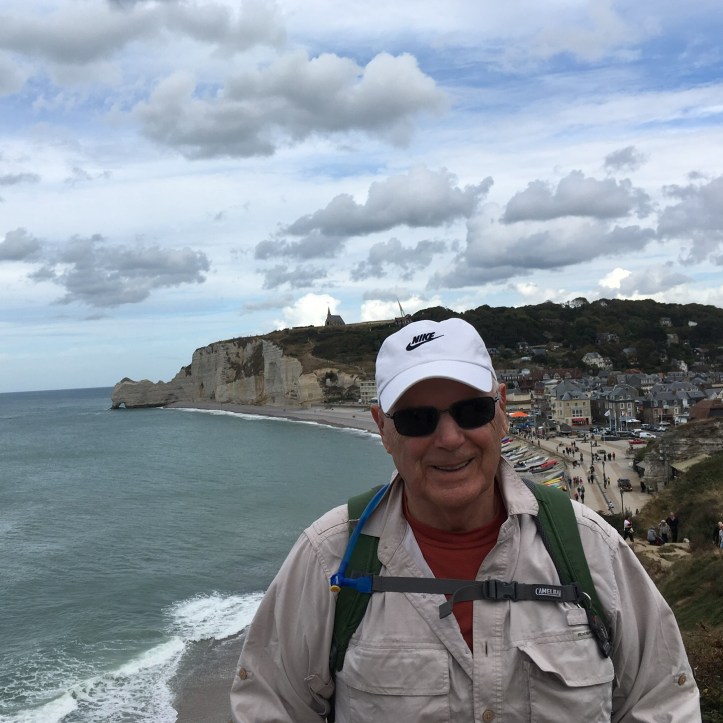
We then walked on toward the fishing town of Étretat and I took a photo of Ross with the town below.
We walked on down and checked out the cliffs and arch from the beach. Is that a proposal happening on the beach? Or, maybe, he’s just burying something.
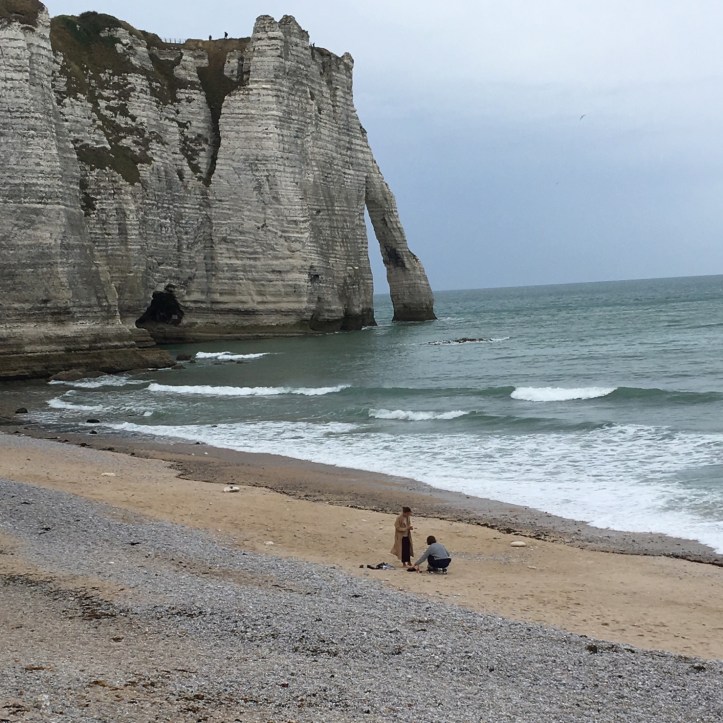
Later, we saw Monet’s painting in Paris.

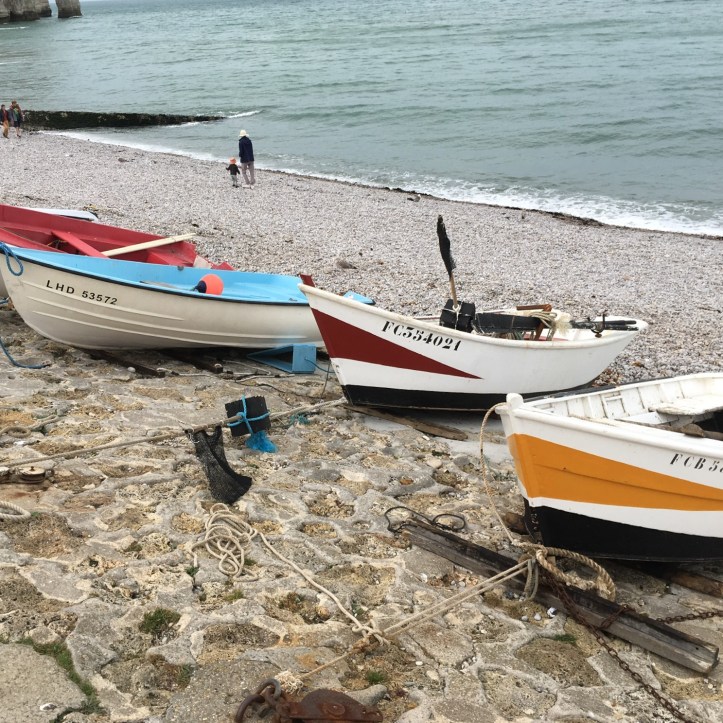
A few fishing boats were hauled up on the sand.
This was an area heavily protected by the German army during WWII and they constructed what was called the Atlantic Wall to make it impossible for the Allies to land here. In addition to the obstacles pictured below, there were 1,500 mines buried on the beach and 19 bunkers in the surrounding cliffs.

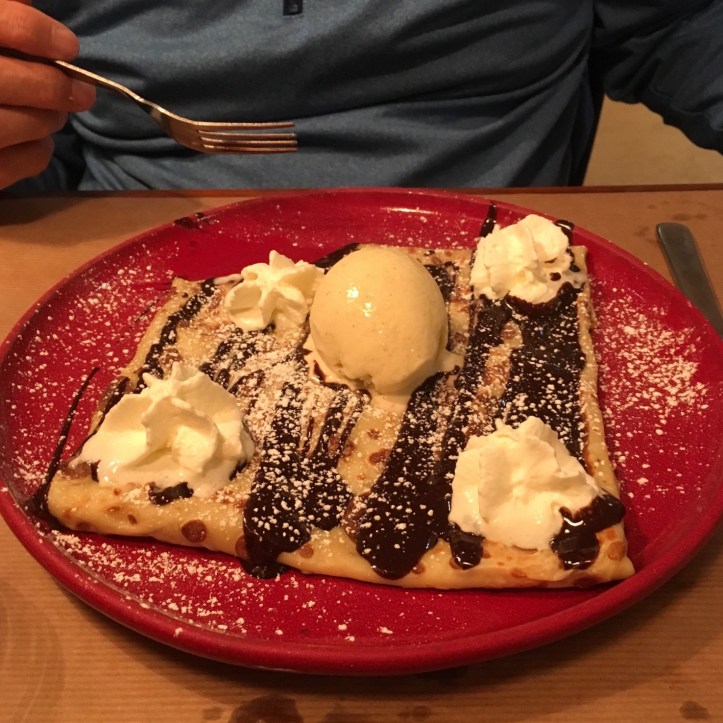
We met our shuttle for a ride back to the hotel. Dinner was on our own and we ate at a nearby creperie. Our dessert was the La Demoiselle Blanch with chocolate and ice cream. The nice surprise in Honfleur was the licorice Ross found at a local shop. It cost us 12 Euros for 12 pieces but it was worth it!
Back at the hotel we packed up for moving. Tomorrow we go to the D-Day Beaches and the American Military Cemetery. Big day.
 Adventures with Sheila