We were really anxious to go here. We had seen this island monastery on television many times while watching the Tour de France. The big issue seemed to be the tide; when it’s out you can walk there, and when it’s in, you need a boat. At least that’s the way it was long ago. Now there’s a causeway that can be driven across.
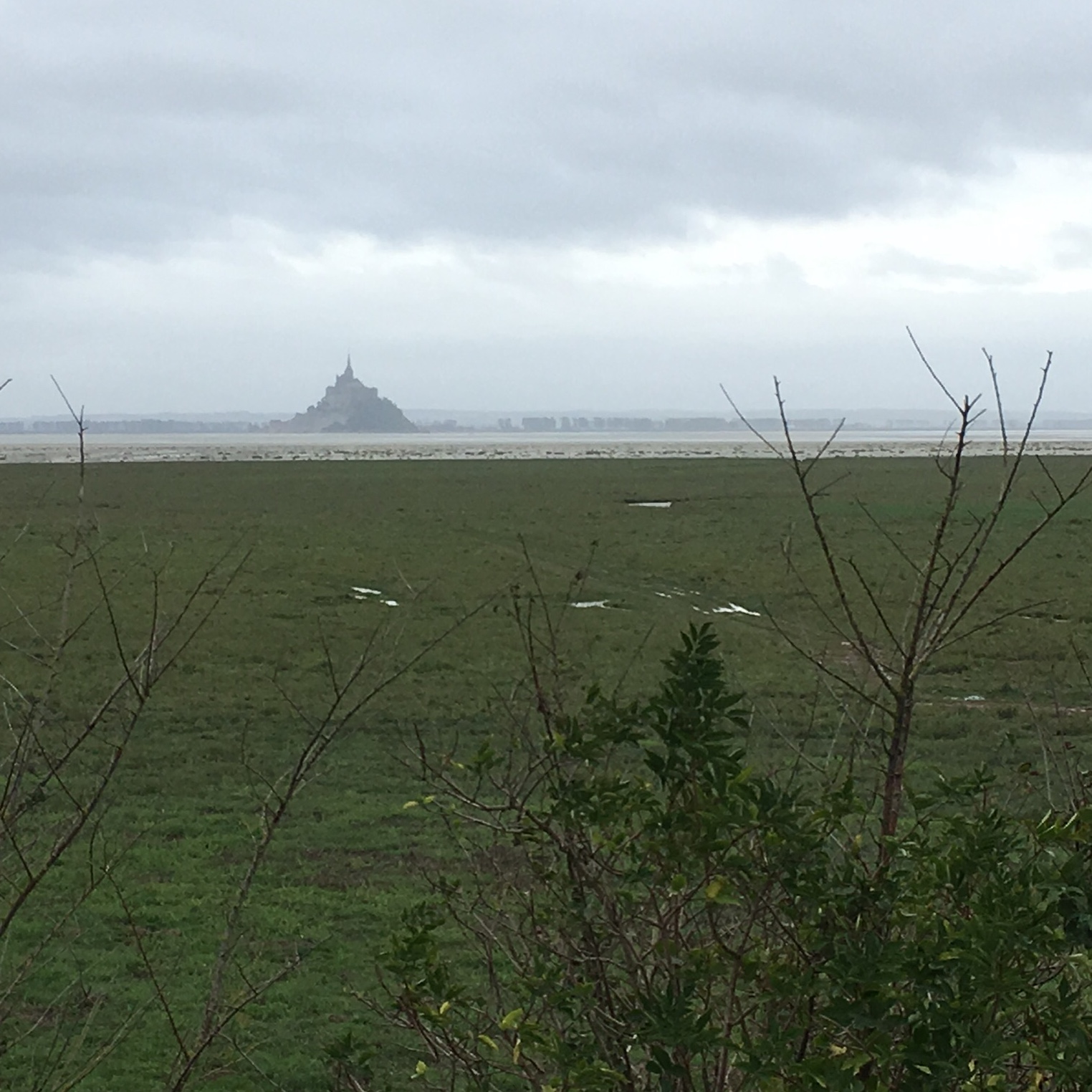
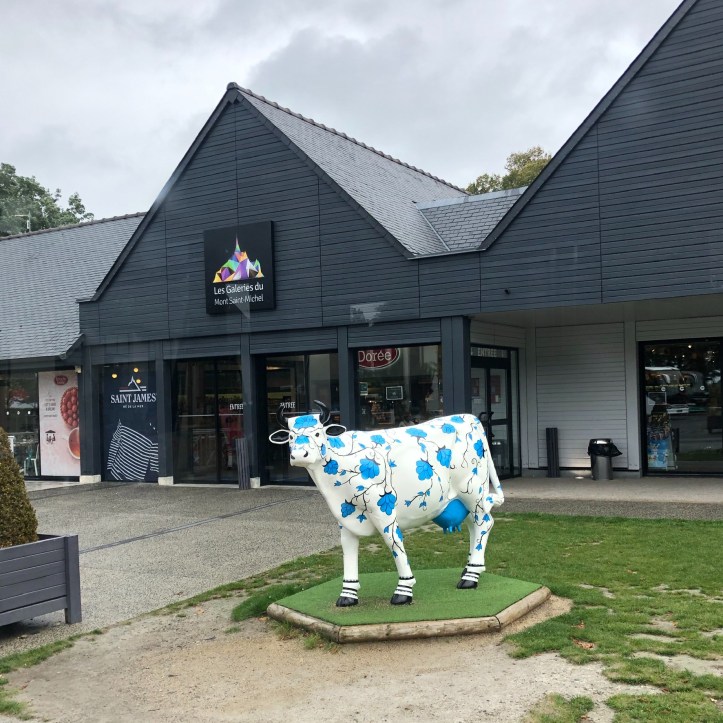
We packed up for moving again and started off the day with a shuttle ride of about 90 minutes. Our three-mile hike today started with a bathroom stop – one facility for 18 people so that took awhile. We watched some cows while waiting and in the distance, Mont Saint-Michel.

We were ready to go this morning. It was our shortest hike today if we don’t count the 50,000 steps or so at Saint-Michel.
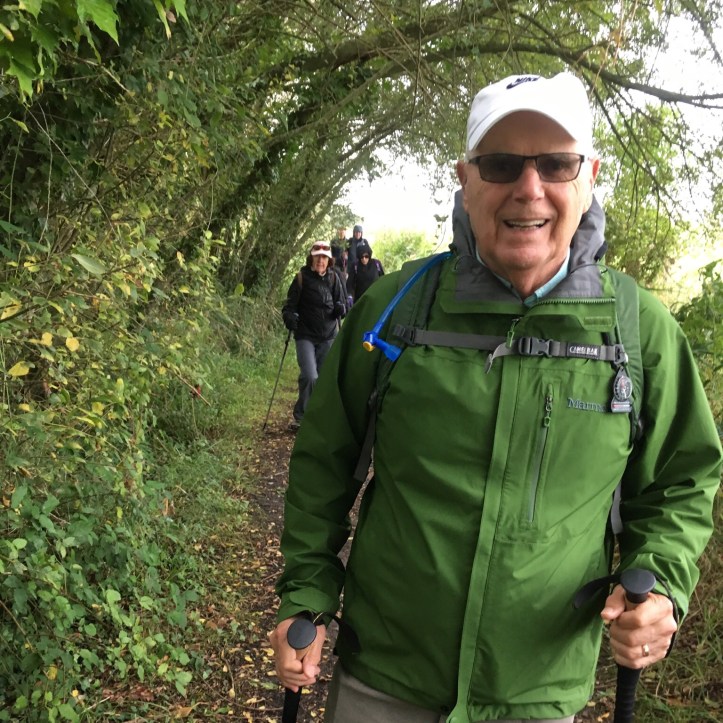
Our trail continued along the coastal GR223 and this section was absolutely flat.

I had my warmer hat on today so I was wind ready.
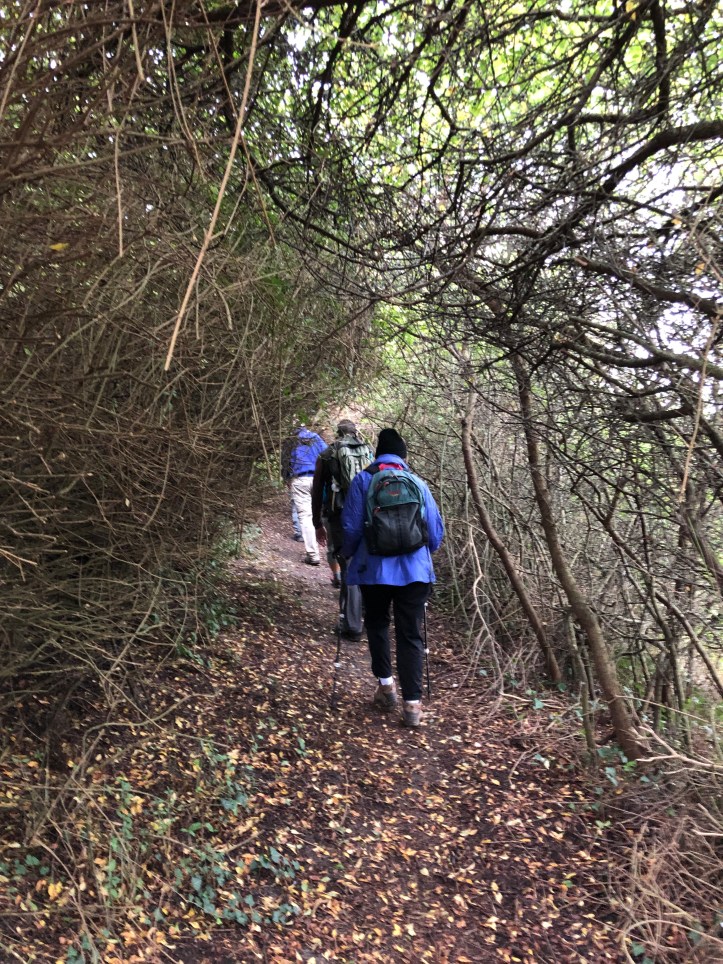
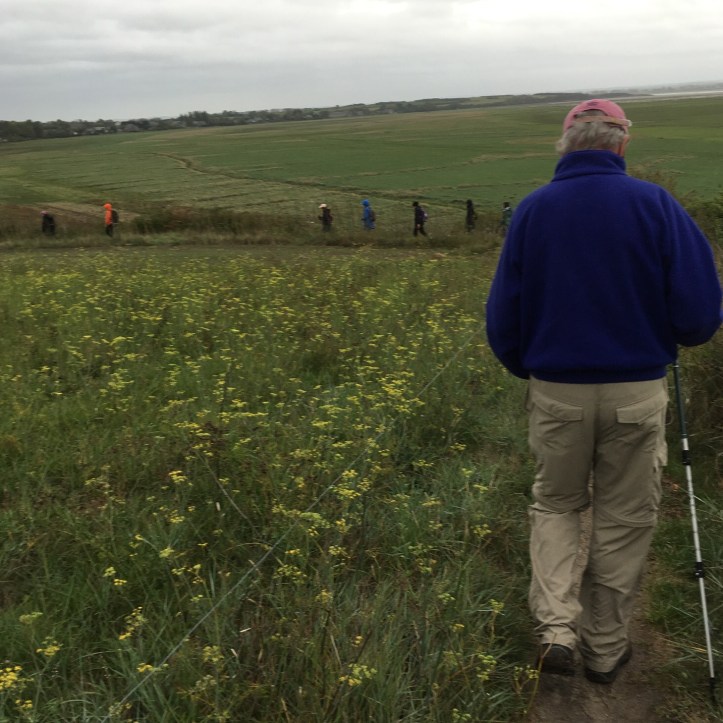
It was trying to either mist or rain on us all day. So we had some mud to deal with too. It was a fairly steady march through mostly grassy areas. And I kept checking to see if we were getting closer. At this point, we were about four miles away.
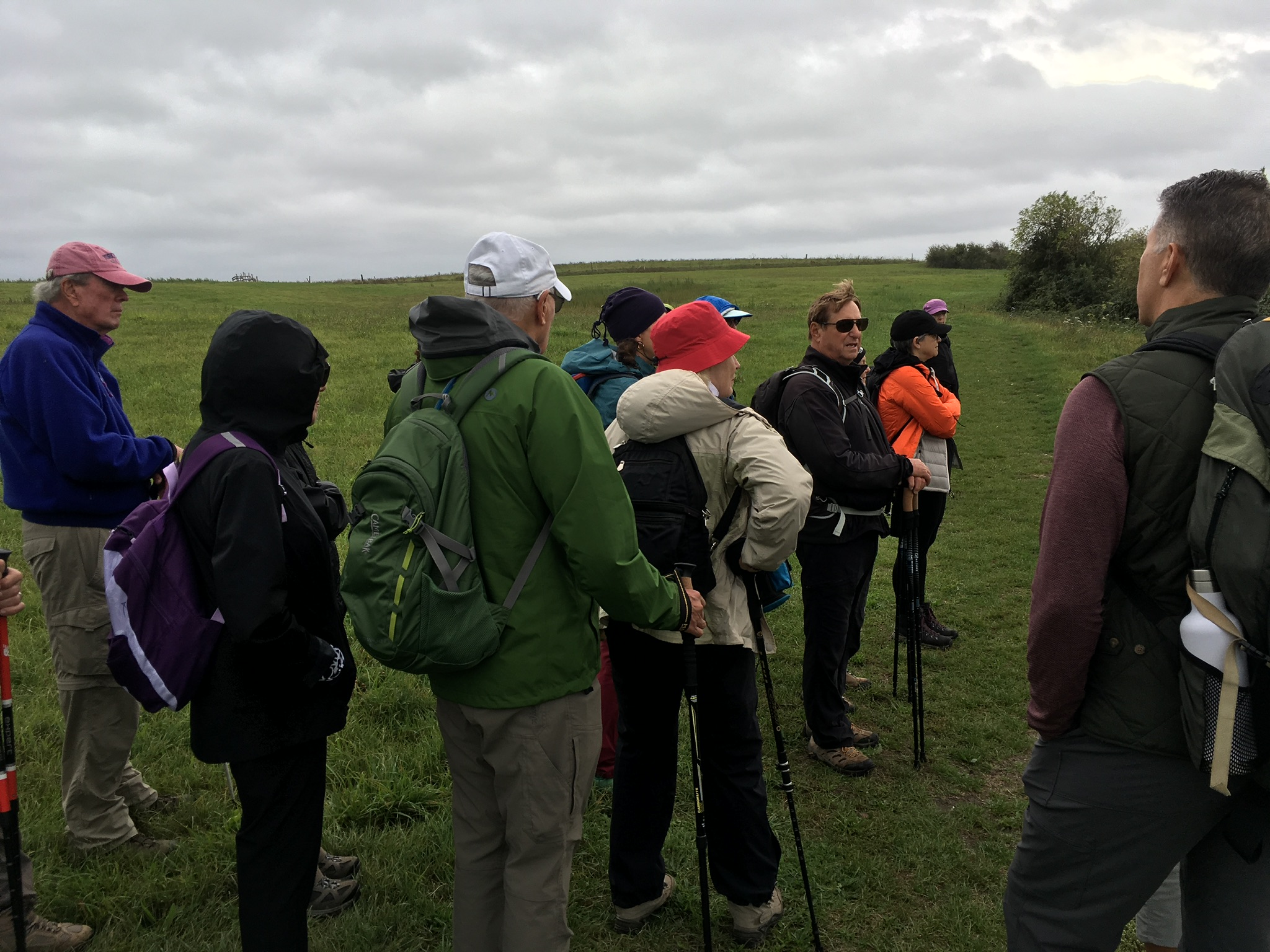
We stopped briefly here, probably just to get the group together.
Back on track, but we seemed to be turning away from Saint-Michel.
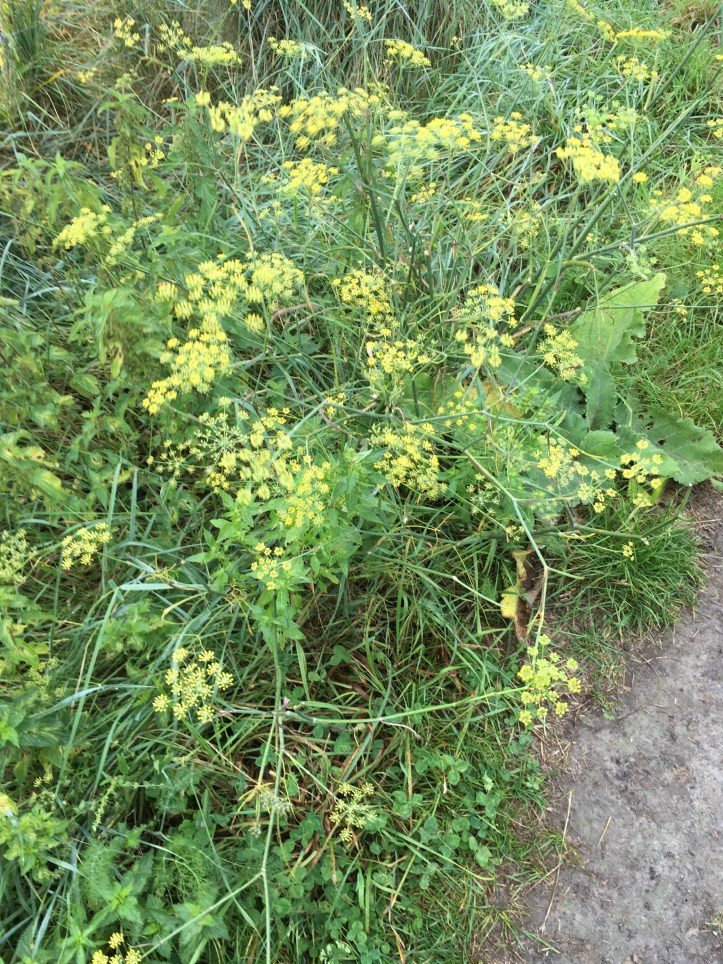
We had lovely fennel along much of the walk and stopped frequently to break off a branch and sniff. Brought back memories of the licorice we bought in Honfleur.
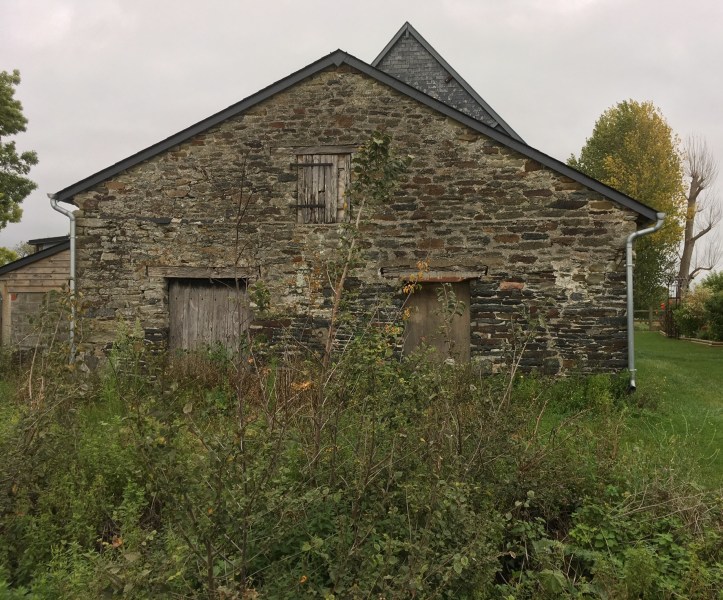
We were near the end of our hike and passed by this old cottage. Several times our route was behind houses and their gardens.
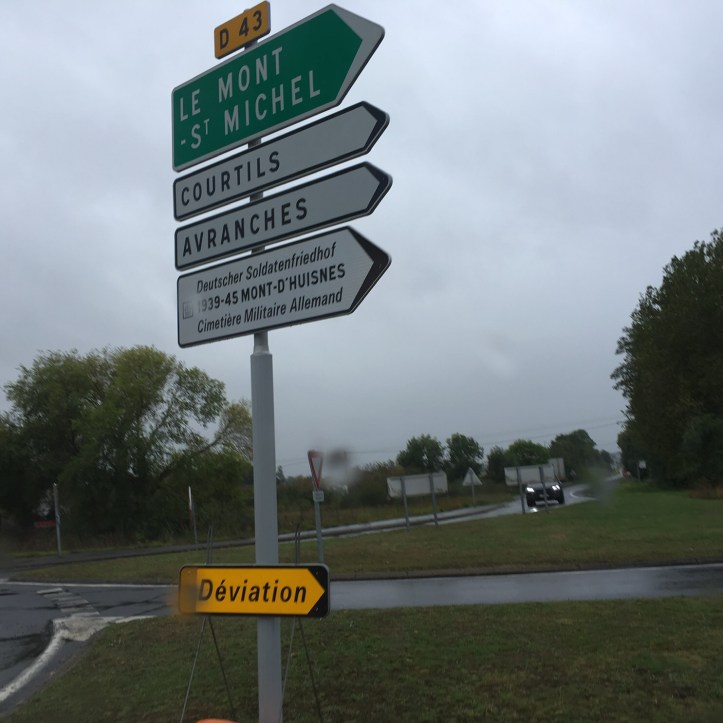
We met up with our shuttle and finished our trip to Mont Saint-Michel.
I learned that three million tourists visit here every year, more perhaps in the summer than in September. But, there were still a lot of tourists including us, even though we considered ourselves pilgrims because we had walked part of the way. Our shuttle parked in one of many parking lots then we caught a much bigger bus, called a Passeur, that took us across the causeway to the island. On the way we saw lots of these colorful cows.
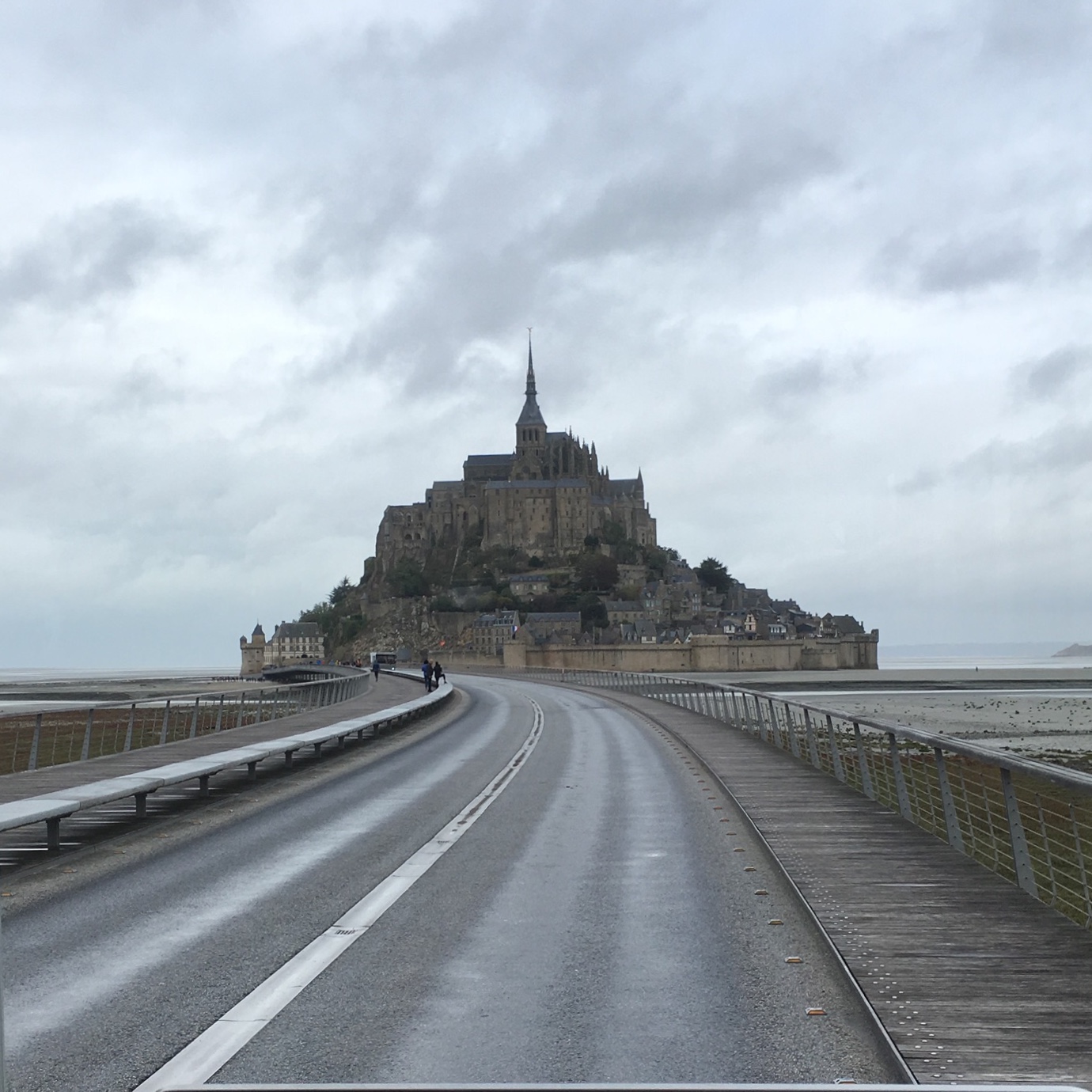
In this photo we were on the causeway and getting closer.
Now we saw that the Benedictine abbey church was at the top of the structure with additional rooms below, and outside the walls and around the bottom were the houses and stores for fishermen and farmers who once lived here.
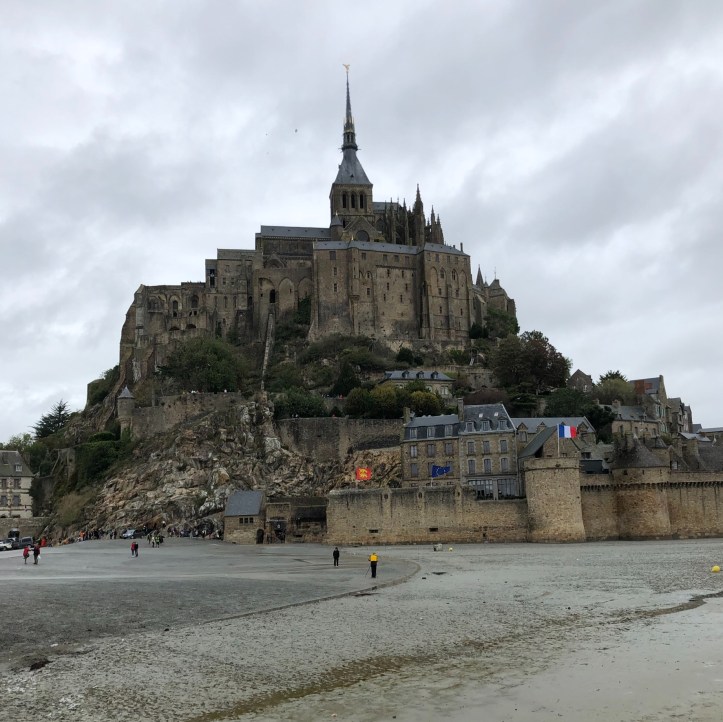
Here’s a photo of the causeway as the tide is coming in. During super tides the causeway can be completely covered.

We walked through the main gate into a street and looked for a place for lunch. We had crepes and learned that along the coast, savory crepes are called galettes and sweet crepes are called crepes. Hmmm. Tons of souvenir shops here but we were on a tight schedule and had to meet our guides back at the front gate. We were able to stop in one shop to buy a monogrammed bowl for our granddaughter who has a French name.
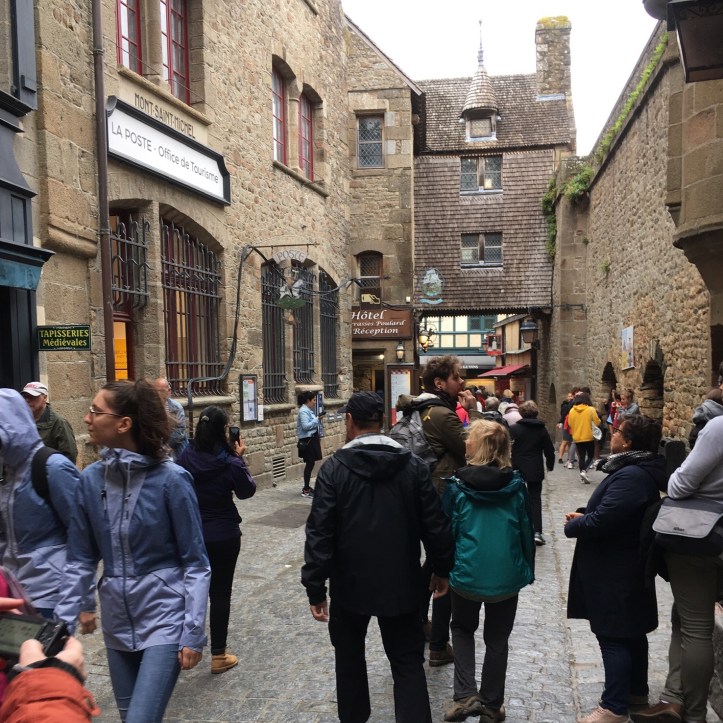
After lunch we met our guide, Virginie who told us why and how the abbey was built.
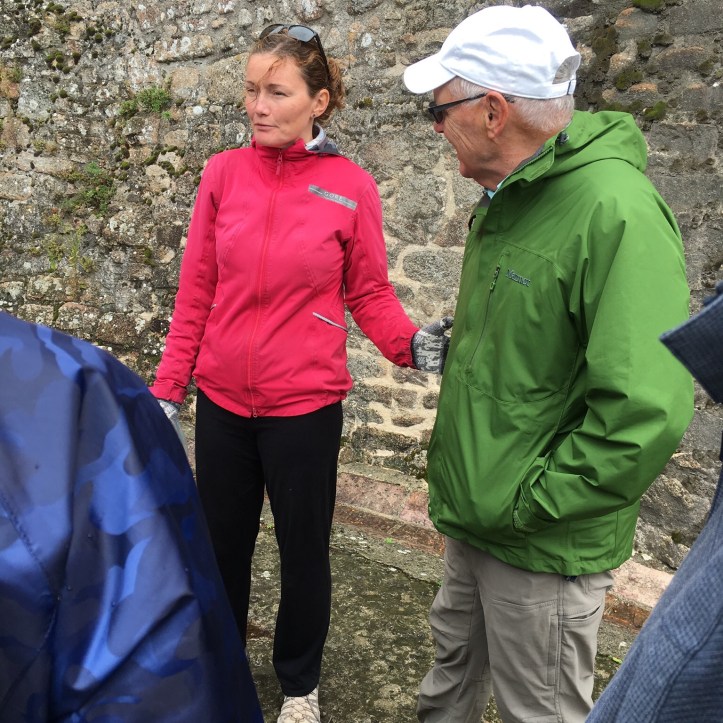
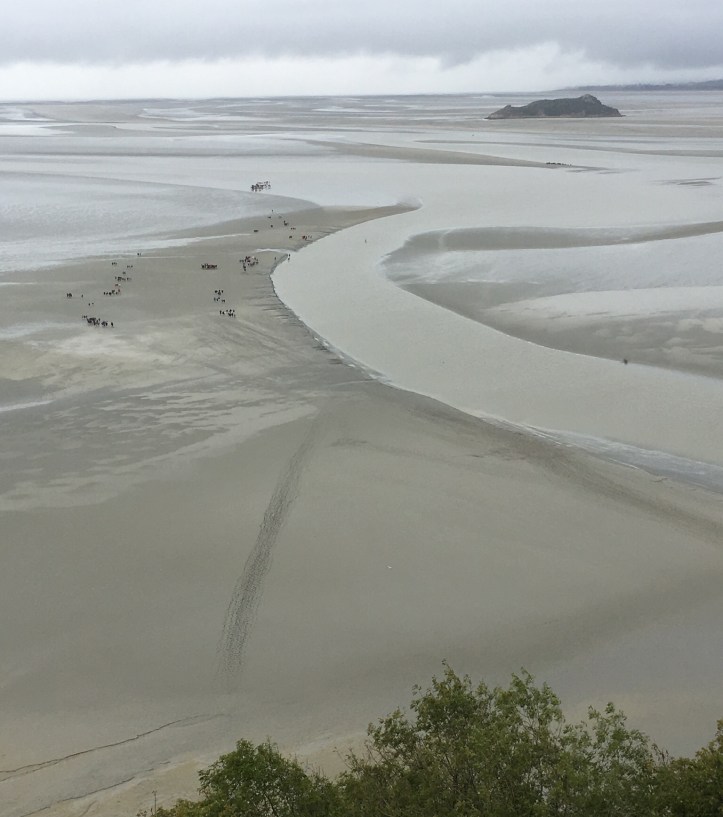
She said that when Mont Saint-Michel was just a big rock island it was called Mont Tombe and in 708 the archangel Michael appeared to Aubert, the Bishop of Avranches, and told him to build a church on this rock. So he did build a sanctuary in 709. The first pilgrims started venturing to the abbey in the 800s. They had to cross more than four miles of water and/or sand to reach the island. If you made it there, you were considered a good Christian and if you didn’t, you weren’t. There were several obstacles and the main one was the tides. In those days people didn’t understand changes in tide, and starting to walk there at the wrong time could result in being in deep water. Literally. Today the difference in high and low tide averages about 46 feet, some of the most dramatic in Europe. Back then, it was probably even more dramatic. Second, even when walking there at low tide, quicksand was an issue.
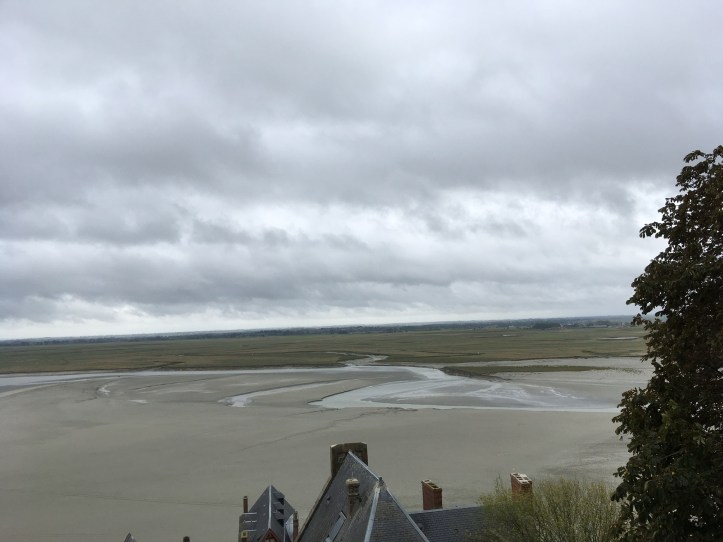
When people became worried about the apocalypse of the year 1000, many more pilgrims came and brought financial contributions with them. As a result, the abbey grew in size which it needed to do to accommodate the visitors.
We began climbing towards the top and took some photos from outside on our way up.
We stopped to take another look at the surrounding area and this time we saw tiny people walking across the sand. I think most of these were high school students on a field trip, perhaps replicating the journey of some of the early pilgrims.
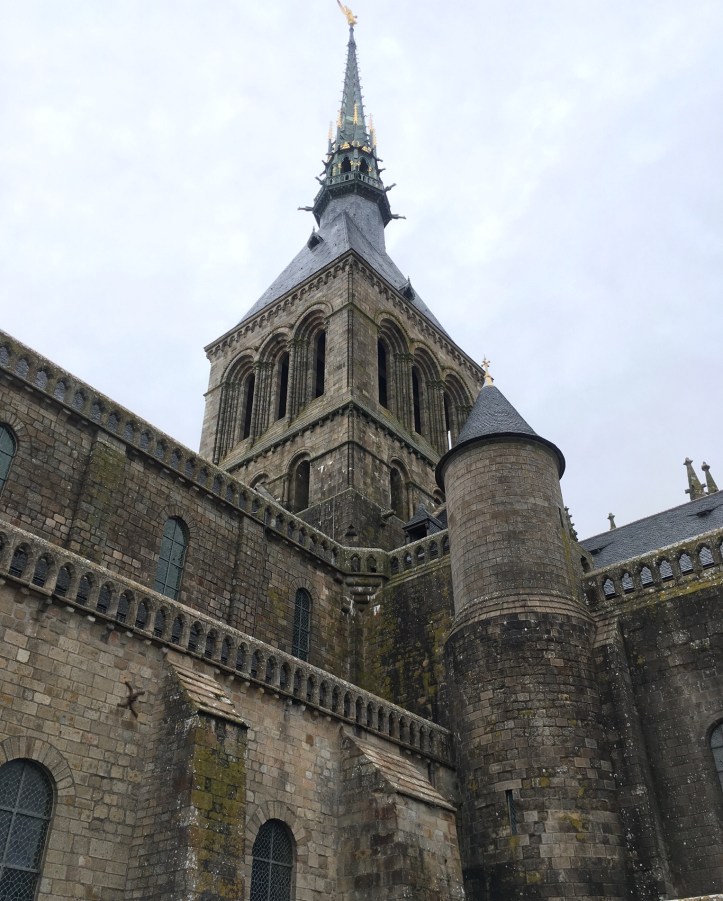
 Another look at the outside of the monastery from a balcony.
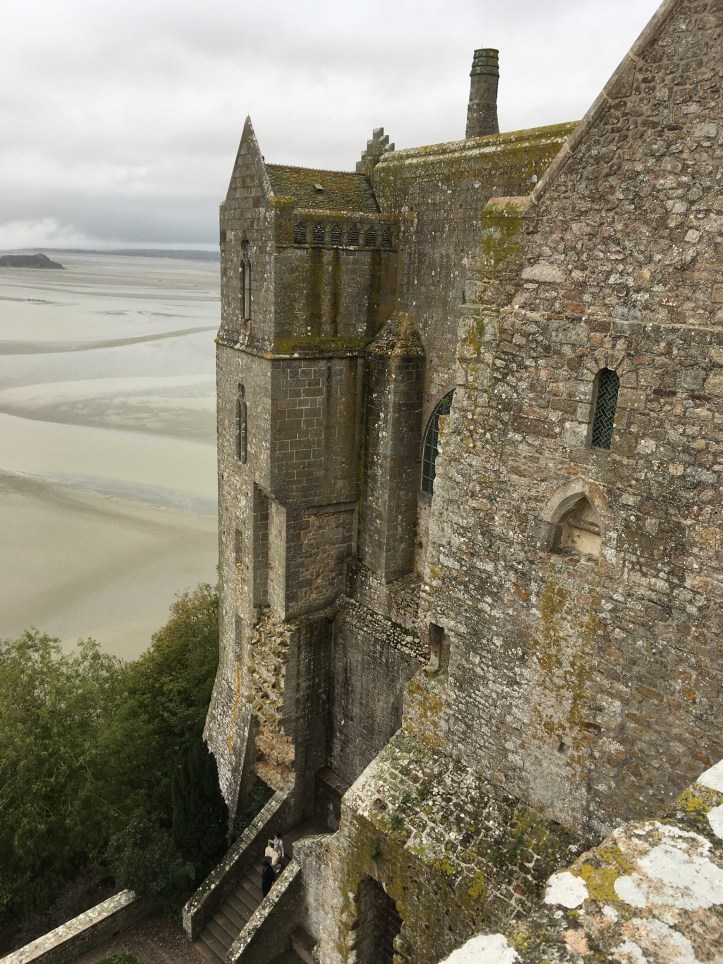
Looking just below the balcony.
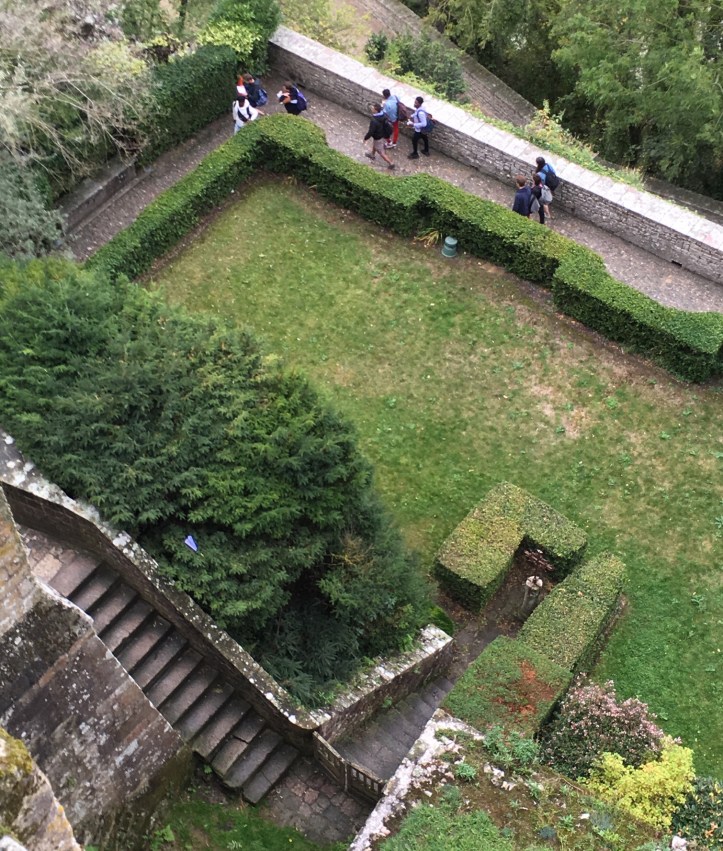
After climbing about a thousand more steps we arrived in the nave of the church.
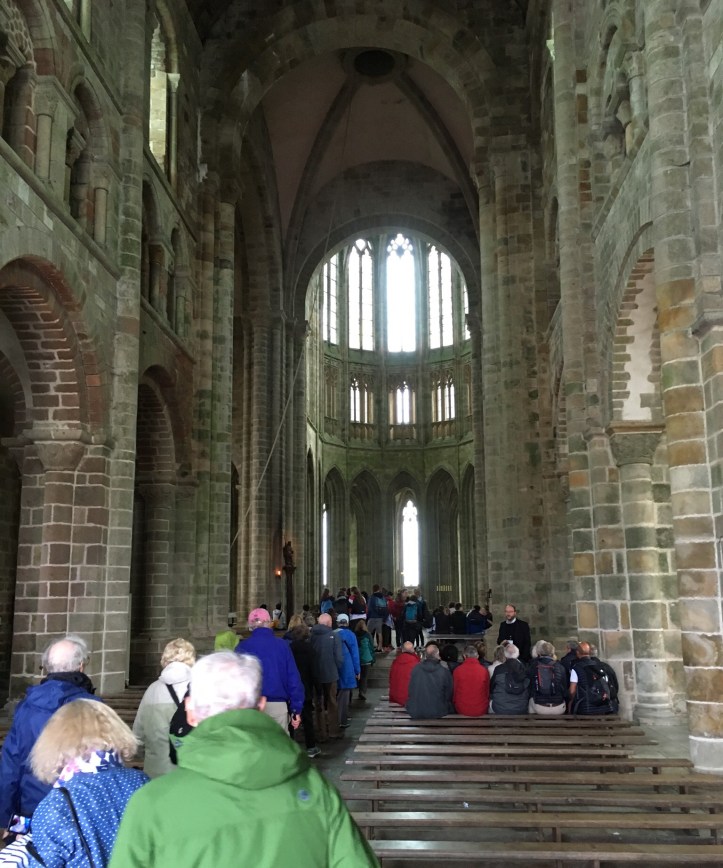
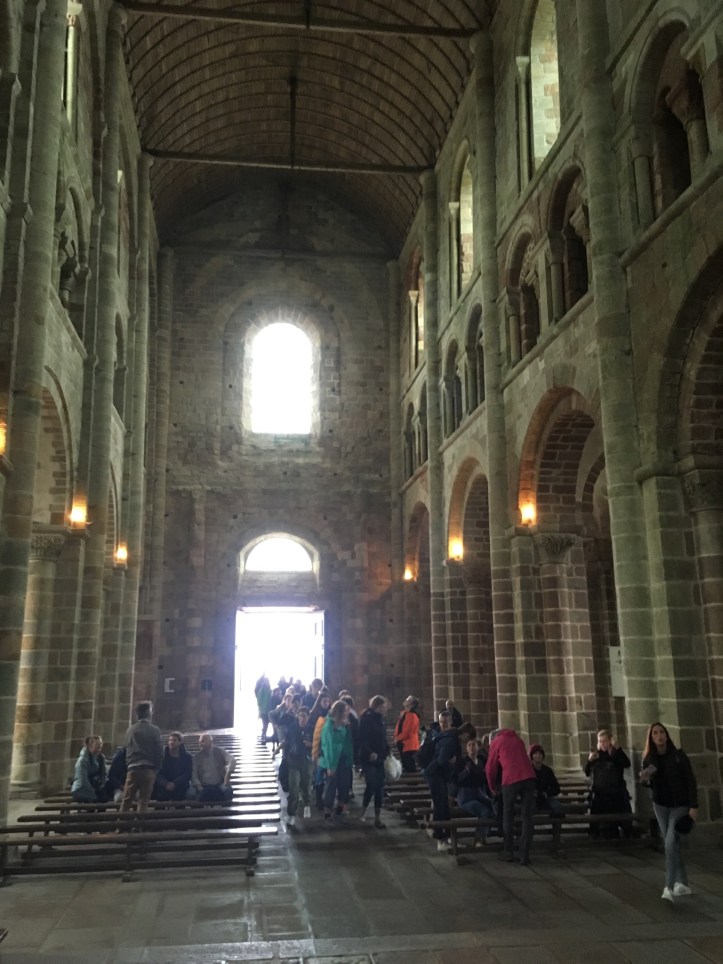
Virginie explained that the Romanesque church of the abbey was built in the 11th century. The majority of the stones were cut from rock on the nearby Chausey Island. The photo below reflects the style of the early Abbey church. The whole structure is fairly plain, making it appear to be as much a fortress as a monastery. And it did play that role numerous times including during the Hundred Year’s War.
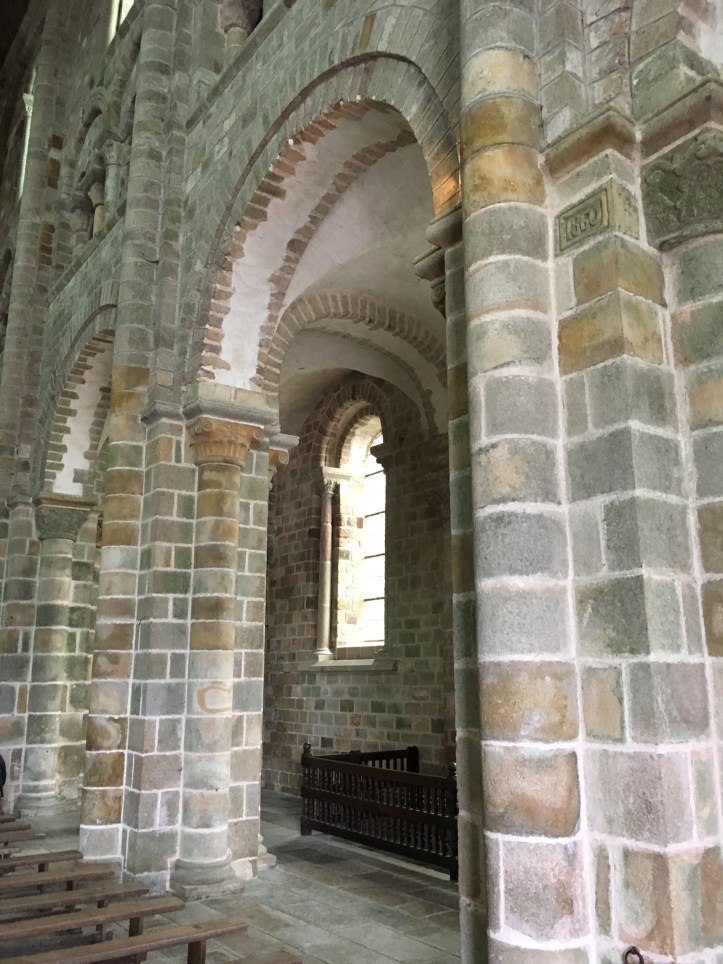
The transept crossing was placed on the top of the mount. Thus, crypts, the great halls, and rooms for housing and storage, had to be built underneath to support the church. The choir section of the church partially collapsed due to a fire and had to be rebuilt 400 years later and that section was then done in gothic style.

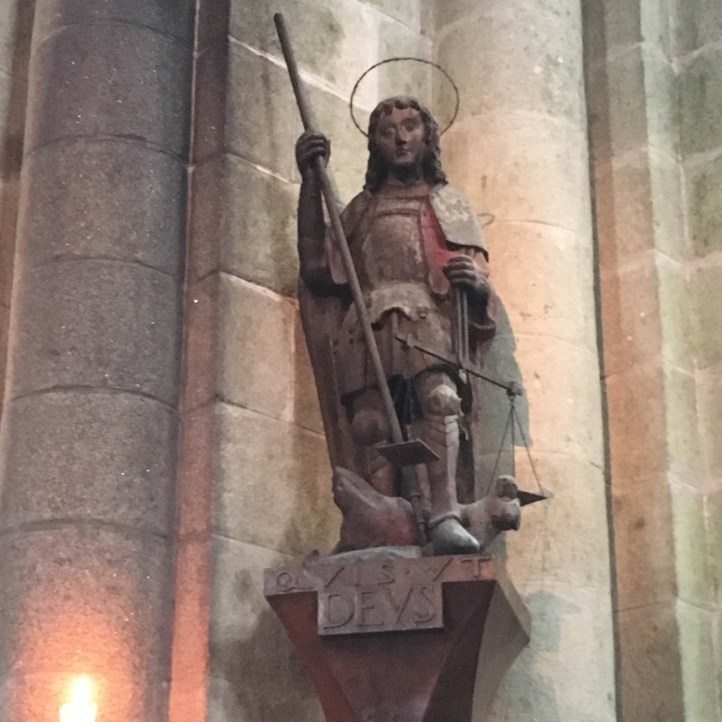
We looked at a statue of Saint Michael, who is usually depicted as a warrior, that showed him with a dragon head at his feet representing the slaying of Satan. He also held scales with which to weigh people’s souls. I think they had to be lighter than a feather to make it into heaven.
Another view of the church looking toward the entrance.
Then we walked outside to the cloister.
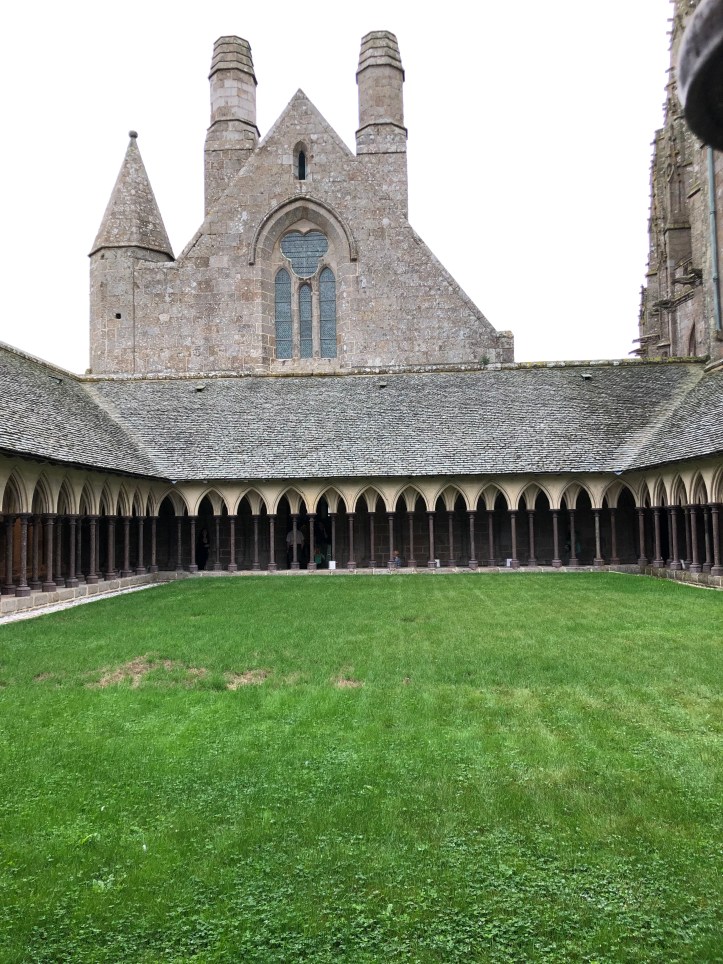
Virginie told us originally there was no garden here because the underlying structure could not support the water needed to keep it alive. Instead, flowers were carved along the walkways. Now at least there is grass.
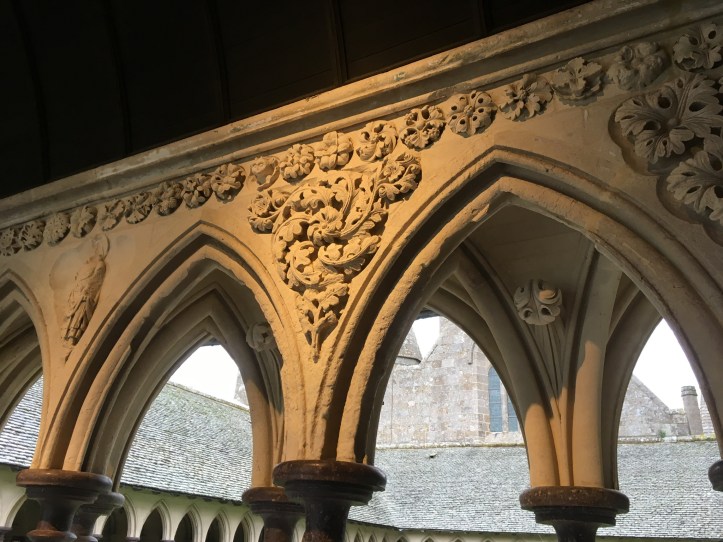
Another look.

We began heading down to the next level and stopped briefly at this sculpture of Michael and Aubere. There was a bench along the wall which a few of us took advantage of.
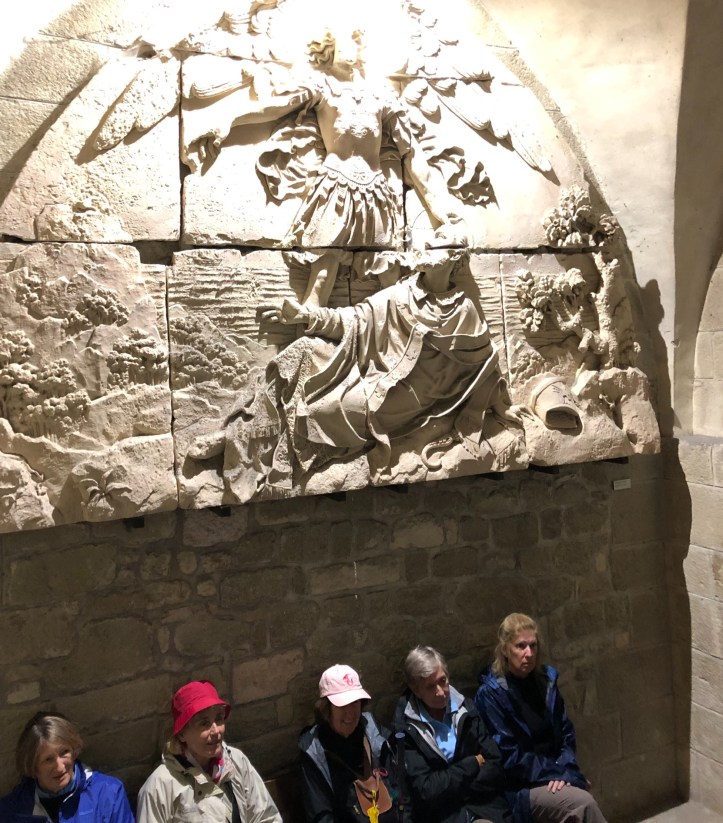
There are about 50 inhabitants on the island now including 12 nuns and 8 monks. We saw one monk slipping into a side door. Must be difficult here surrounded by tourists.
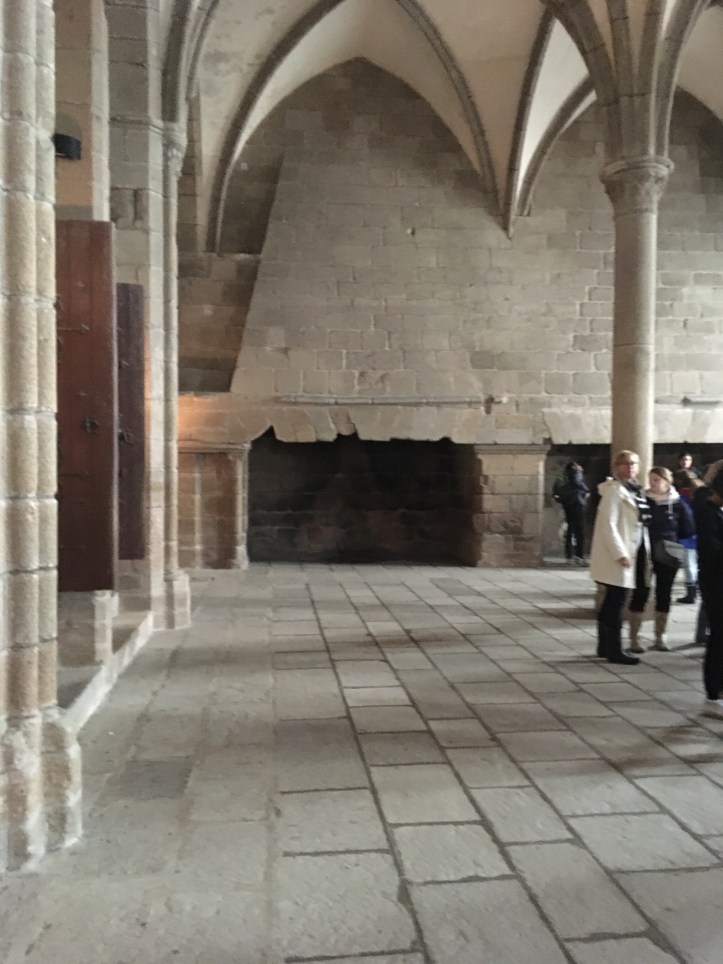
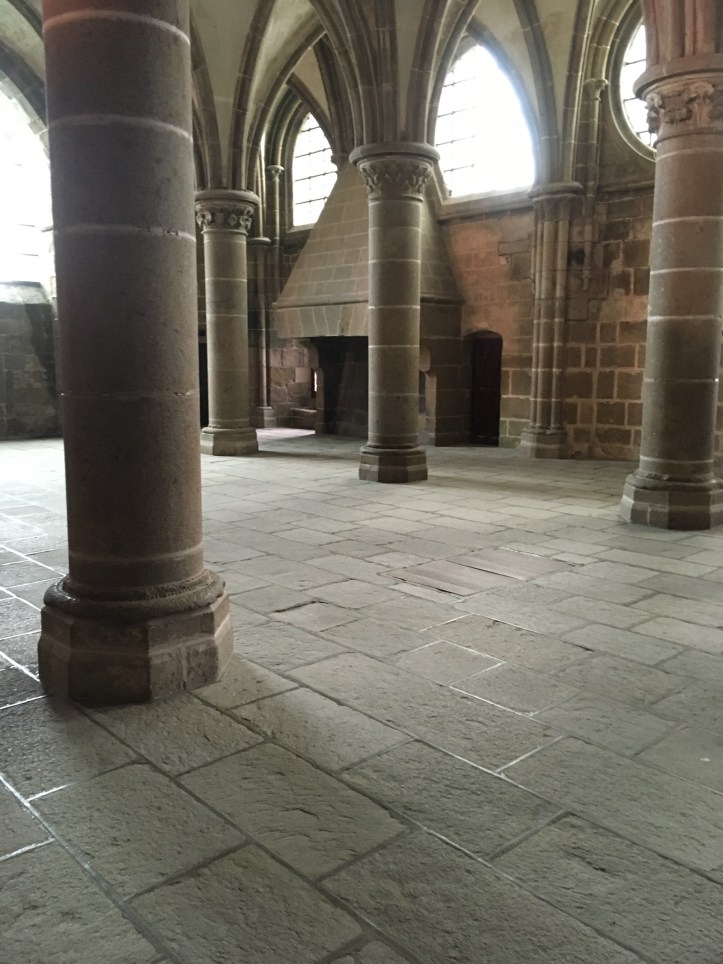
We stopped to look at a room used for eating in the past. There was no fireplace there because four-legged animals were not to be eaten or therefore cooked. The Benedictine monks who were here then, ate in silence with one monk praying in a monotone voice while the others were eating. Virginie gave us a good example of how that sounded. She also said there were a maximum of 60 monks in the past and they all tended to be the third son of their family. She also noted that during the Middle Ages, monks, noblemen, and the poor, ate on different floors and did not mix. The photo below shows where the noblemen ate and it has two fireplaces.
Virginie told us how the heavy stones used to build the monastery were brought into the building. This wheel was used to drive a pulley system to bring the rocks up, and it was done by six men walking inside the wheel to turn it, hamster-like.
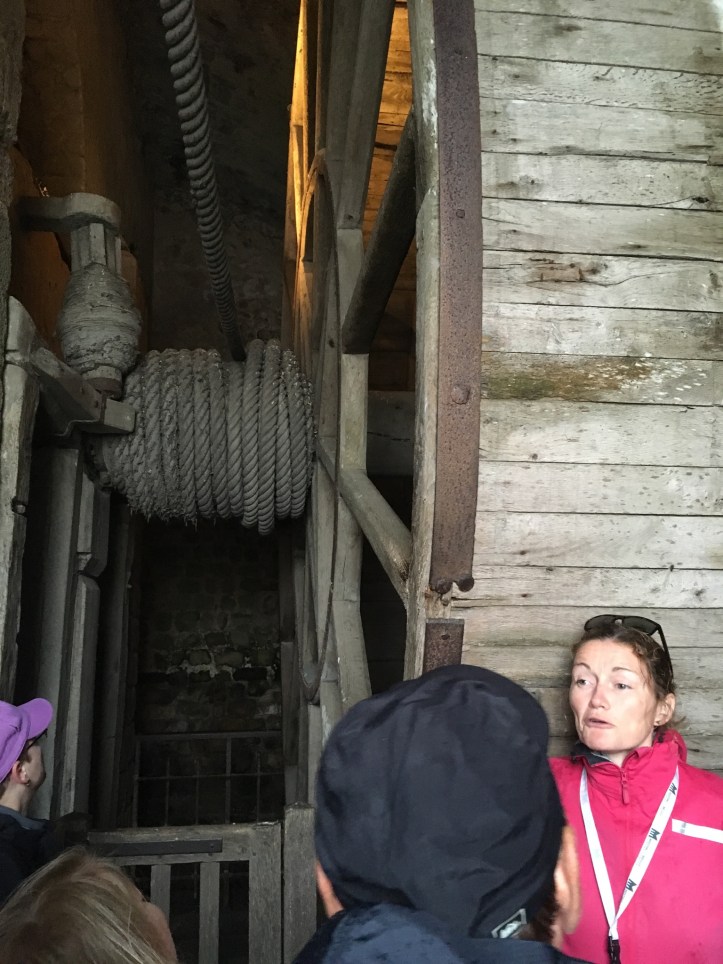
Sleds of this type were what was used to lift the stones. Six men on the wheel could leverage two tons of rocks.
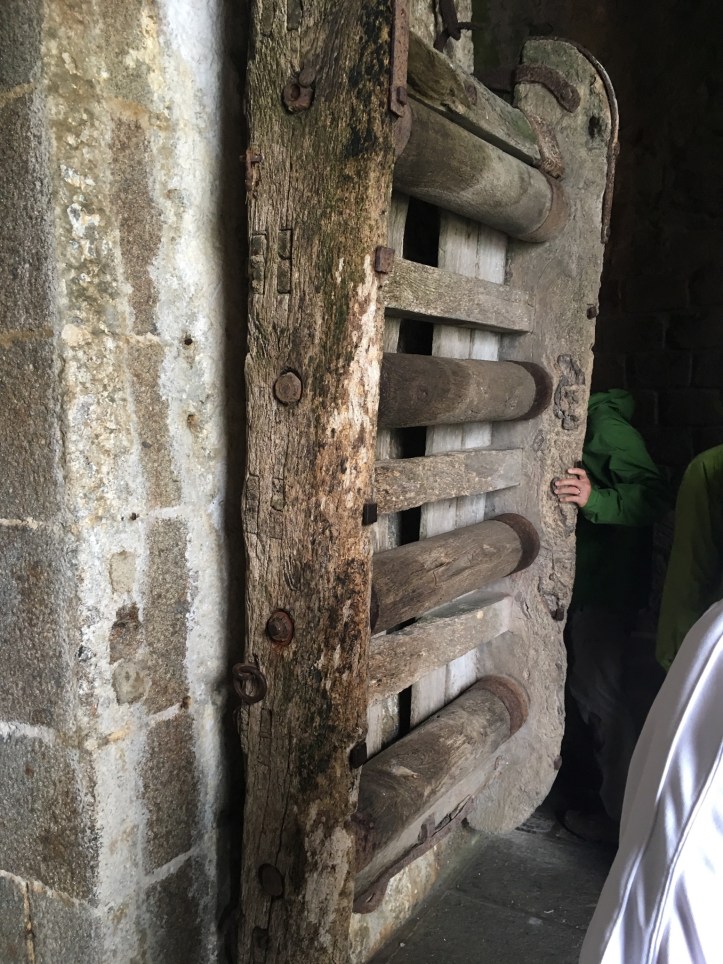 Virginie explained that this area was where the monks wrote their manuscripts and they were prolific. It has fireplaces that were used for heat as well as windows for light and was therefore a desirable area in which to spend time.
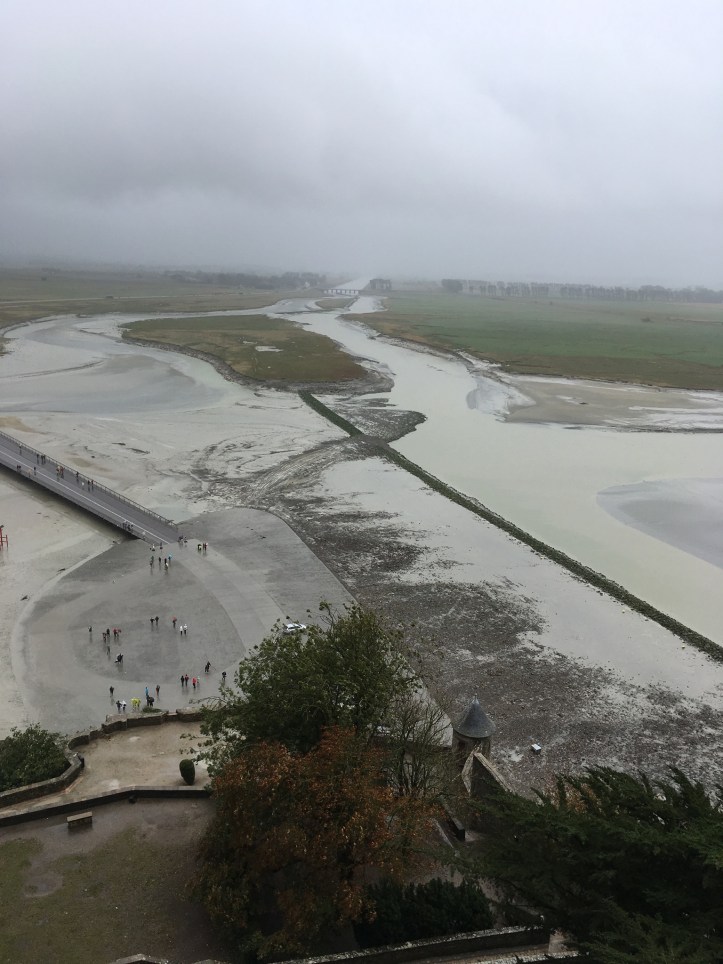
We went back outside to take another look down. The Couesnon River can be seen below heading inland and historically formed the border between Normandy and Brittany with the Mont being in Normandy.
Then we began to get back to ground level first walking down these steps.
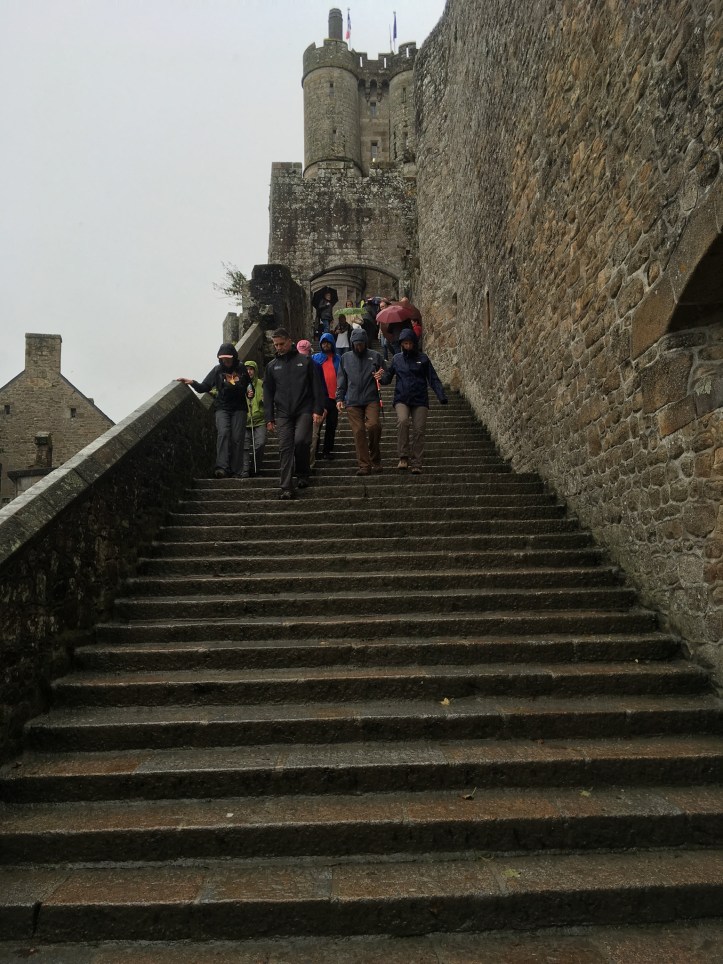
And then these steps.
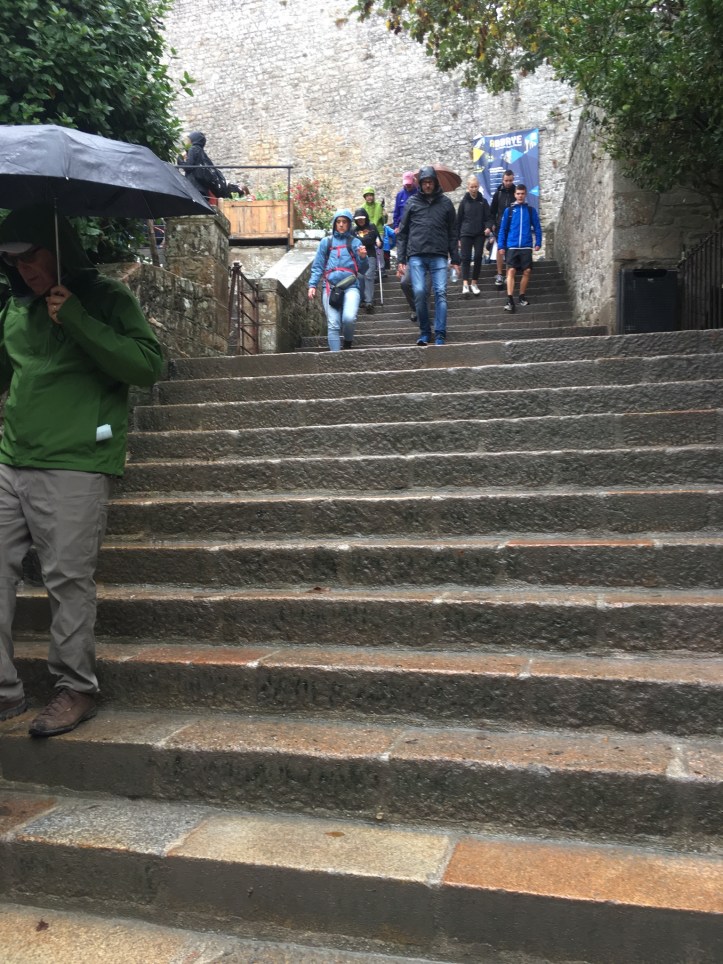
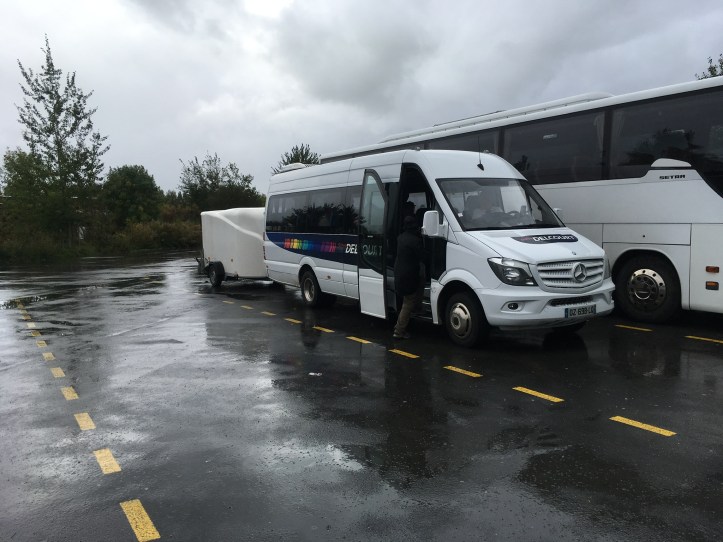
It had been raining and that made some of the steps slick, but we made it to our small van and went to our hotel for the night in Saint-Malo.
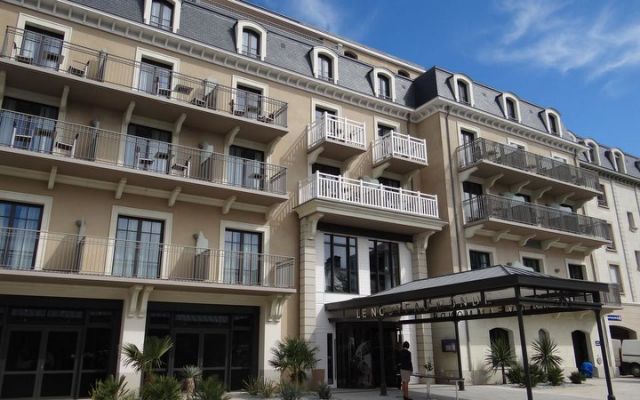
For the next two nights we were at the Hotel Le Nouveau Monde, on the Bay of Saint-Malo.
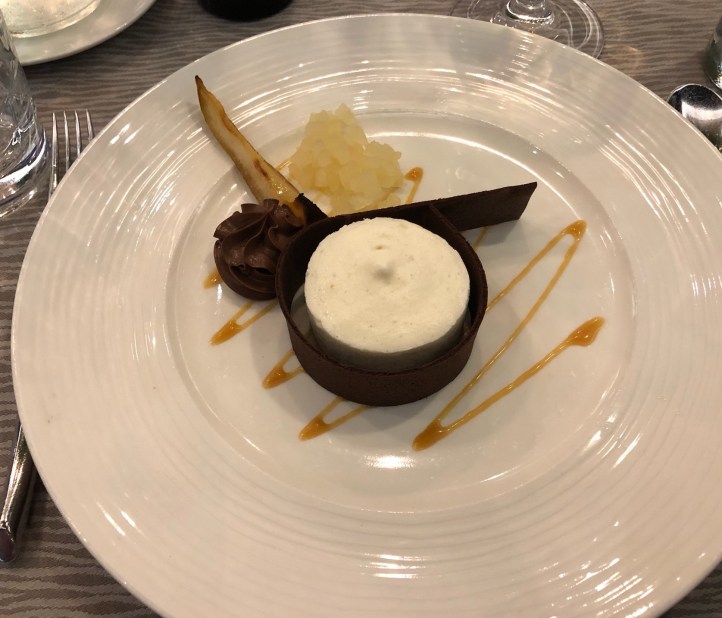
Dinner that night was at the hotel with another attractive dessert. I’m sure the main course was some type of seafood, either hake, skate, sole, oysters, mussels, cockles, etc. And I do like seafood but some of it doesn’t like me. Anyway, another great day along the coast.
 Adventures with Sheila