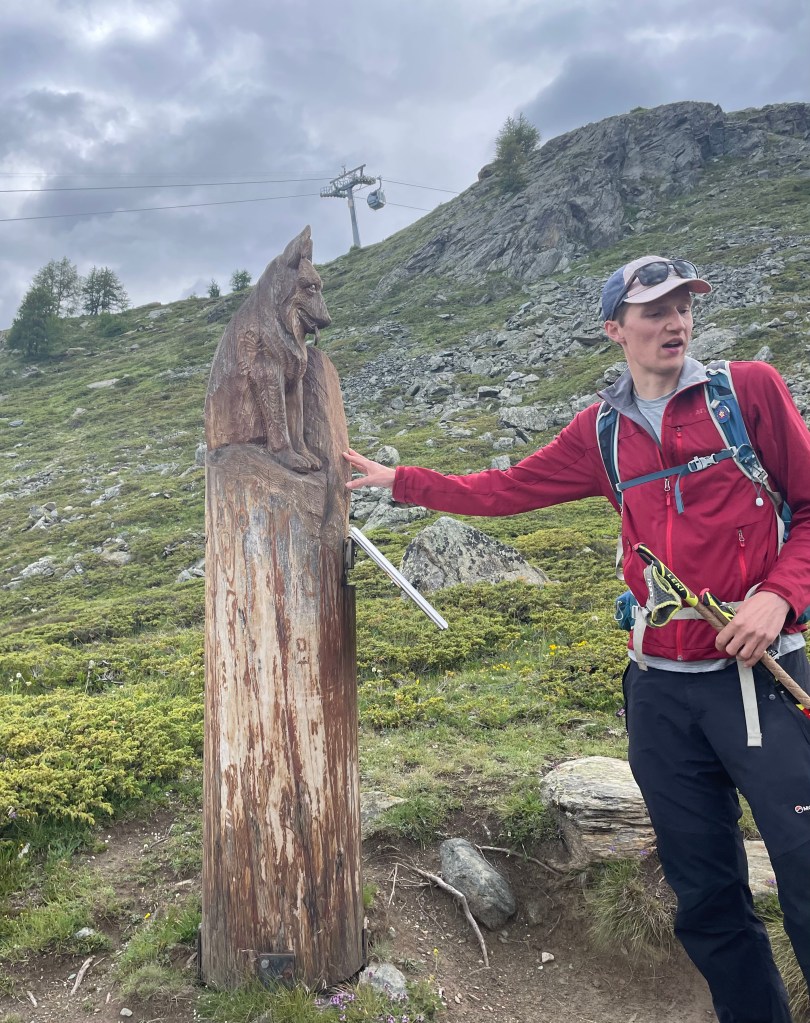
Saturday: Our final full day starts with a funicular ride toward Sunnegga and hiking on the Marmot Trail with a wolf totem to mark the trailhead.
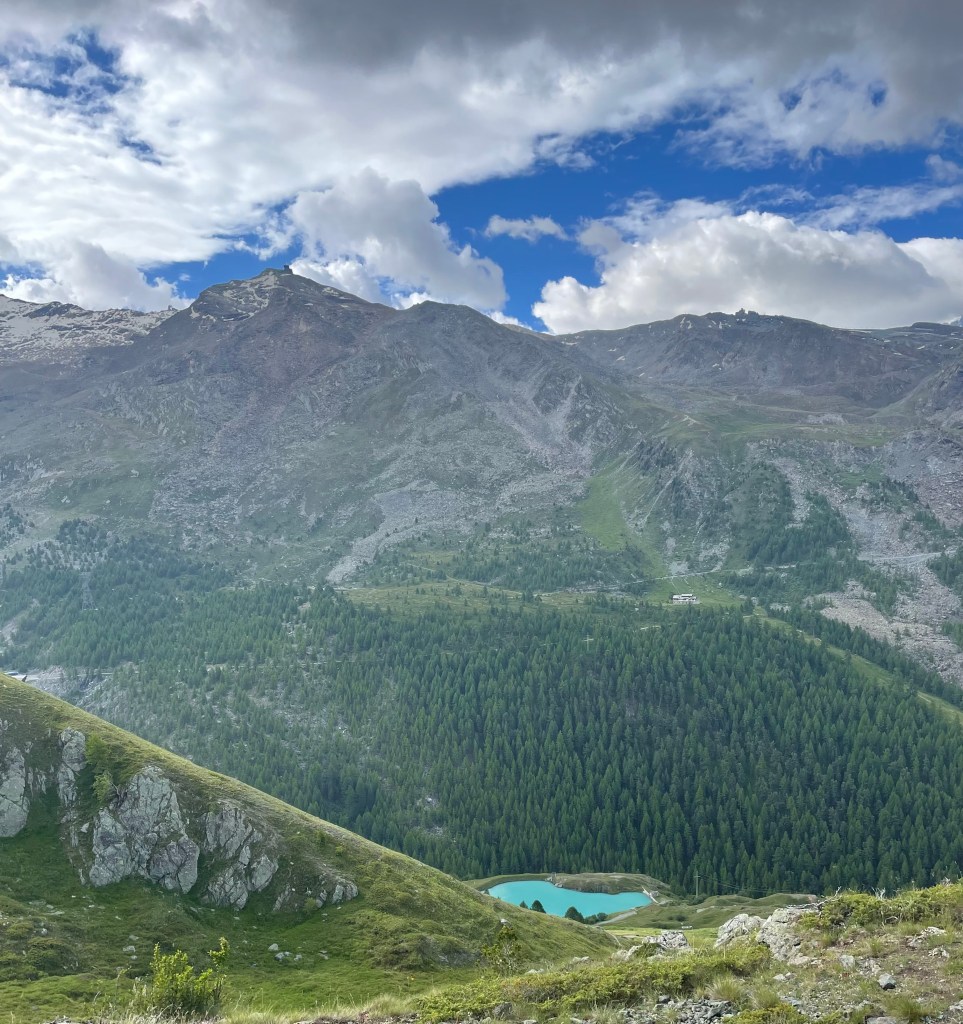
This hike was in the Mattertal Valley and included a six-mile circuit of five lakes including the tarn below.
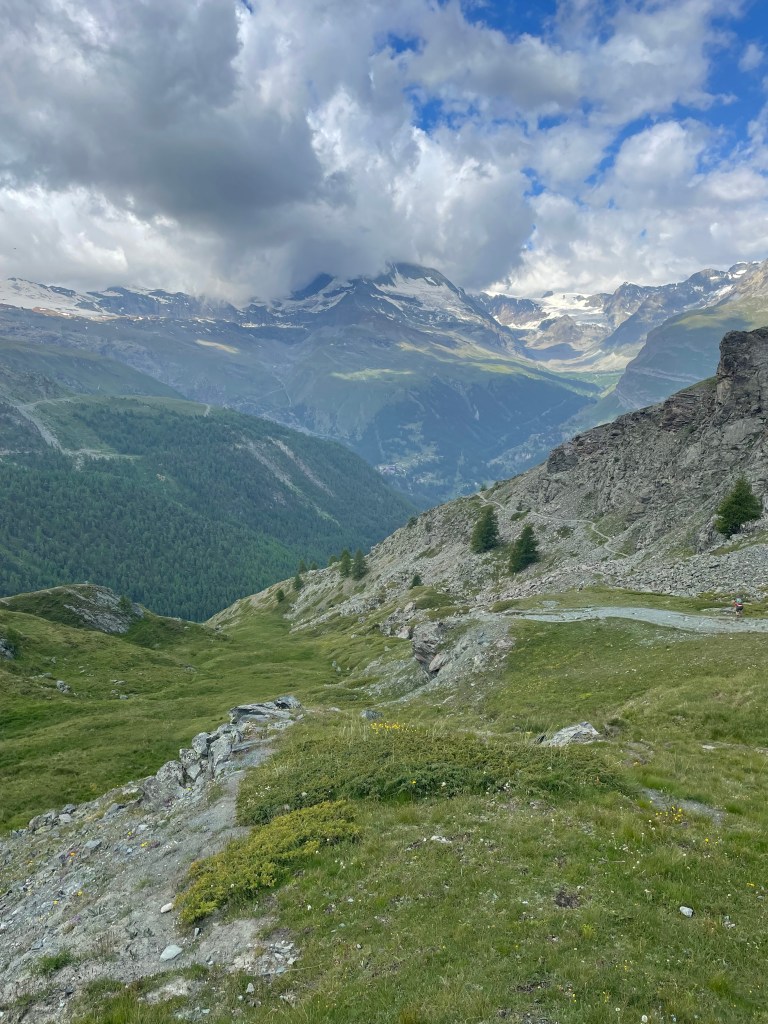
Looking across the valley.
Edelweiss was seen frequently along the trail and lots of marmots were also seen and heard today.

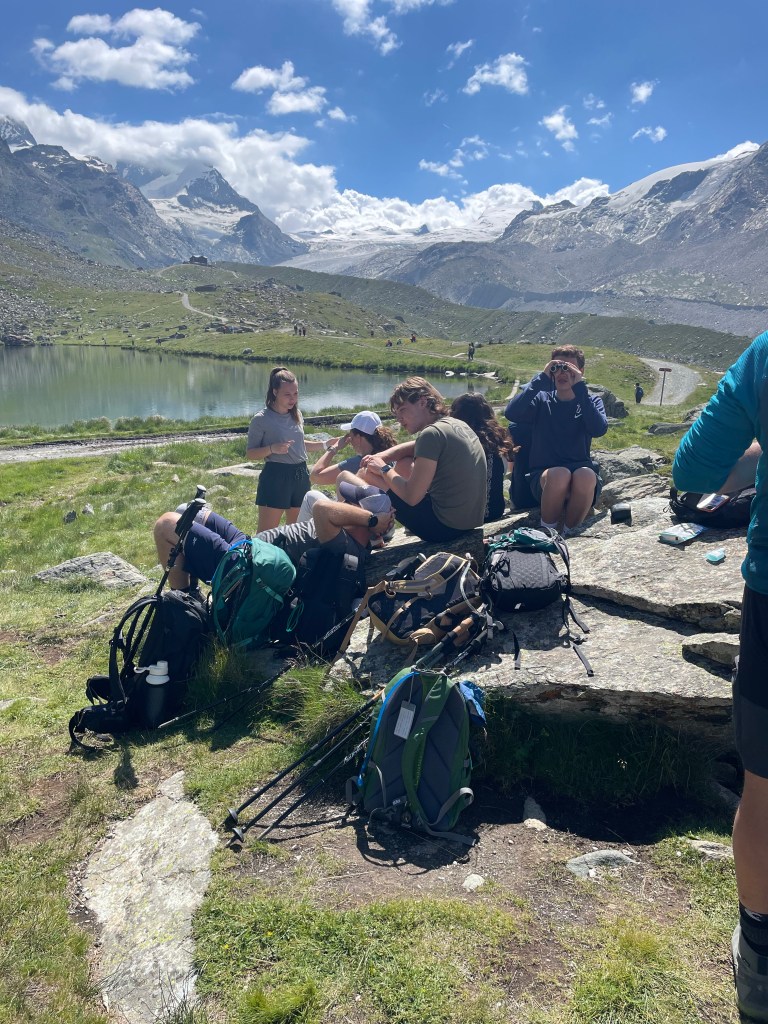
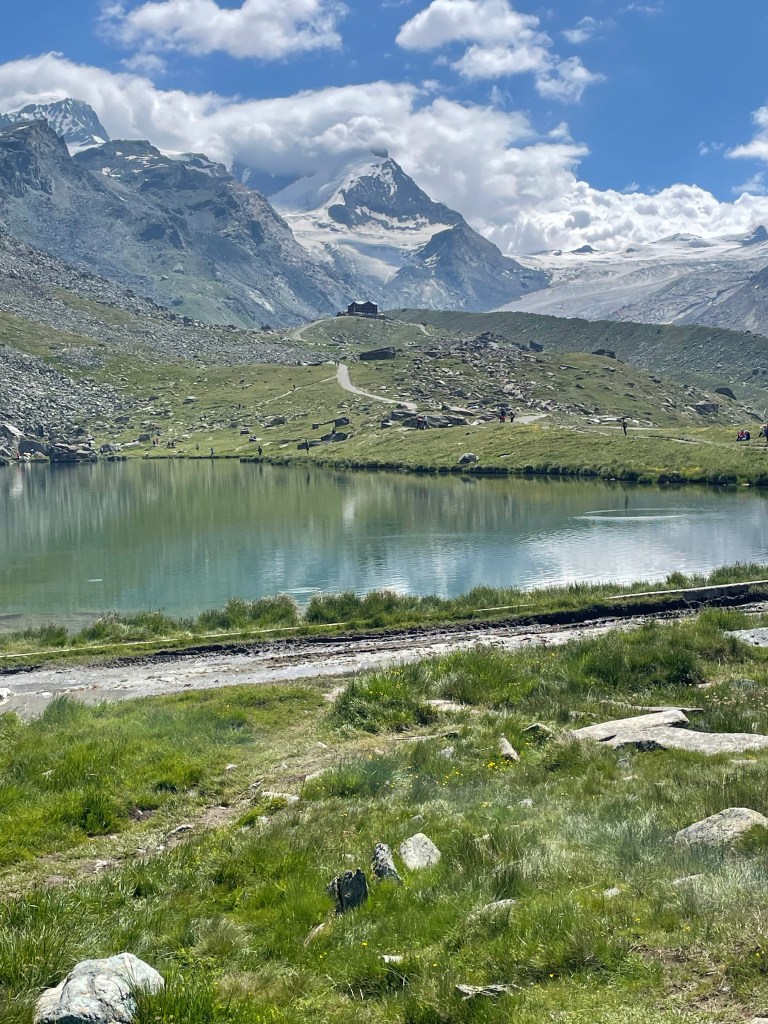
A rest stop by one of the lakes. In the distance on the hill is the Fluhalp Hotel and our group is headed there.
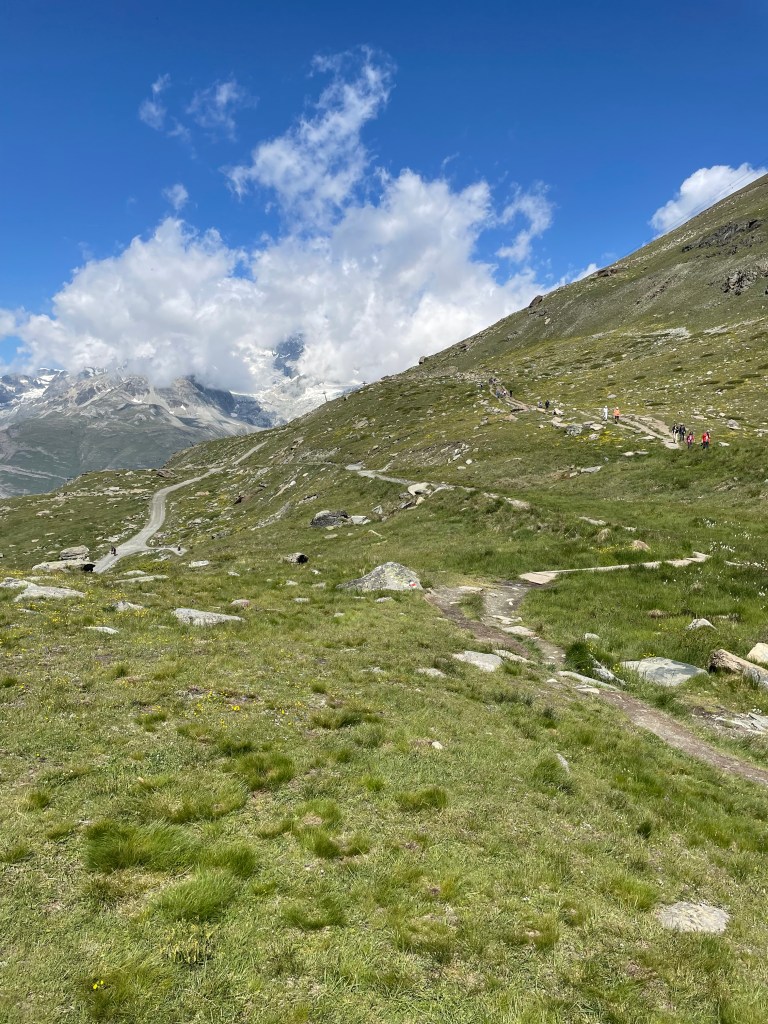
On the trail to the hotel with other hikers in the distance.
A clearer view of the Matterhorn behind the hotel.
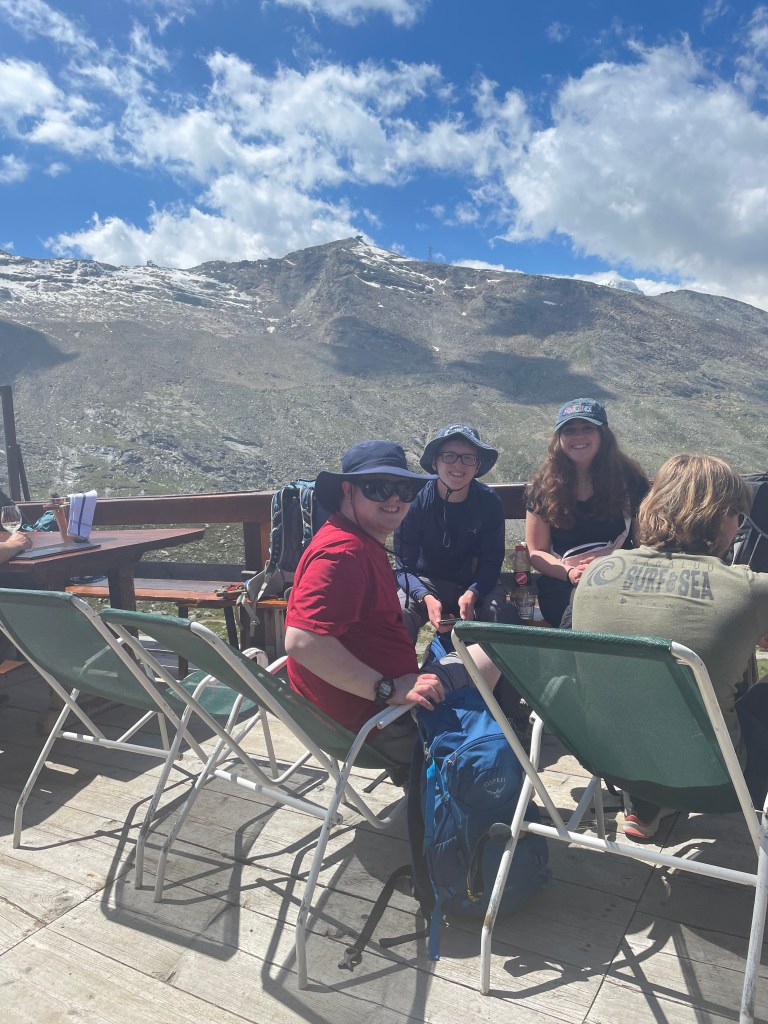
After arriving at the hotel, the group had a break for cokes and Fanta, one of their favorite drinks in Switzerland.
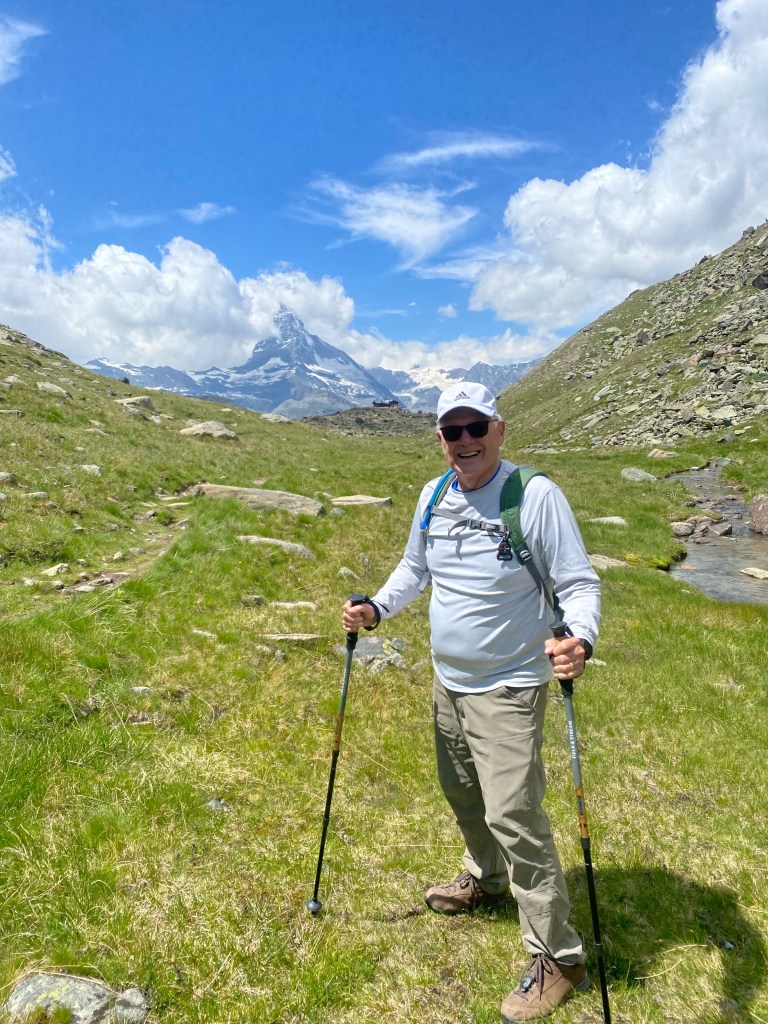
Continuing on the trail and the Matterhorn is still fairly clear.
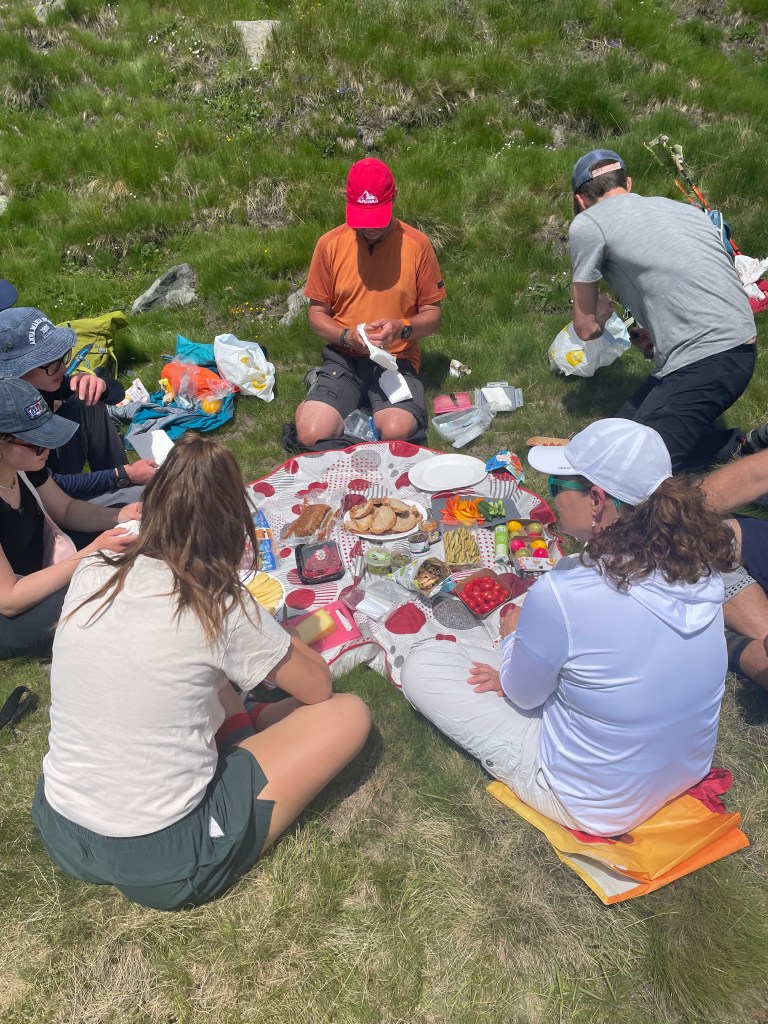
Another picnic lunch. The kids helped carry some of the items for lunch mainly to keep things from being squashed and helped get the lunch ready to eat. Healthy choices.
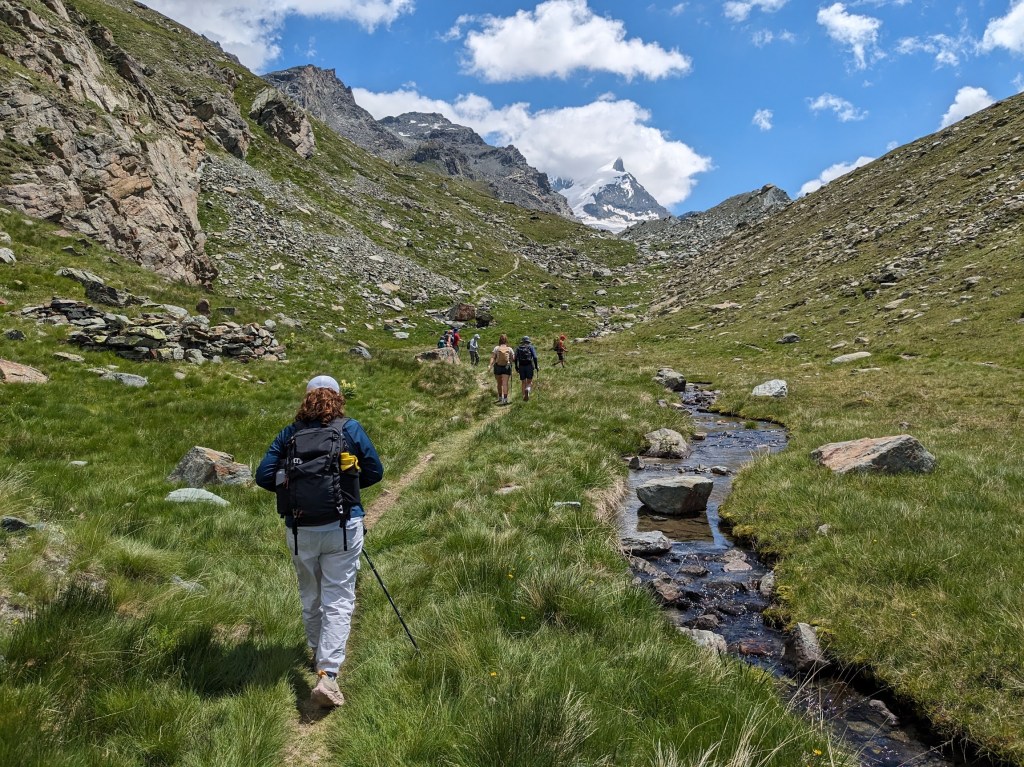
Heading back on the trail. Ross said this hike reminded him of the Pontresina area because of the little streams and balcony trails.
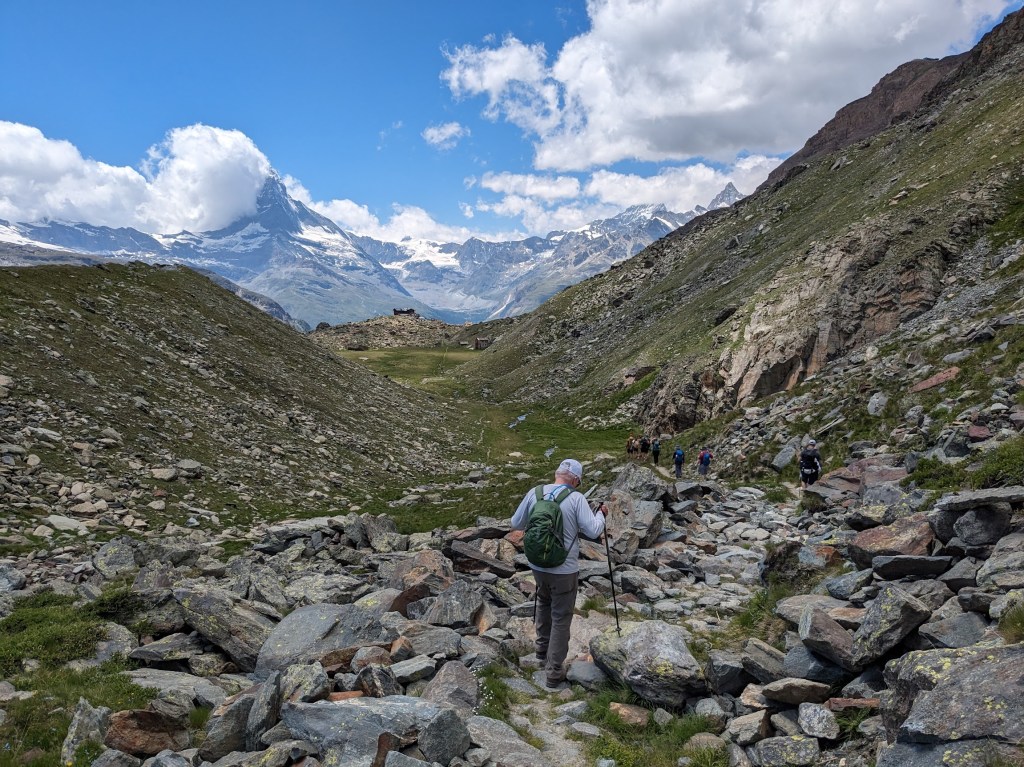
Ross, picking his way though a boulder field on the trail. The hike finished back at the funicular for a return to Zermatt.
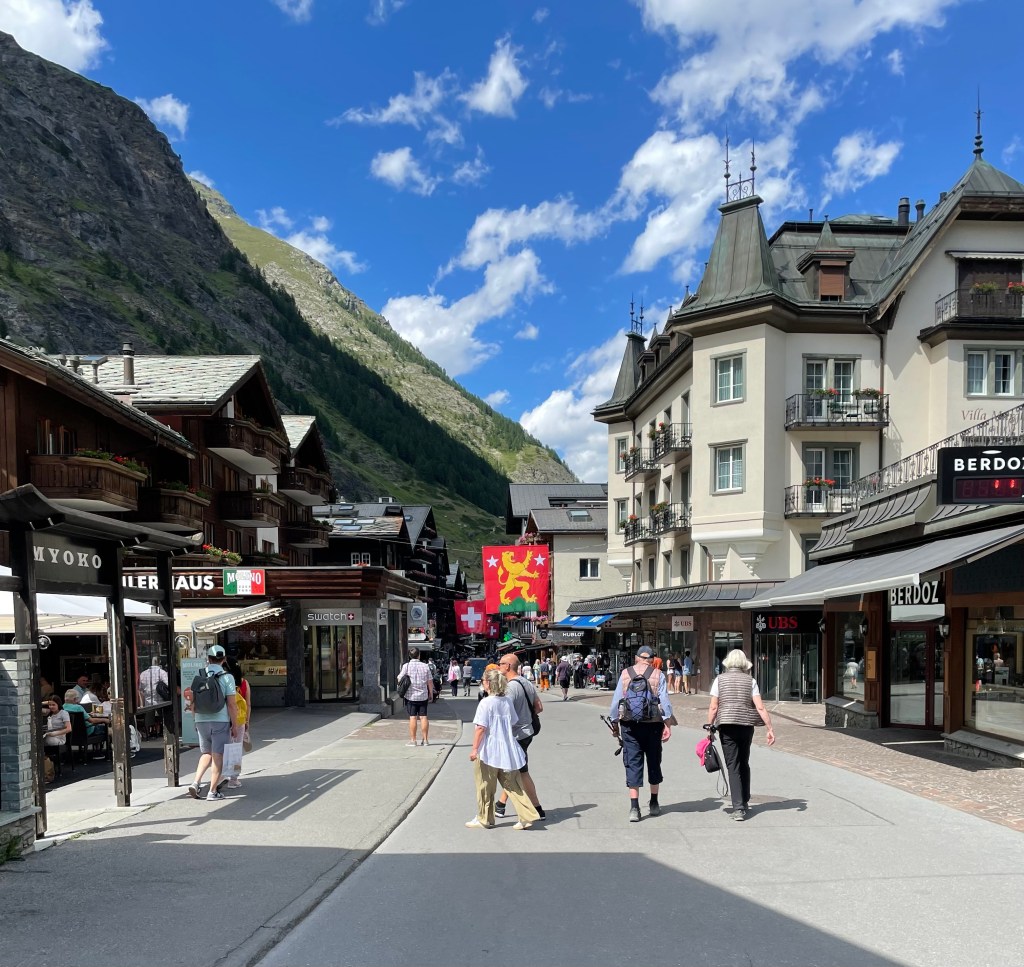
My day included a taxi ride to the train station followed by a walk along the Bahnhofstrasse, the Main Street of Zermatt, to pick up a few souvenirs and a pair of reading glasses.
My main target, however, was the Matterhorn Museum.
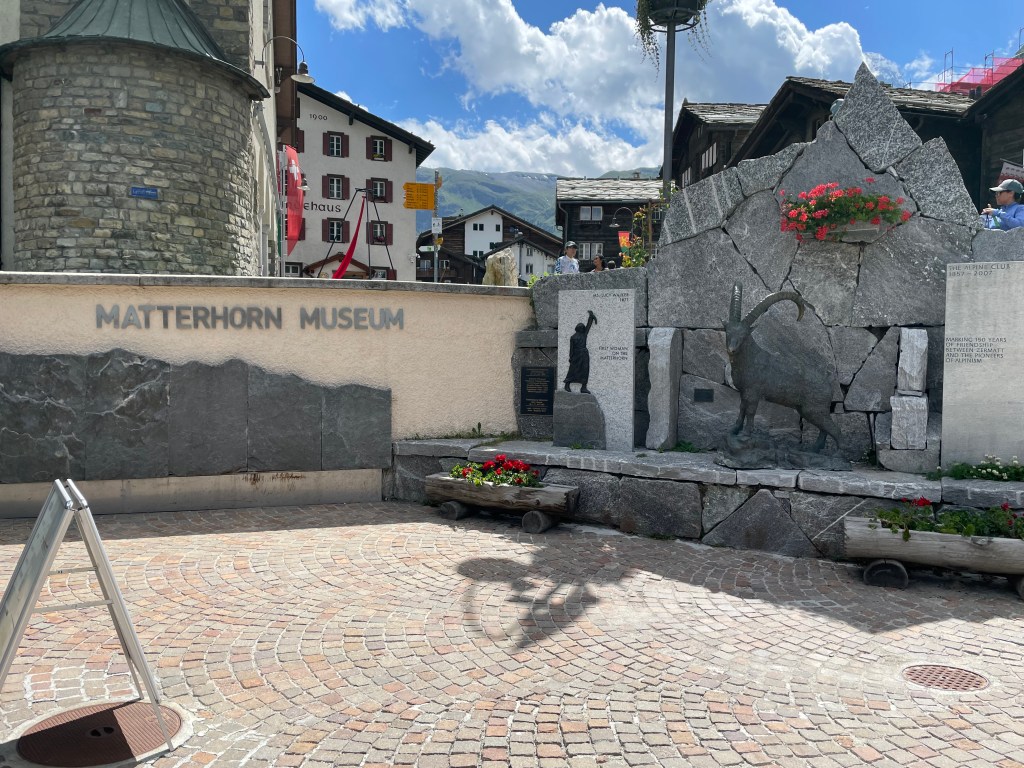
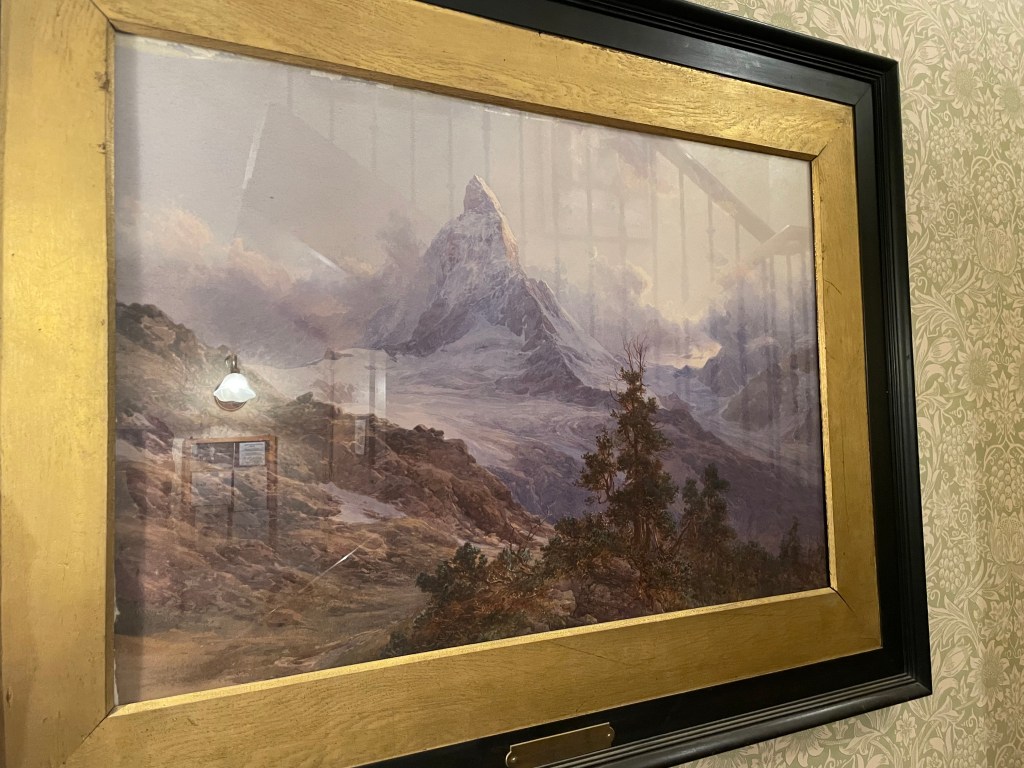
I had unfinished business at the museum. We visited there twenty years ago but arrived at exactly 5 pm when it was closing. I wanted to see this painting and had just discovered that the original was there, thus, a last minute rush to the museum before we had to leave town the next day. No luck, no admittance.
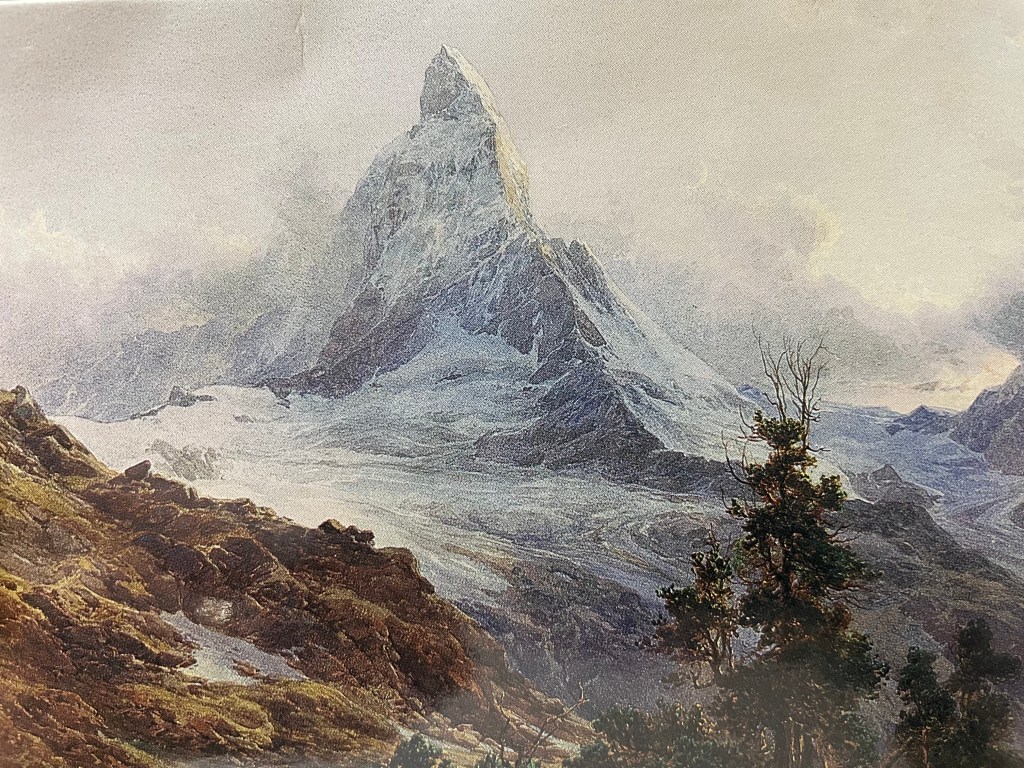
So this time I checked times carefully; the museum was open from 3pm to 6pm daily. So I finally got there and saw this Edward T. Compton painting of the Matterhorn. Compton was born in London in 1849, raised in Germany, became a climber, was a member of the Alpine Club, and was inspired to paint mountains by a family trip to the Jungfrau Region when he was nineteen. He completed this painting n 1879.
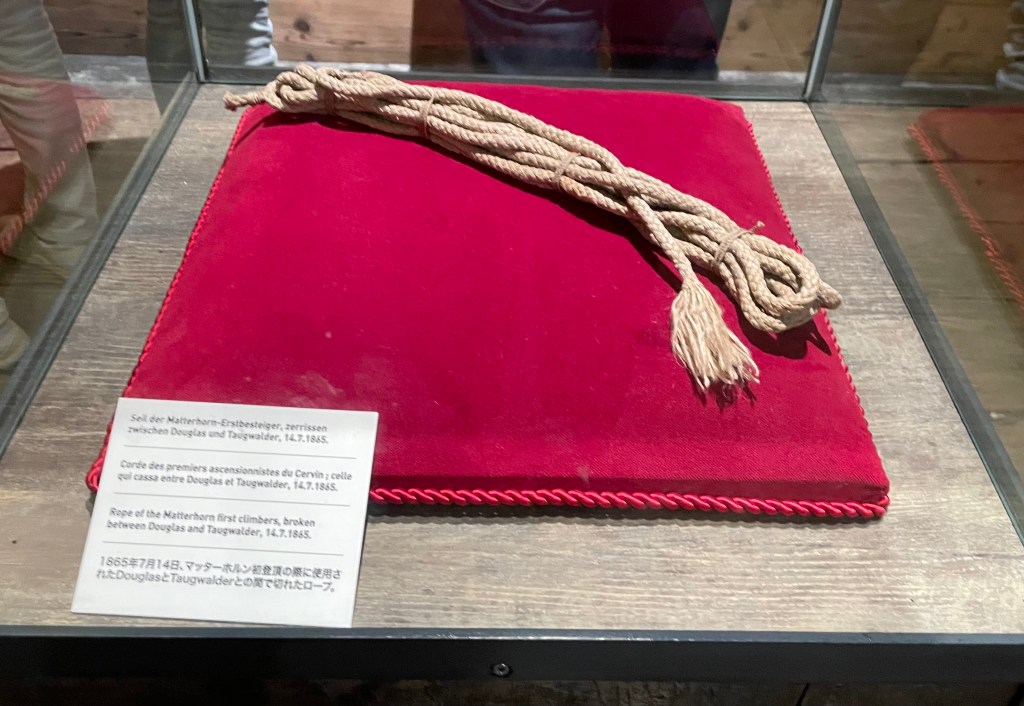
The museum is small but provides history of the area and one room is focused on the first successful climb to the summit in 1865. Seven men successfully summited but four were killed on the descent. Connected by rope for the descent, the second man from the bottom slipped and fell and pulled three others down with him. The top three were spared because the rope broke. There was controversary at the time as to whether the rope broke or one of the survivors cut it. The survivors included Edward Whymper of England who had tried the climb several times previously, and two guides from Chamonix, Peter Taugwalder and his son of the same name. An official inquiry found no evidence that the rope had been cut.
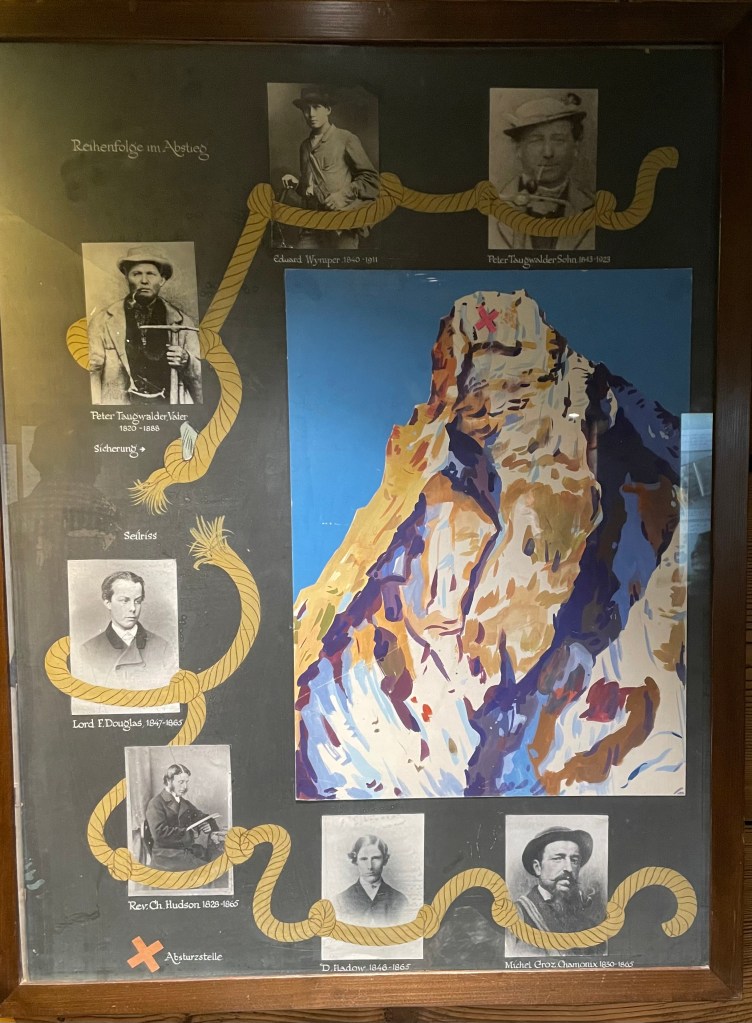
The original rope involved is on display at the museum. The rope is very thin; the circumference was about equal to that of my little finger.
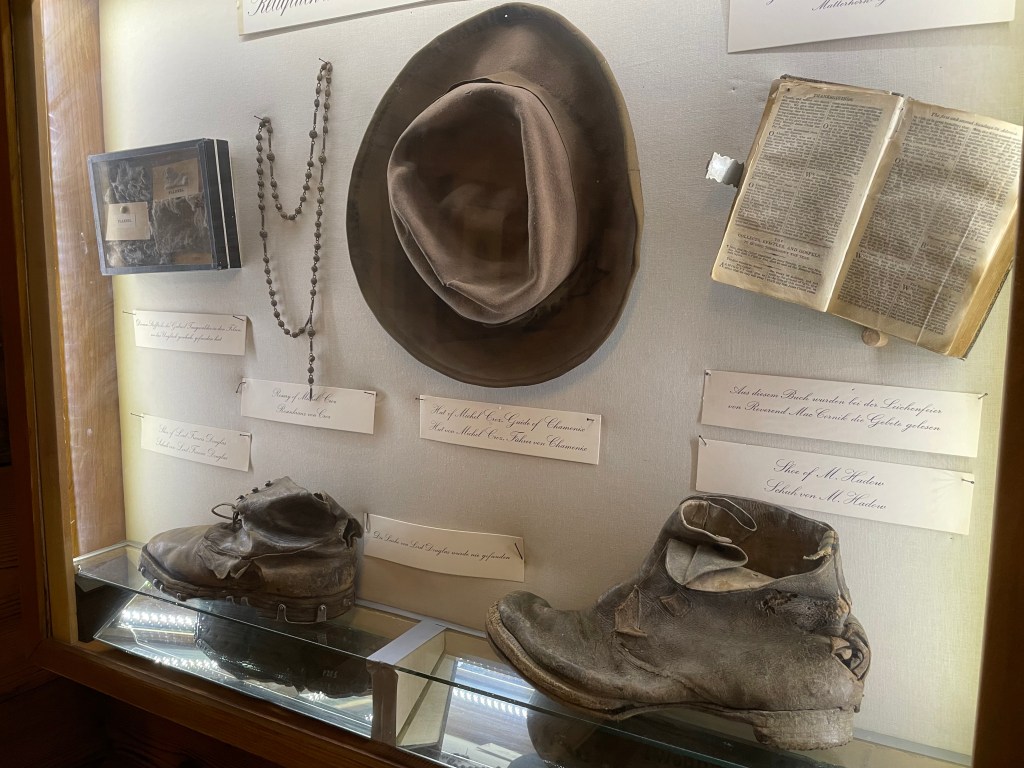
Clothing items worn by the climbers was also on display.
Dinner that night was a more cheerful event; it was at Restaurant Julen, owned by the Julen family who had the sheep on the mountainside. This family owns several properties in Zermatt. Several of our youthful eaters tried lamb for the first time.
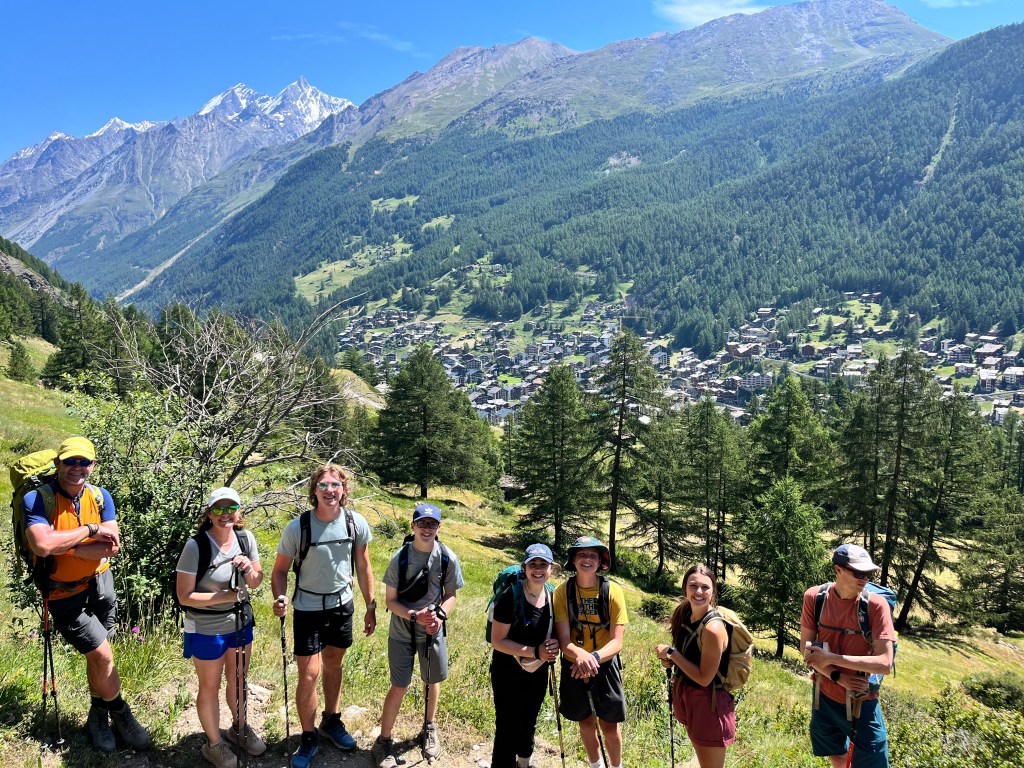
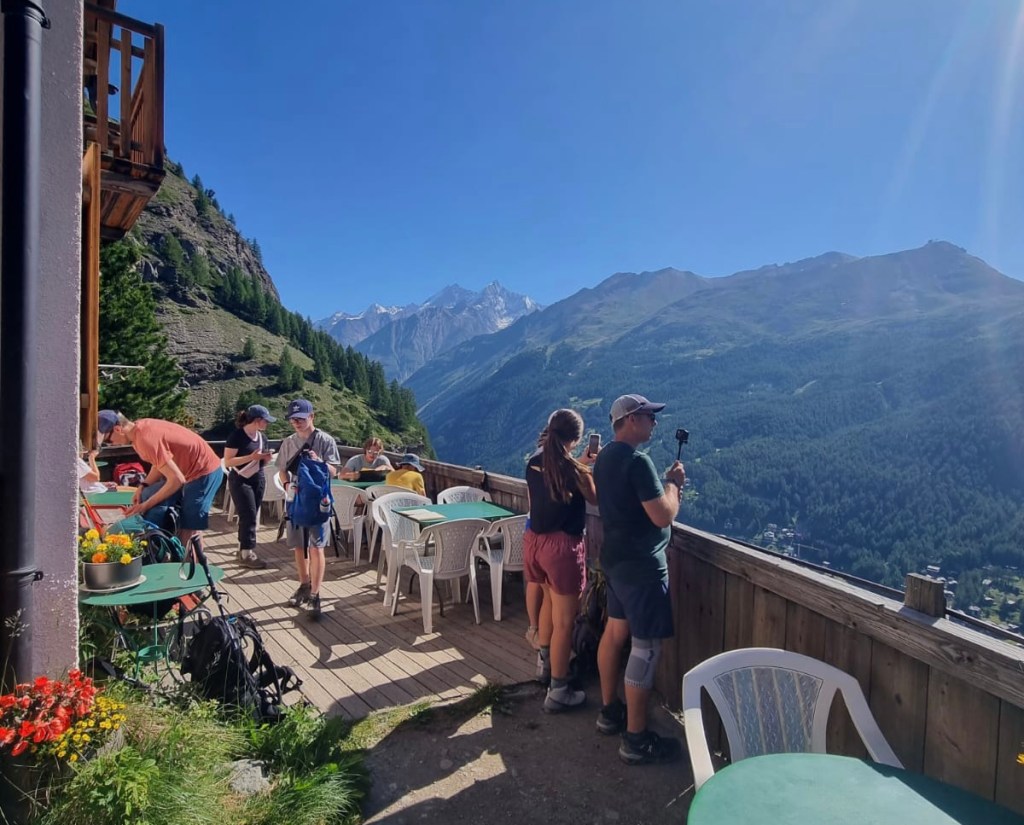
Sunday: We had a morning left in Zermatt. Part of our group did souvenir shopping and the rest, went on a hike to Edelweisshütte. Edelweiss is a small mountain hut providing lodging and serving lunch high above Zermatt. It’s a fairly short hike, just over a mile and a half, but strenuous with a quick 1,300 foot elevation gain.
They did not have lunch here but did have the restaurant’s famous carrot cake while enjoying views of Zermatt.
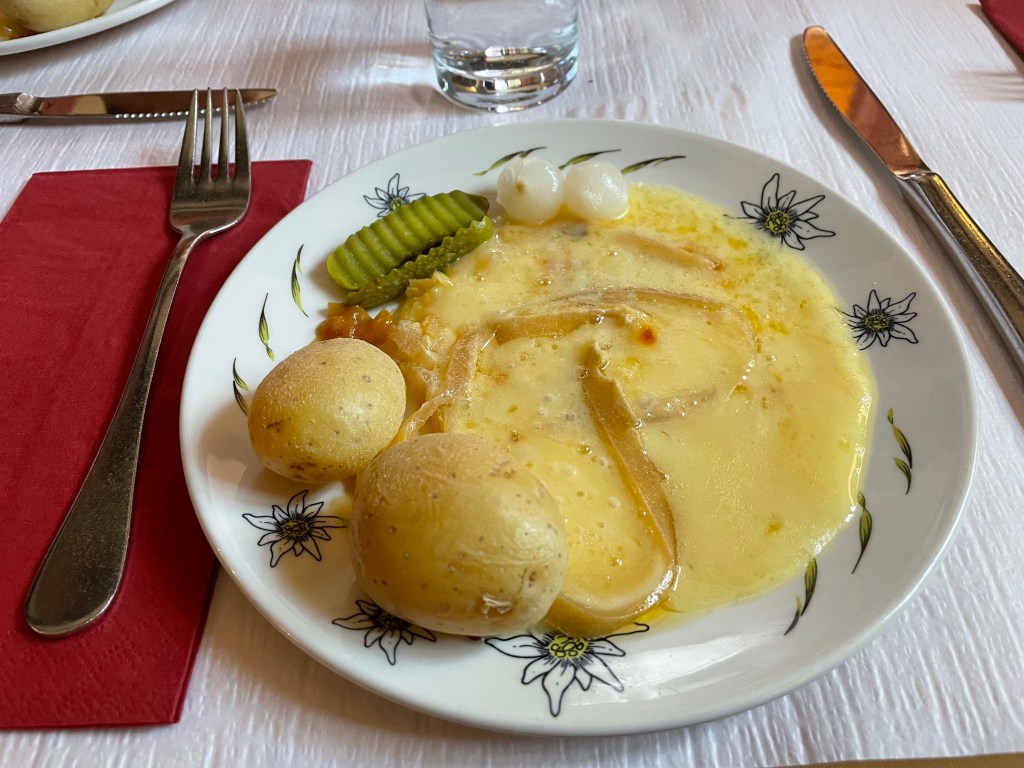
Our final lunch in Zermatt, fittingly, was raclette at Whymper Strube.
Then we caught the train, transferred into Zurich, spent the night at an airport hotel, and flew home the next day. Great trip. Only marred by bringing Covid home with me.
 Adventures with Sheila