We never made it to Mammoth Hot Springs in 2010 so we were really looking forward to checking it out this trip and it did not disappoint.
Part of our group, however, left around 4:30 am this morning to drive to Lamar Valley to look for wildlife and they had good luck. Not only did they see a herd of bison, and a herd of elk, but they also saw three wolves and a couple of the elusive Pronghorn.
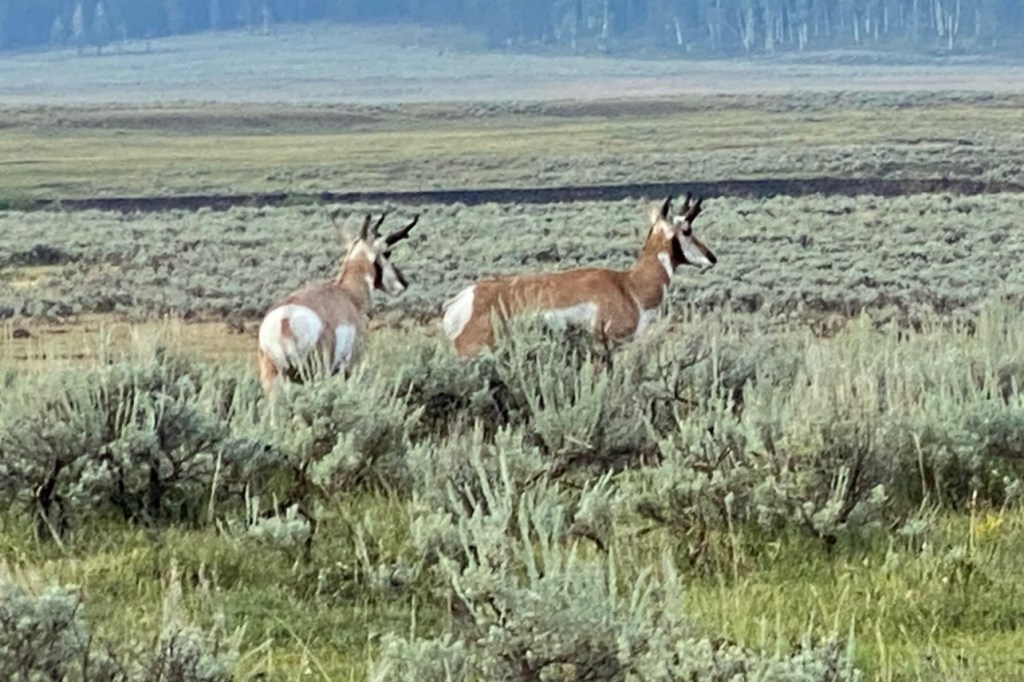
We saw a few Pronghorn in 2010 and they are beautiful to watch. The Pronghorn is the fastest land mammal in the Western Hemisphere and can reach speeds of 55 mph. They don’t look like they belong in North America and indeed their closest relatives are the giraffe and the okapi.
The rest of us left later and probably had our longest wait to get into the park today but that was only about 15 minutes. We drove east to the Madison Junction, then on to the Norris Junction and from there we headed north.
Our first stop was Obsidian Cliff which is made up of black volcanic glass formed from a lava flow contacting glacial ice about 75,000 years ago. Made me think of Dragonglass on Game of Thrones.
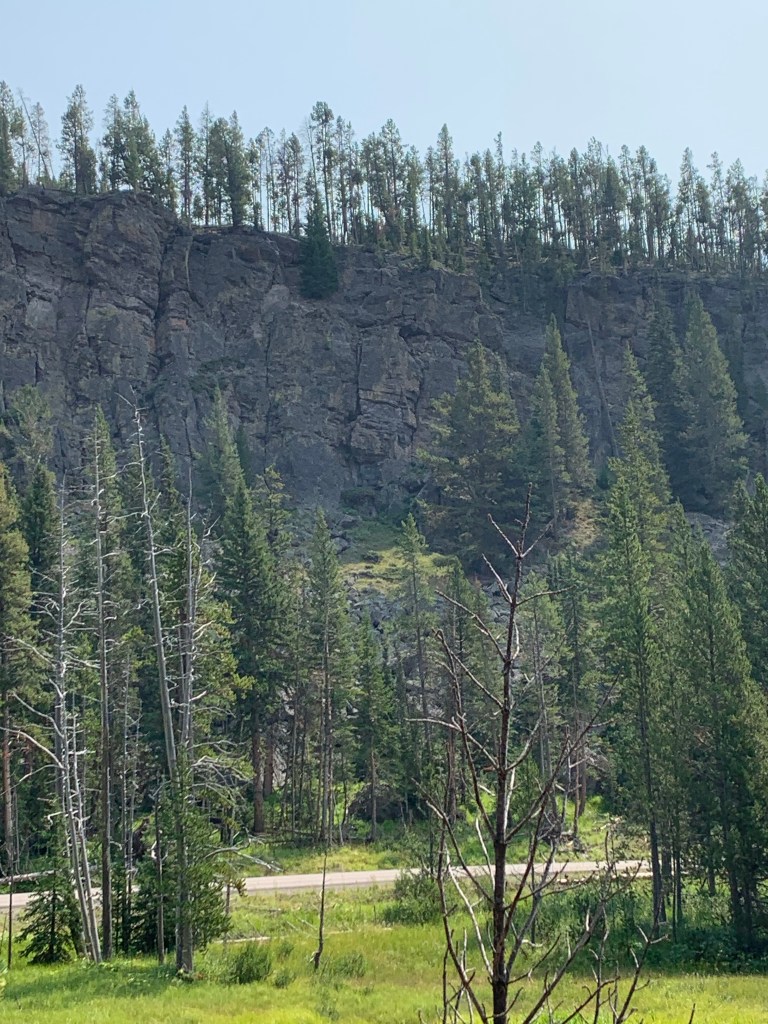
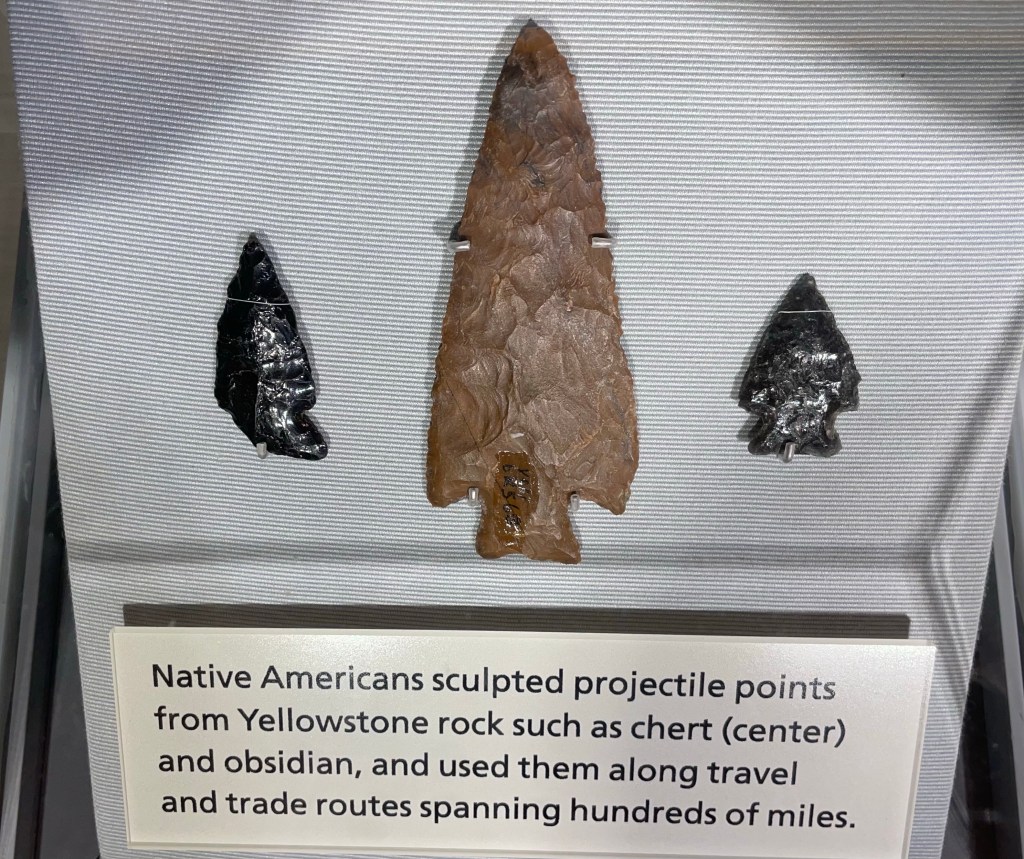
It was valued by Indians for stone tools and weapons and was found as far away as the Ohio River Valley and Canada as a result of trading.
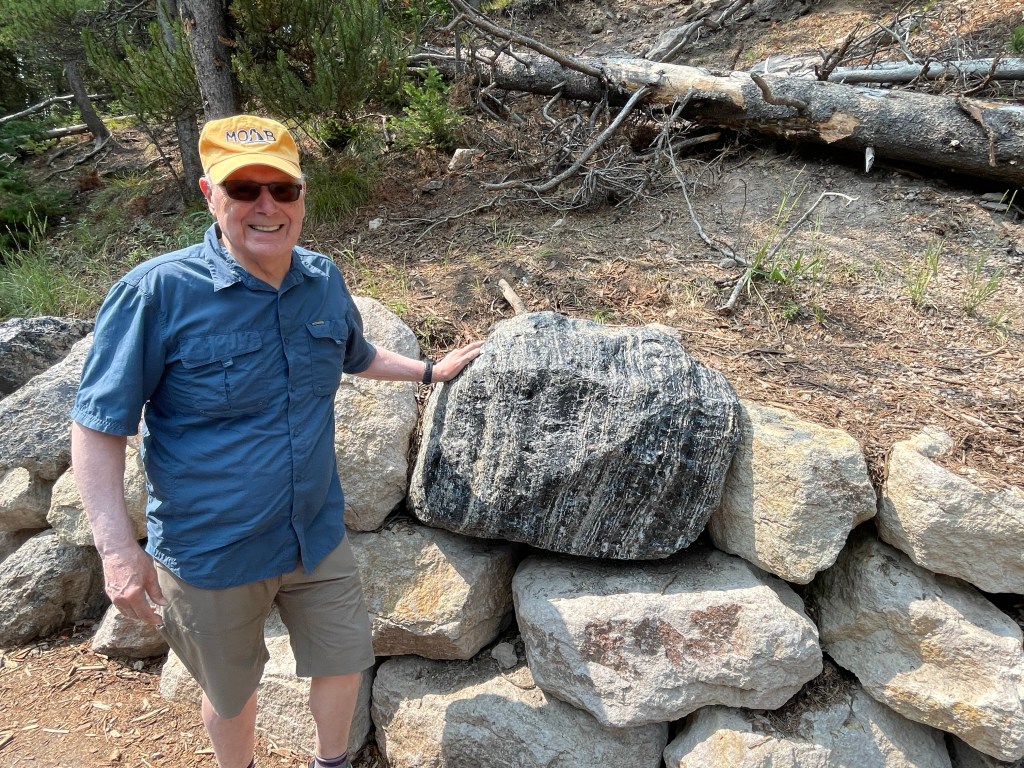
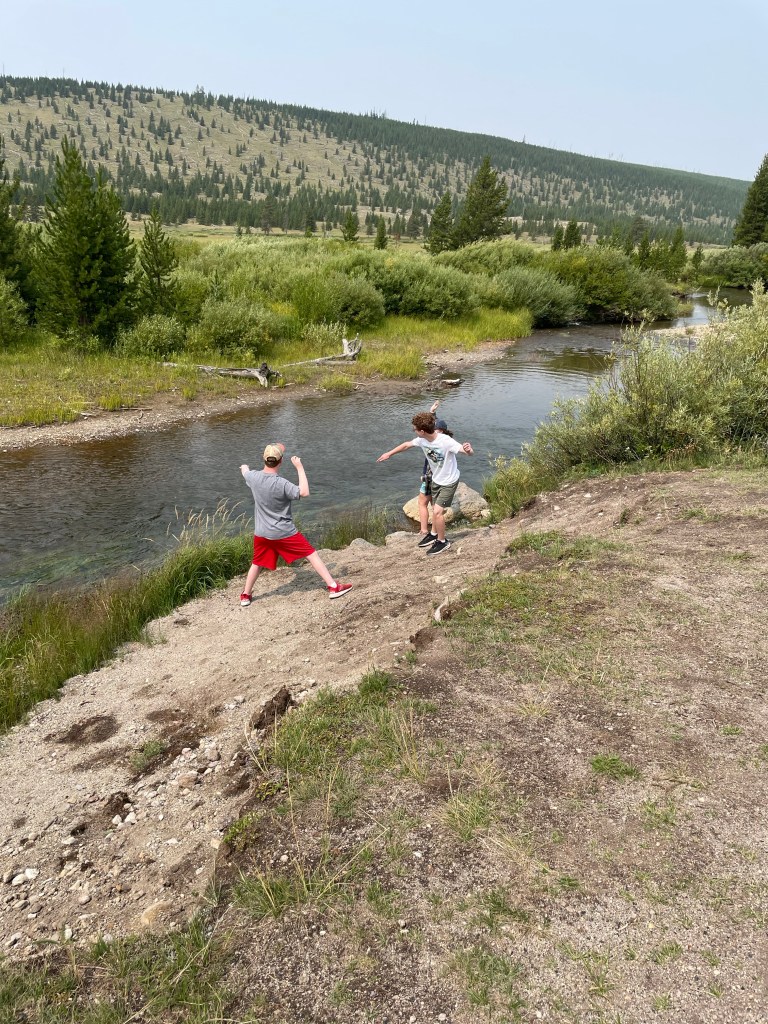
Back in the car, our next stop was at the Moose Exhibit which was basically a sign indicating this was the type of area – water and grass – where moose liked to hang out.
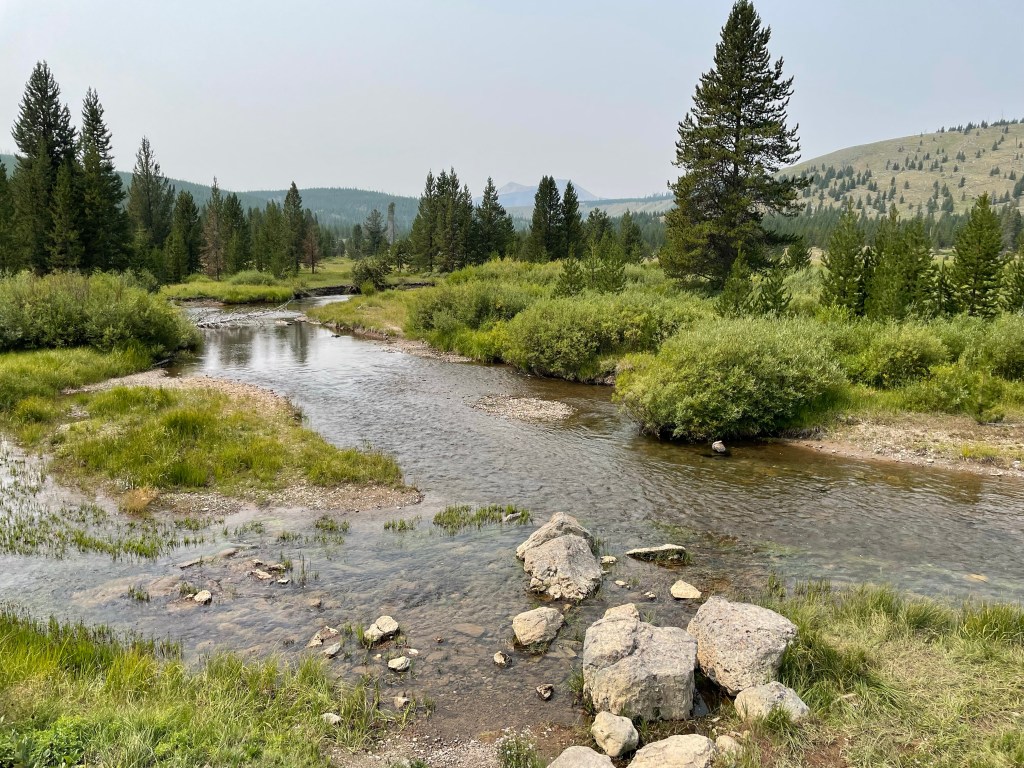
We saw no moose but did have fun skipping a few rocks in the water.
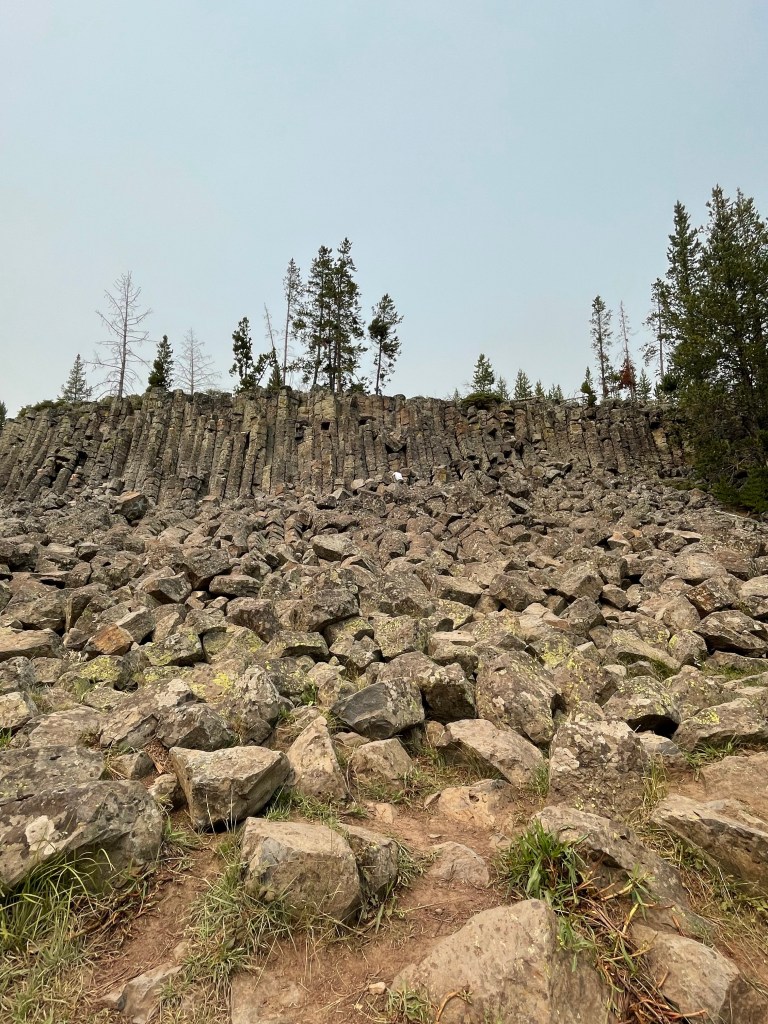
Next stop was lunch and that was at Sheepeater Cliff picnic area. The cliff was named for a group of Shoshone who lived here before Yellowstone became a park. This is considered to be an exceptional example of a feature of volcanic flow called columnar jointing that can occur around the edge of a caldera. It was also a good area for climbing. Grandson is in the white shirt way up at the top.
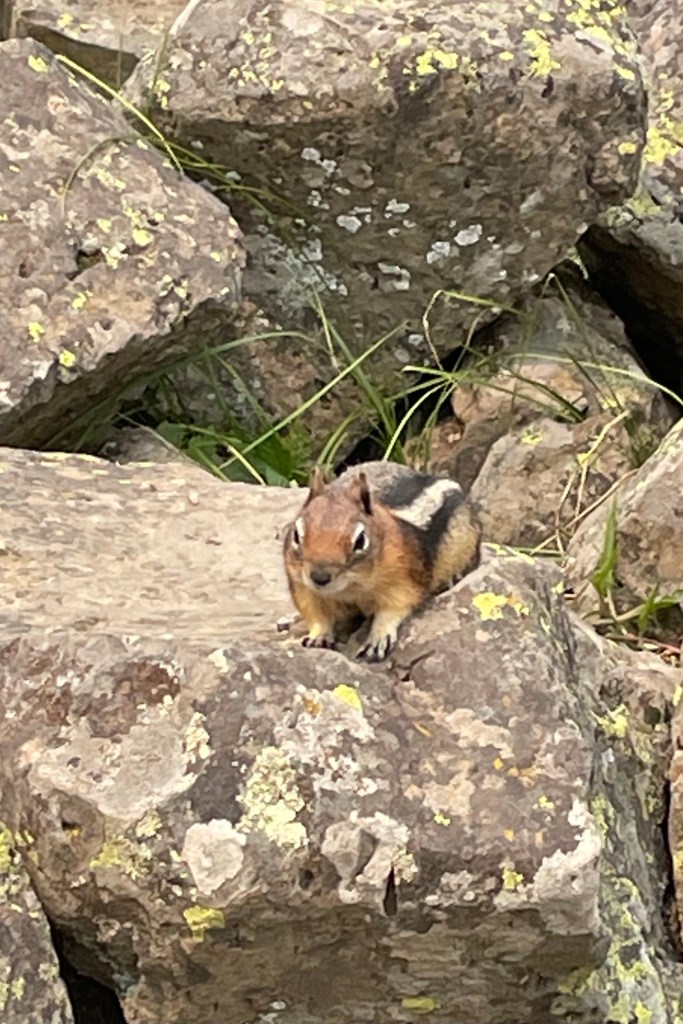
Marmots supposedly live among these rocks but all we saw were these ubiquitous Least Chipmunks.
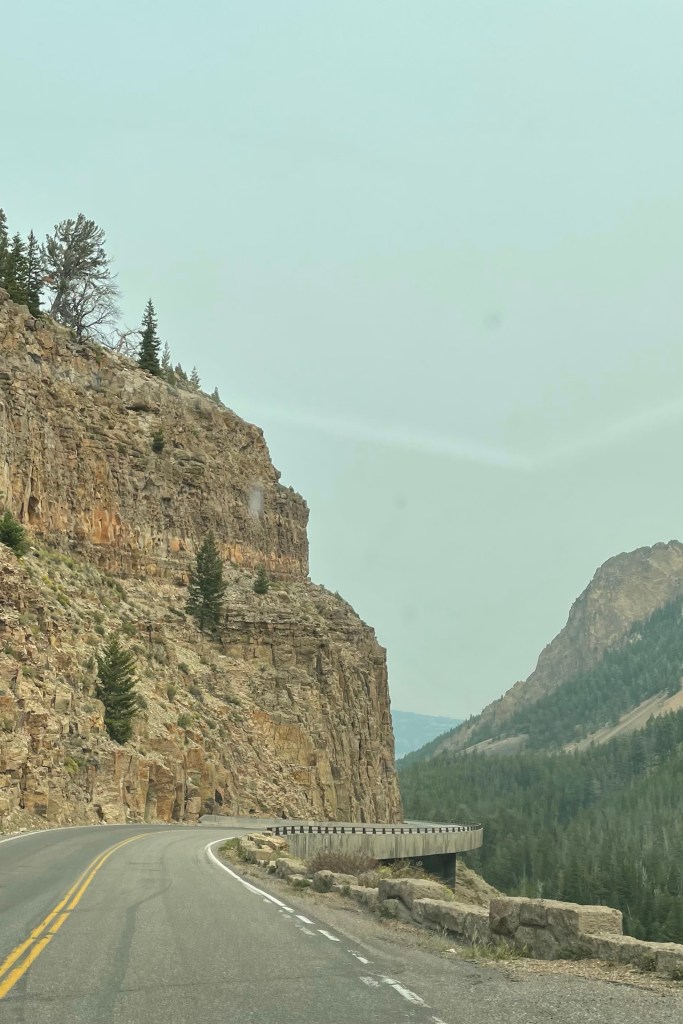
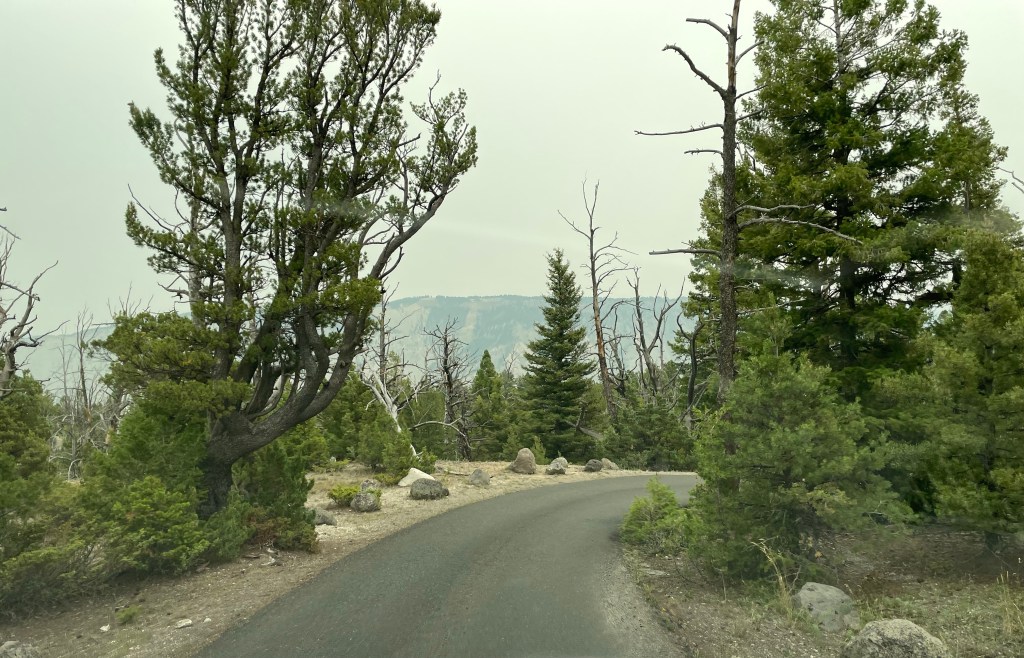
Back on the road we continue on toward Mammoth Hot Springs. We are pushing into the northern part of the park and the terrain becomes more mountainous. At 3,500 square miles, the park is huge so not surprising that the terrain varies. And now we are outside the Yellowstone Caldera.
We reach the Upper Terrace Drive of Mammoth Hot Springs which is about a 1.5 mile loop. This loop winds around among travertine terraces and mounds built by hot springs. It’s also the most rapidly changing area of the park; tons of minerals are deposited by the springs each day but the springs can seal up quickly and reappear in different locations.
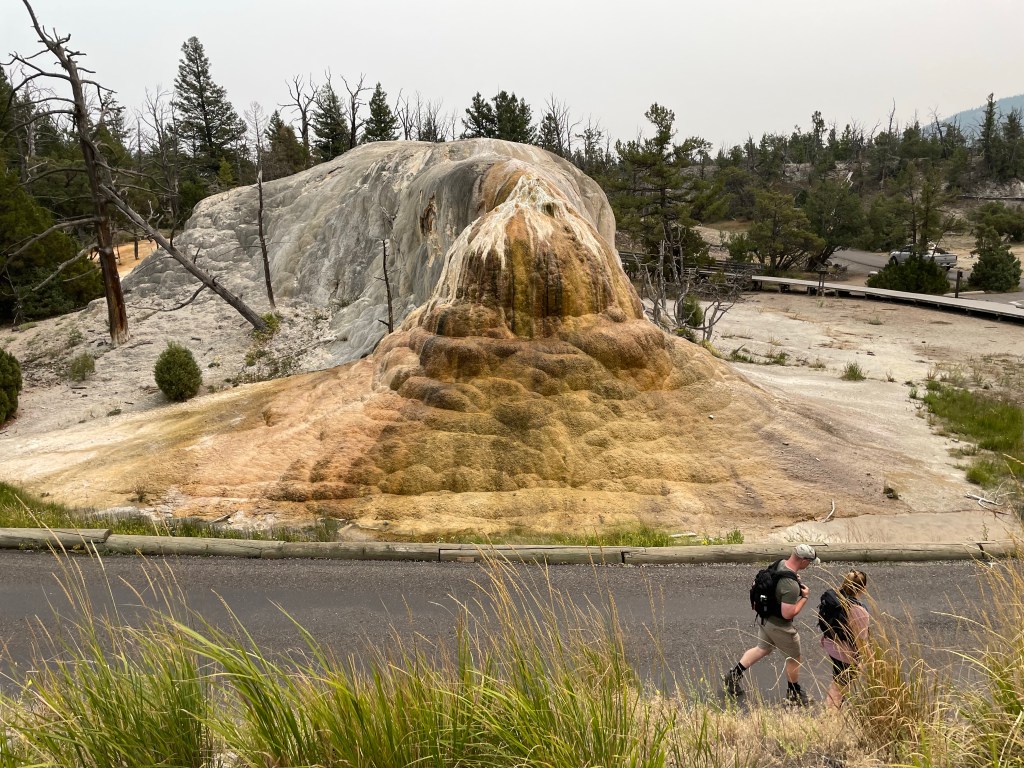
The first impressive formation we see is Orange Spring Mound. The mound was created by heated volcano water which pushes up through calcium carbonate and as it cools, deposits the carbonate or travertine. The heat-dwelling bacteria create the orange color. We could see the water continuing to flow down the sides of the mound. We thought it looked like a walrus.
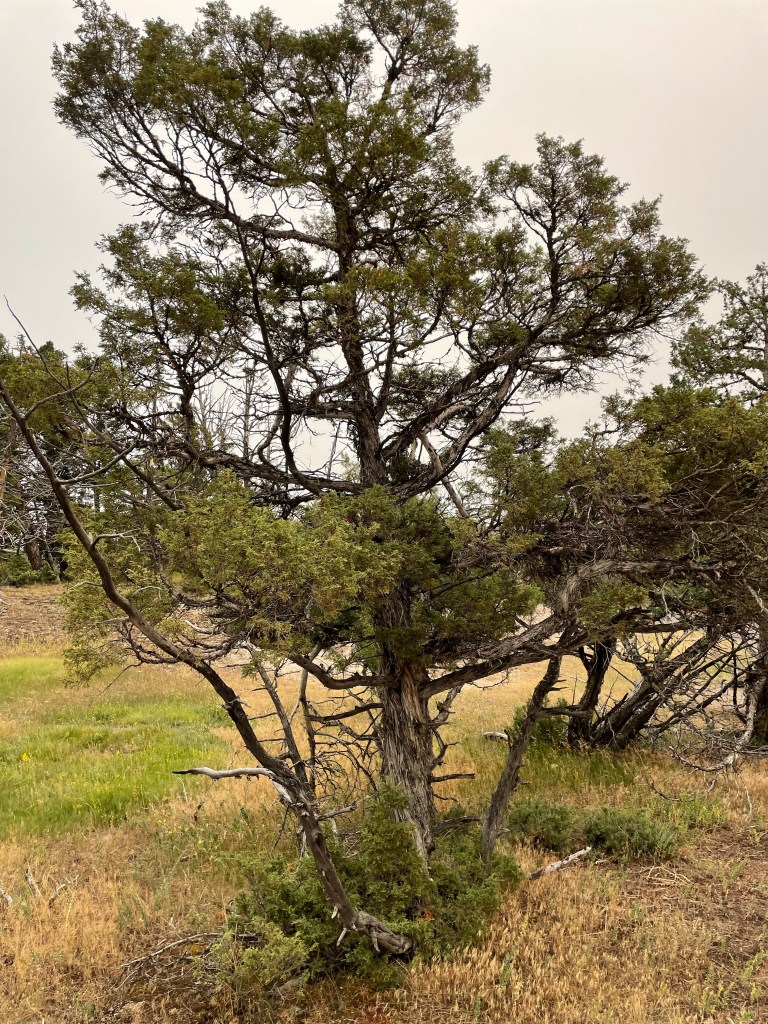
This area also contains centuries-old Juniper Trees. Not sure how old this one is though.
A little further along the road was the beautiful Aphrodite Terrace. Flowing water was first noticed here in 1978 and the structure gradually built up into terraces. The spring was dormant for a number of years but started back up in 2013. It looks like snow and ice.
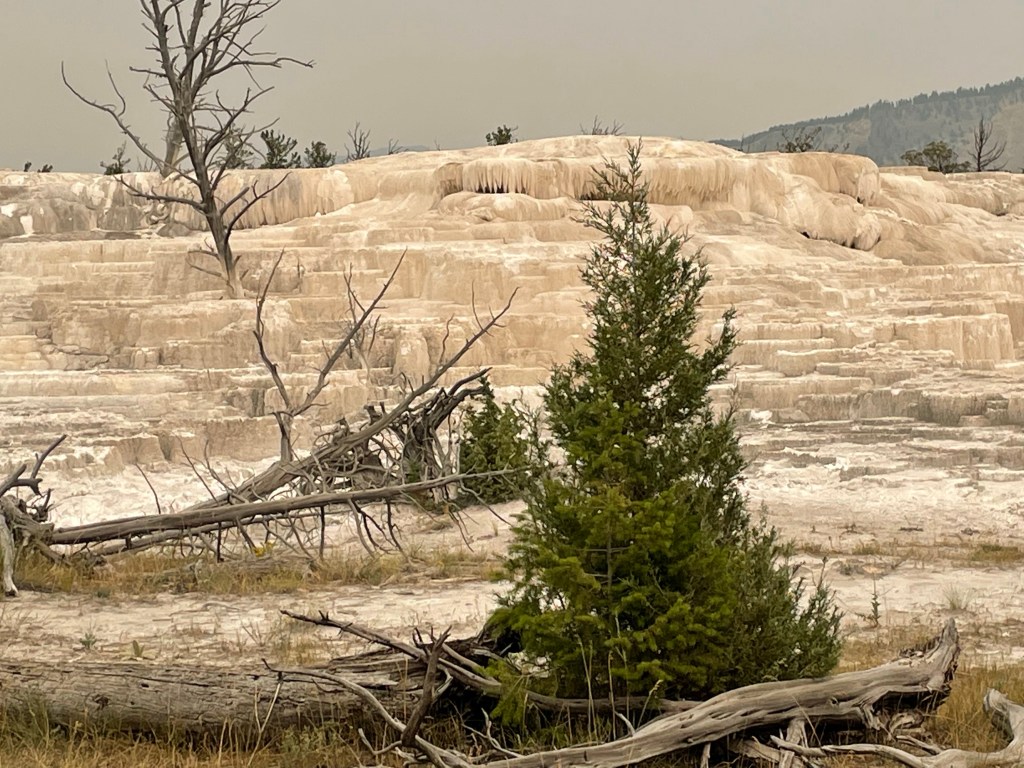
Another structure we saw before we left the Upper Loop, was the Angel Terrace. These springs were intermittently active from the 1870s to 1953.
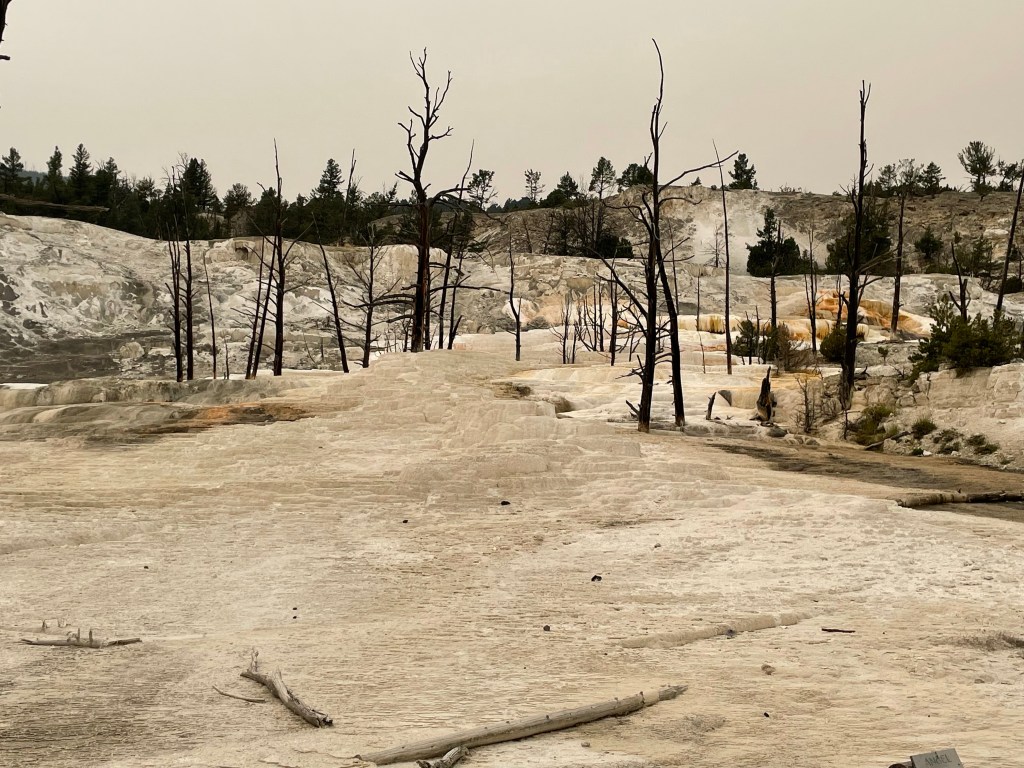
We left the Upper Terrace and drove a short distance to park near the Main Terrace area. Here, boardwalks meander through both dormant and active springs which are in a state of constant change. Our guidebook indicates that about two tons of travertine gets deposited in this area daily.
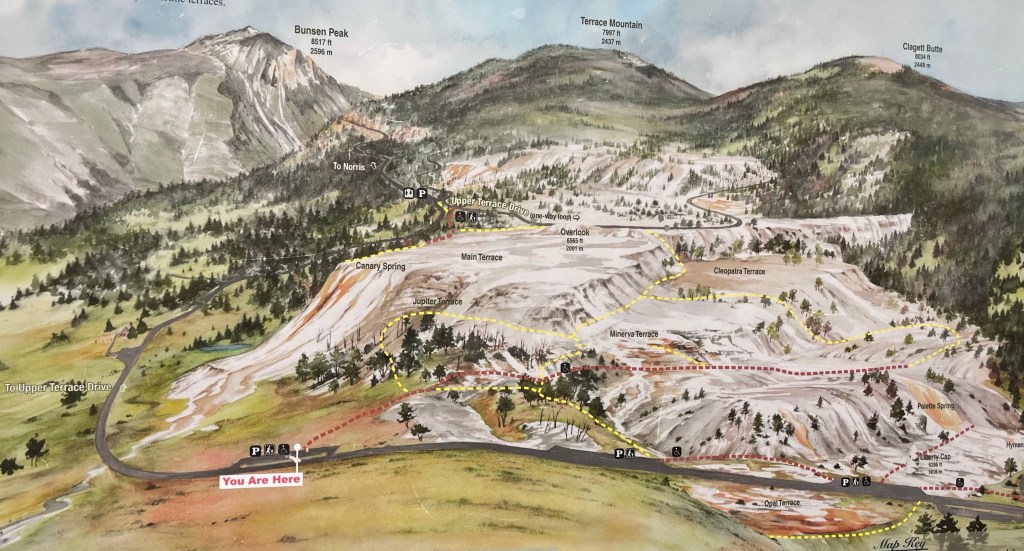
This map near the parking lot showed the different boardwalks. We started along the red line that went below the Minerva Terrace, then took the yellow line up along the Cleopatra Terrace and came back to the car via the Jupiter Terrace.
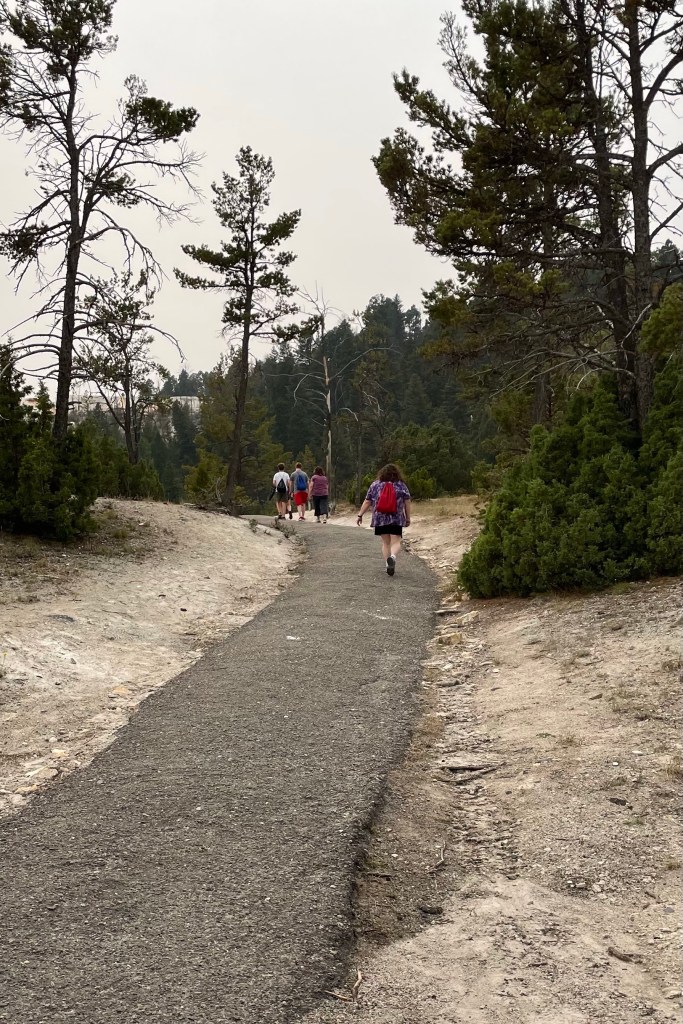
Walking up towards the Cleopatra Terrace. Unfortunately we had a nasty-looking snake cross our path in this area. He was probably about four feet long. Ugh.
Heading toward the beautiful and active Mound Terrace and Spring.
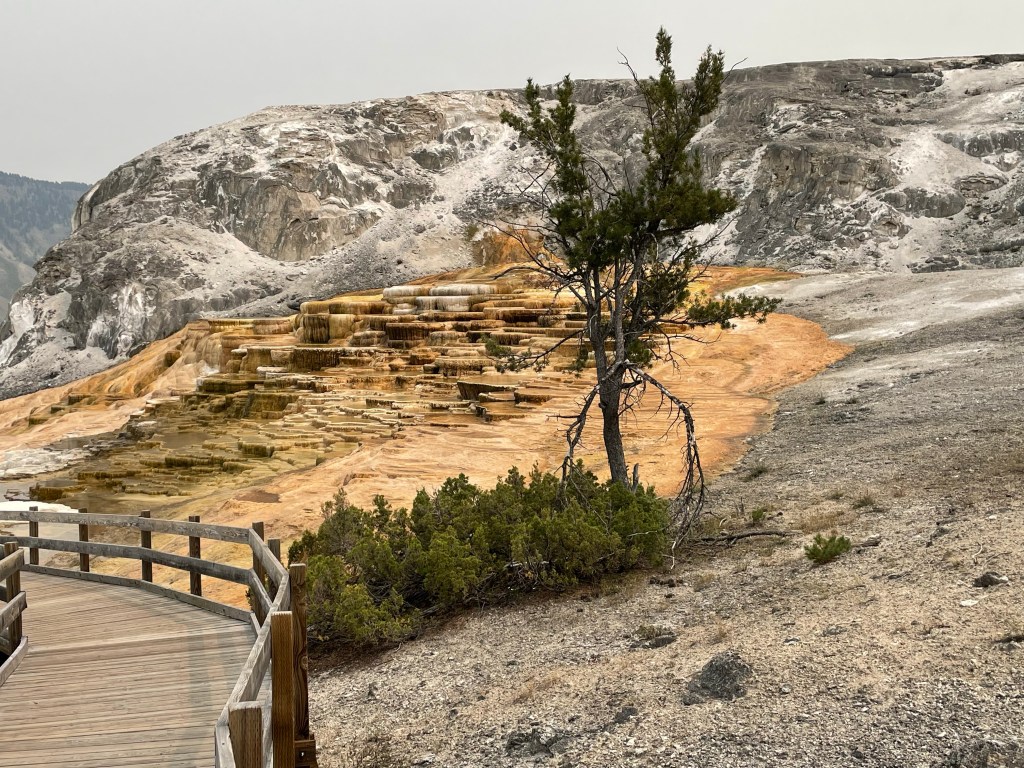
Here’s a closer look at Mound Terrace. The intricate detail of all the different size steps is amazing. And it is a very active waterfall at the moment. This and Aphrodite were the most beautiful sites for me in the whole park.
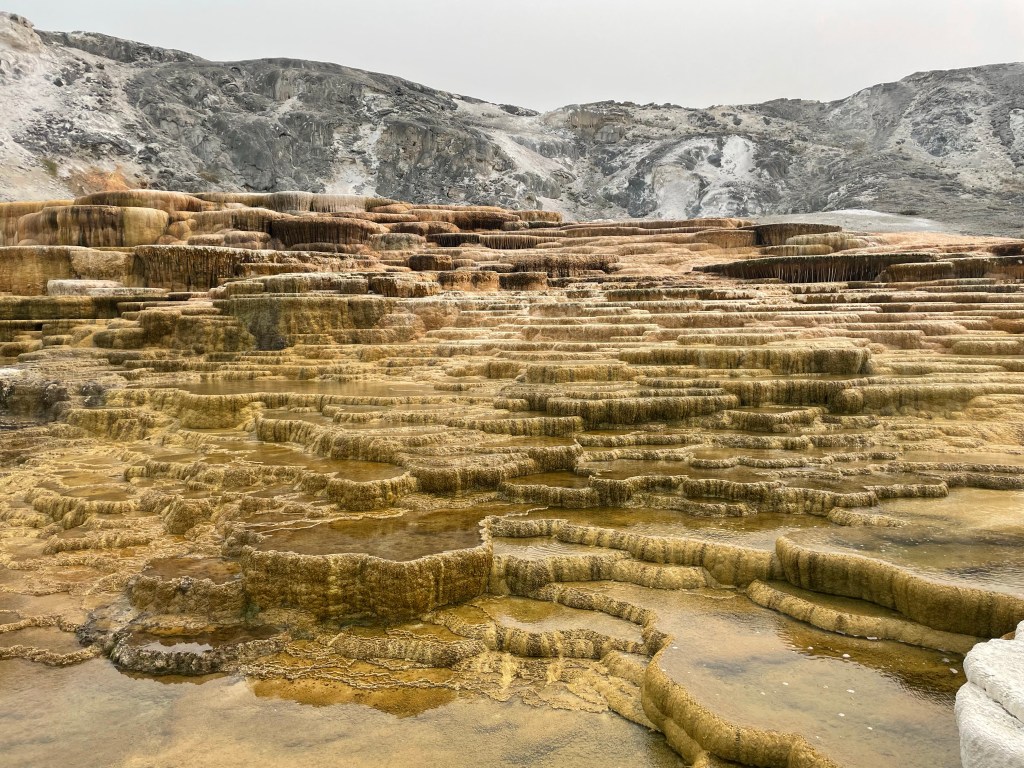
We continue on along Jupiter Terrace which is currently inactive.
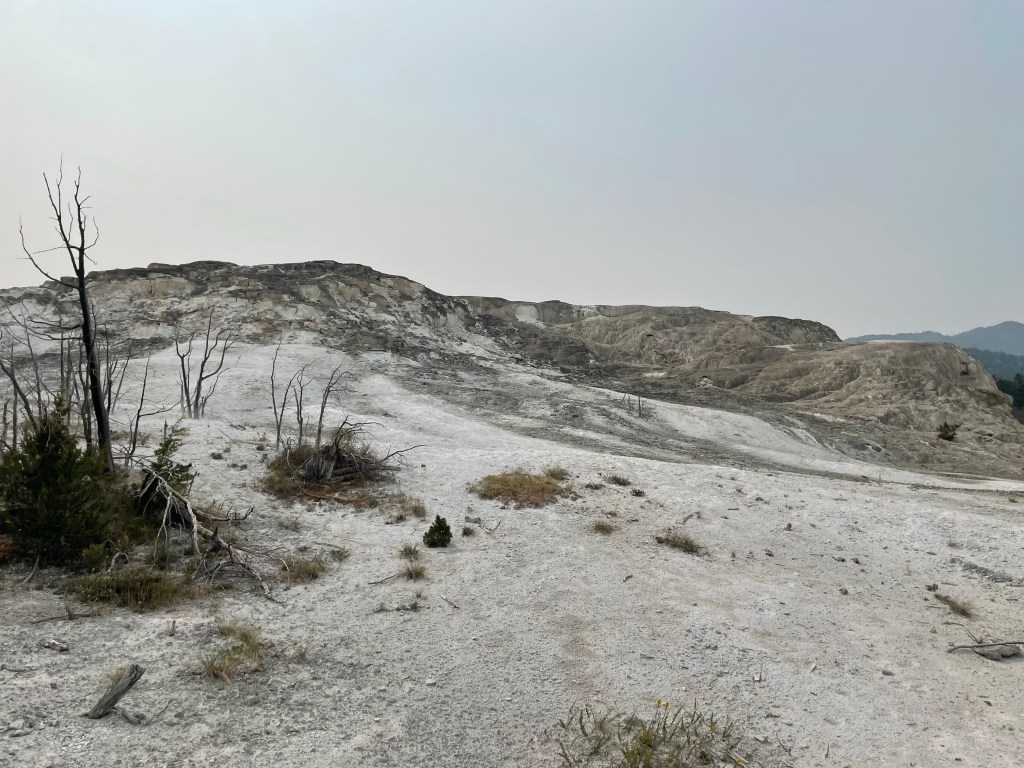
A sign by Jupiter pointed out how the cycle changes. When Jupiter Terrace was first producing hot mineral water, that water streamed downhill burying grass and trees. By 1872, all the trees in this area had been covered in travertine. In 1923, the spring was abundant with colorful pools of hot water but by 1998, the spring had been dormant for several years and had lost its color, turning white. If this dormancy continues, soil will again cover the travertine, and plants and trees will grow again.
From here, there is a good view of Mammoth Village which is also the park’s headquarters. In addition to the Albright Visitors’ Center and General Store, this area also contains the Mammoth Springs Hotel and number of buildings that house the offices and employees of the park. These red-roofed buildings were originally constructed as part of Fort Yellowstone in the late 1800s and early 1900s when the U.S. Army was put in charge of the park in order to manage park resources and visitors.
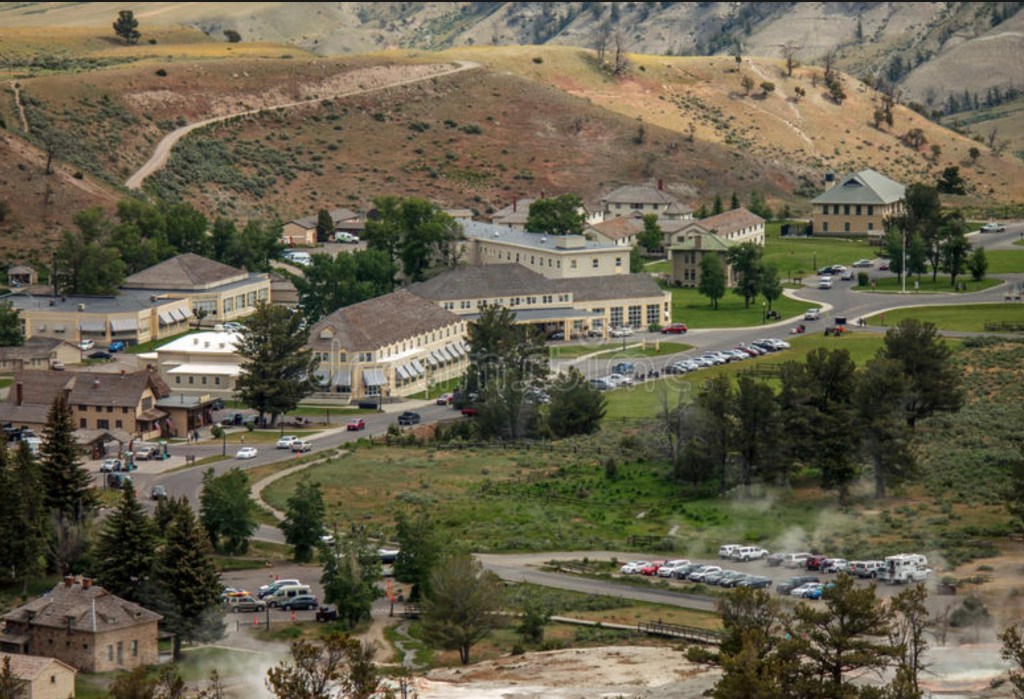
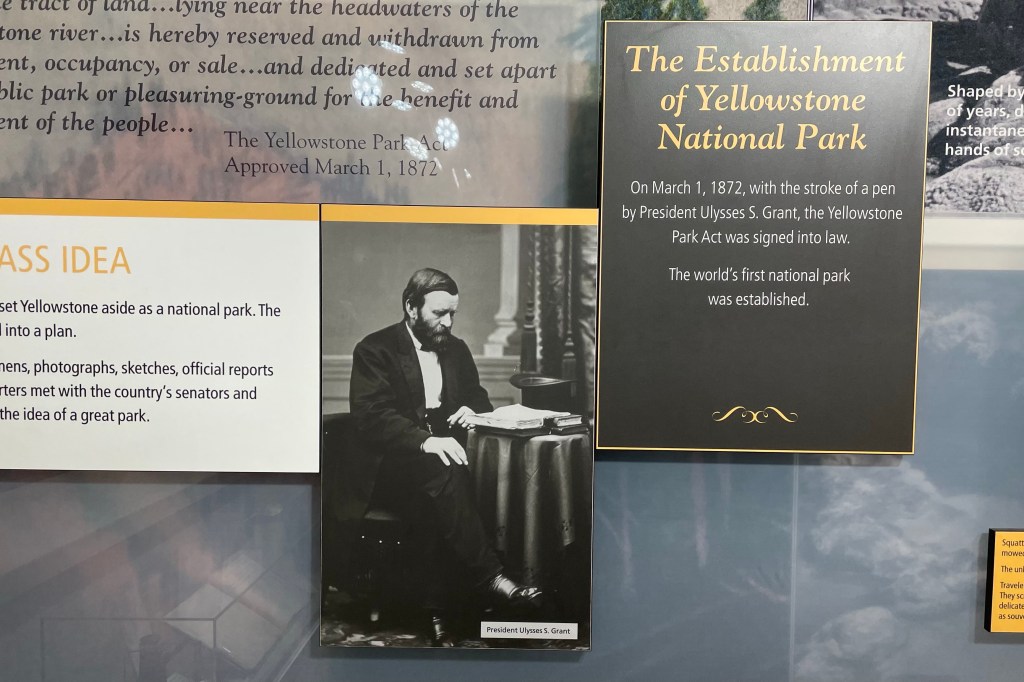
We drive into Mammoth Village and park near the Visitor Center. We liked their historical display in the basement section as well as the small bookstore on the main floor.
There were also some obsidian arrowheads on display,
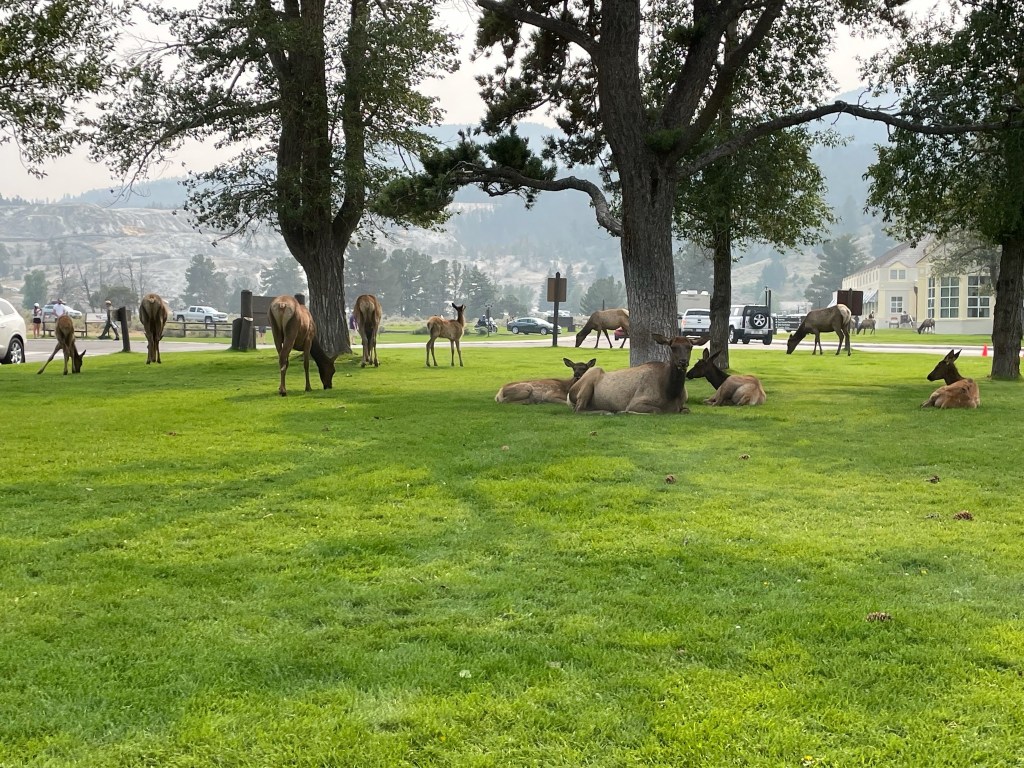
We walked to the General Store for ice cream as usual and on the way back to the car, saw that the village green had been taken over by a small herd of elk.
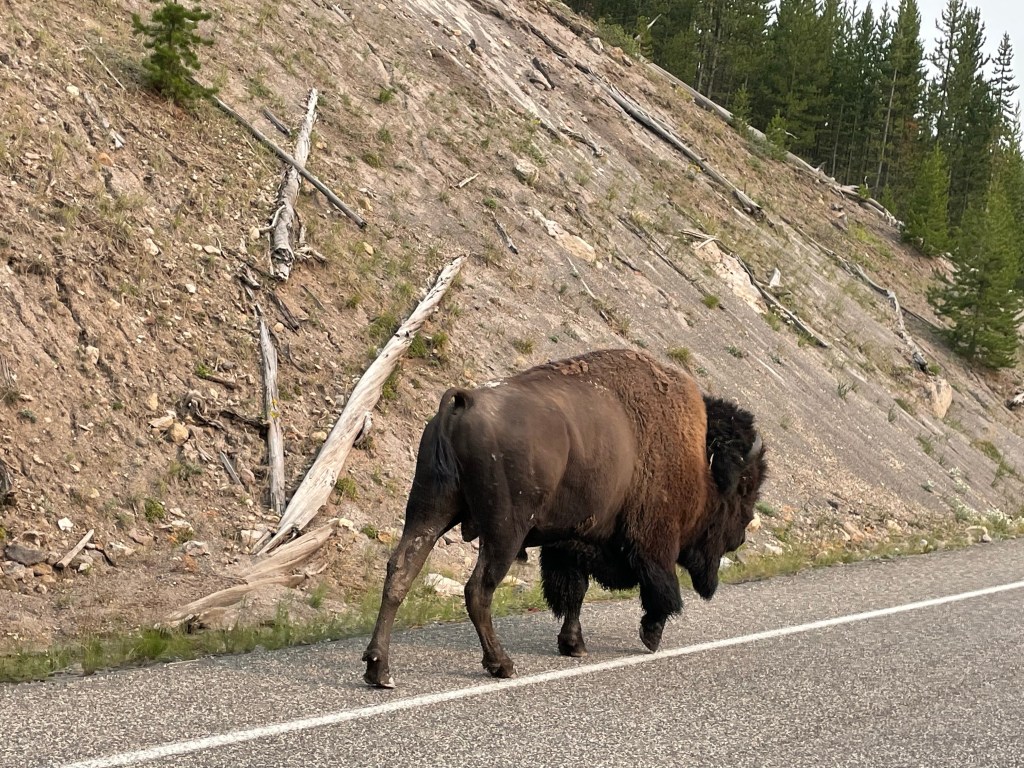
On our way back through the park toward the West Entrance, we had another wildlife sighting. This fellow was just walking along the road.
A closer view.
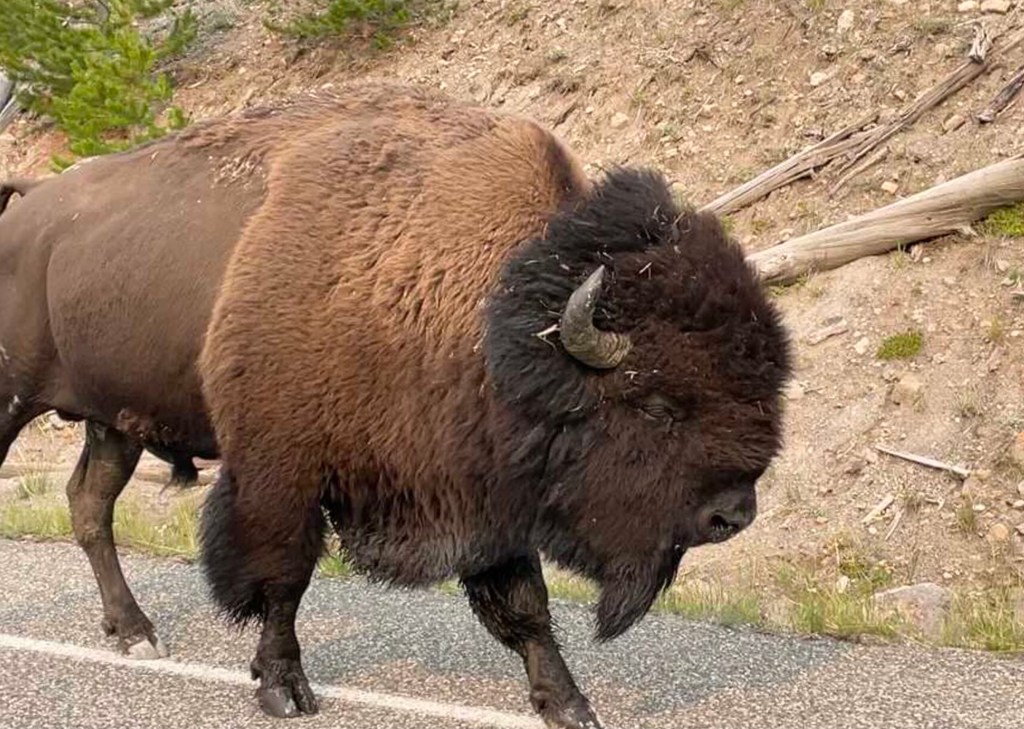
Just around the next corner we met a companion of his headed in the opposite direction and being herded along by a park ranger in a truck. Both seemed out of place, clipping along on the pavement. Though apparently, it is not unusual to find bison grazing in the middle of Mammoth Village.
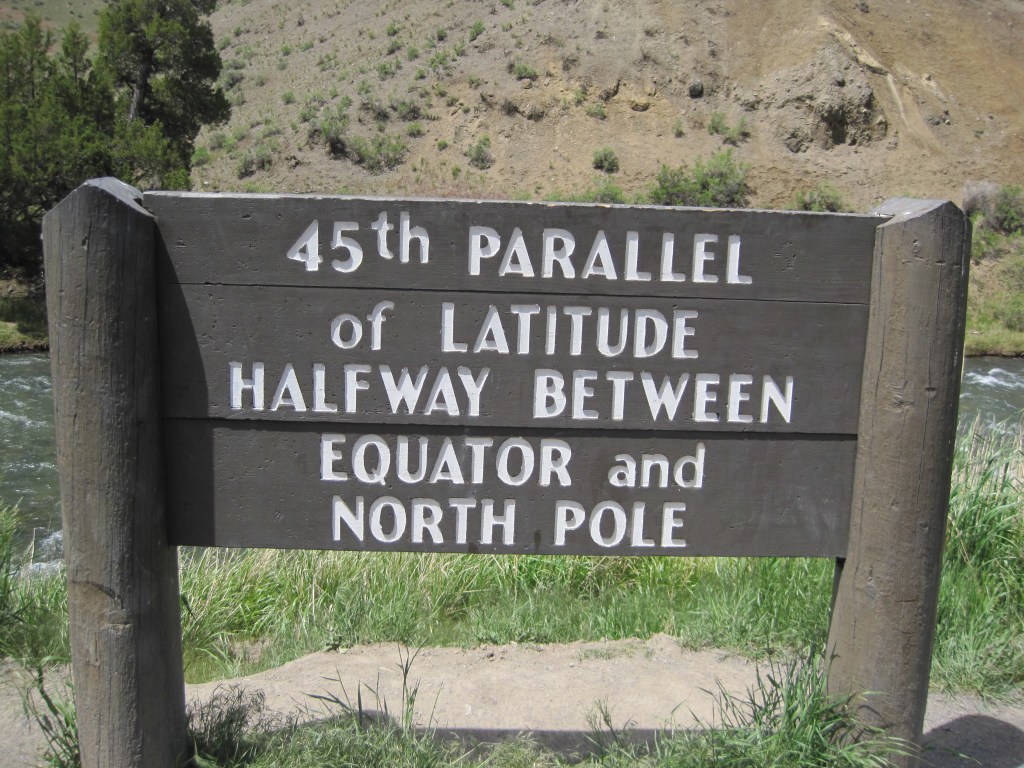
In 2010, we did not make it to Mammoth Hot Springs although we were very close. On that trip we were in Gardiner, Montana for a raft trip on the Yellowstone River and came south to where the road crosses the Gardiner River and marks the 45th parallel of latitude. This same line passes through Minneapolis-St. Paul, Ottawa, Bordeaux, Venice, Belgrade, and the northern tip of the Japanese islands. This line is also the border of Wyoming and Montana in the park.
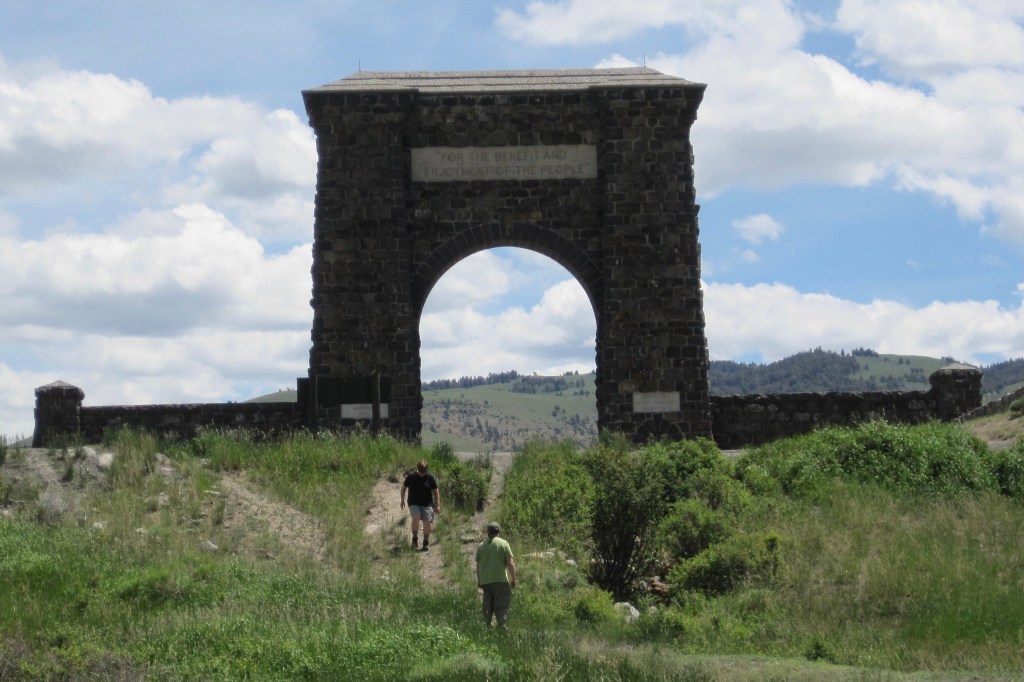
We entered the park then through the North Entrance near the Theodore Roosevelt Entrance Arch, built in 1903. The sign on the arch says, “For the benefit and enjoyment of the people.”
Today we leave the park and arrive back at our house by 7 pm for a nice dinner of hamburgers on the grill. We say good-by to Yellowstone tomorrow so this was also a packing night. But today was special. Mammoth Hot Springs has been described as other worldly, caves turned inside out, and the most colorful area of the park. If you compare photos of features over time, it’s easy to see how quickly changes occur here. That’s primarily because this area of the park is made of limestone. It would have been nice to have one more day here too. Don’t miss it. I suspect our photos were affected by the smoky haze that pervades certain parts of the park. So check out other online photos taken in sunshine to see how magical the colors really are.

