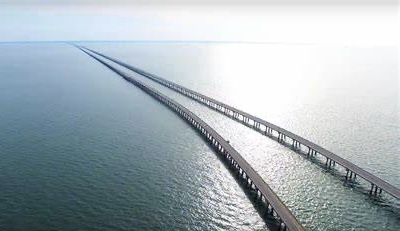
Sunday: We arrive in Baltimore, Maryland and are picked up at the airport and shuttled to Easton, Maryland. We travel across the Chesapeake Bay on the Albert Lane Junior Memorial Bridge, or Bay Bridge, which is almost five miles across. The bay is more than 200 miles long and the bridge spans a fairly narrow part near the upper area.
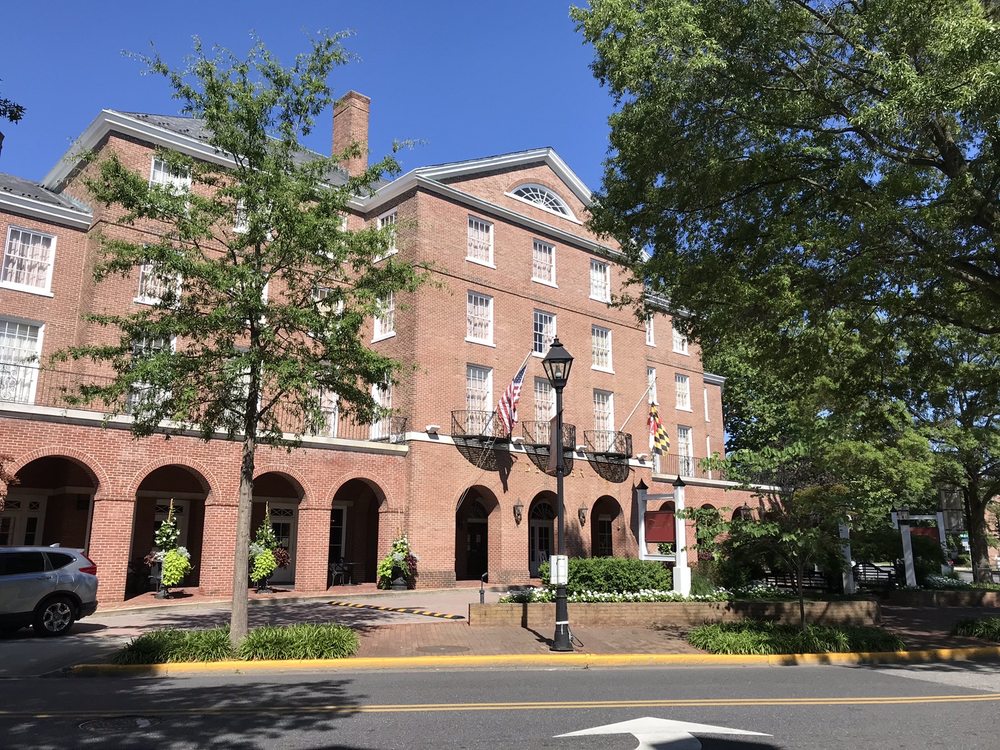
Our home in Easton for the next three nights is the Tidewater Inn.
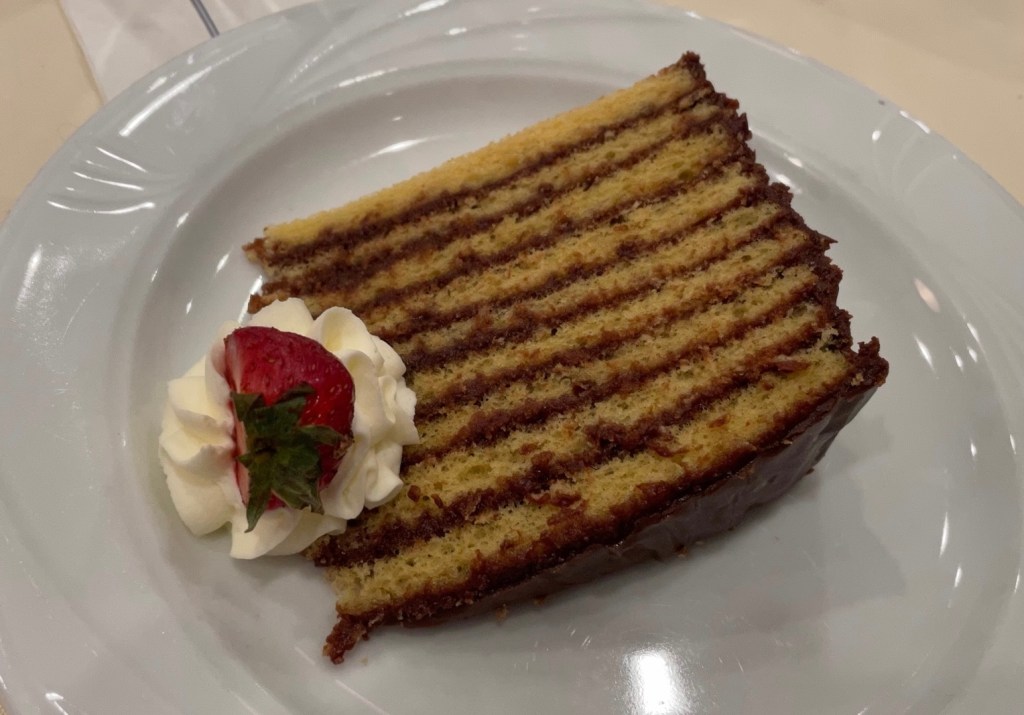
After arriving at the hotel, we change into bike clothes, get fitted for our bikes, and have a six-mile warmup ride on a bike path near the hotel. Dinner is at the hotel and we learn about Smith Island Cake which just happens to be our dessert for the evening. It is typically comprised of at least eight pancake-thin layers separated by fudge frosting.
Monday: Today was our first full day of riding and we cycled 31 miles, 19 in the morning and 12 after lunch. The weather was tricky; the temperature when we started riding was in the mid-40s but was expected to reach the upper 60s. And we had sunshine and very little wind. So we started with leg warmers, long-fingered gloves and three layers on top. By lunch the leg warmers, gloves, and two top layers were gone.
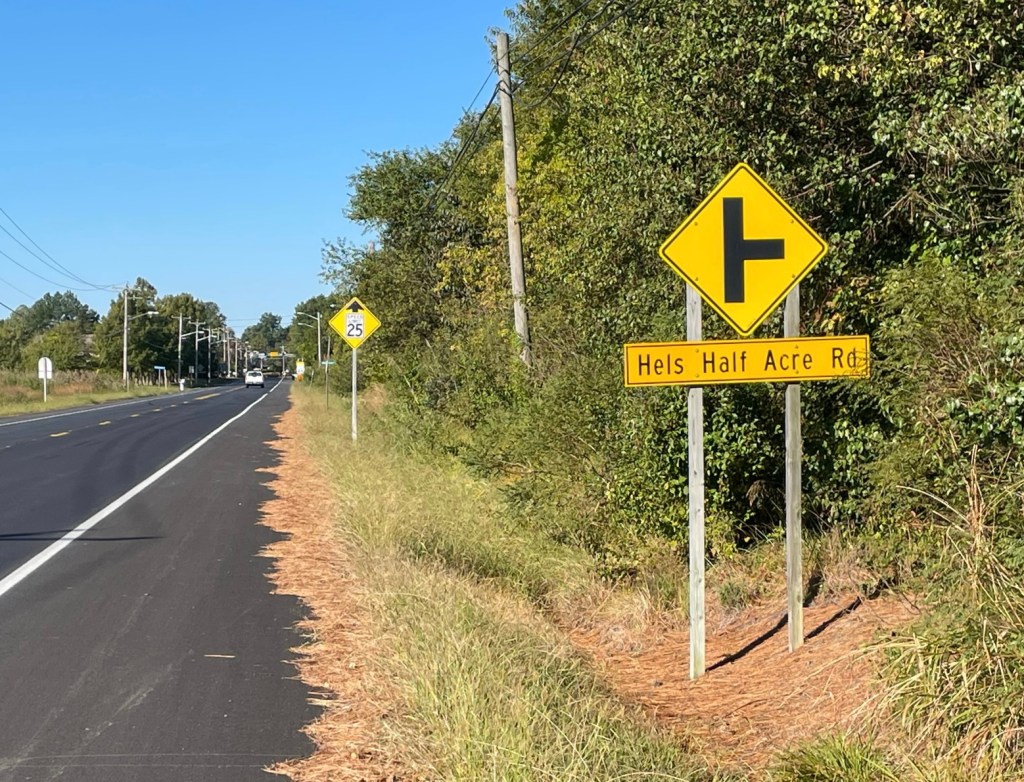
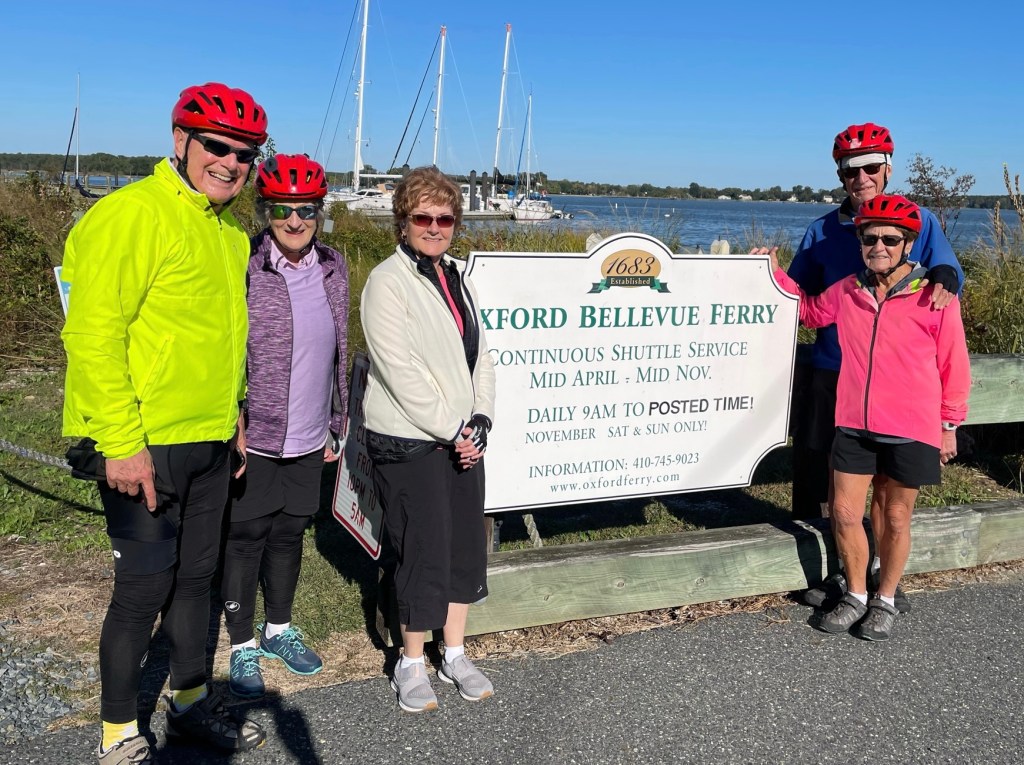
The first half of our morning ride took us into Oxford and just before entering town, I saw this sign. I also saw one that read “Screamersville Road.” Whoever named the roads around here had an interesting sense of humor.
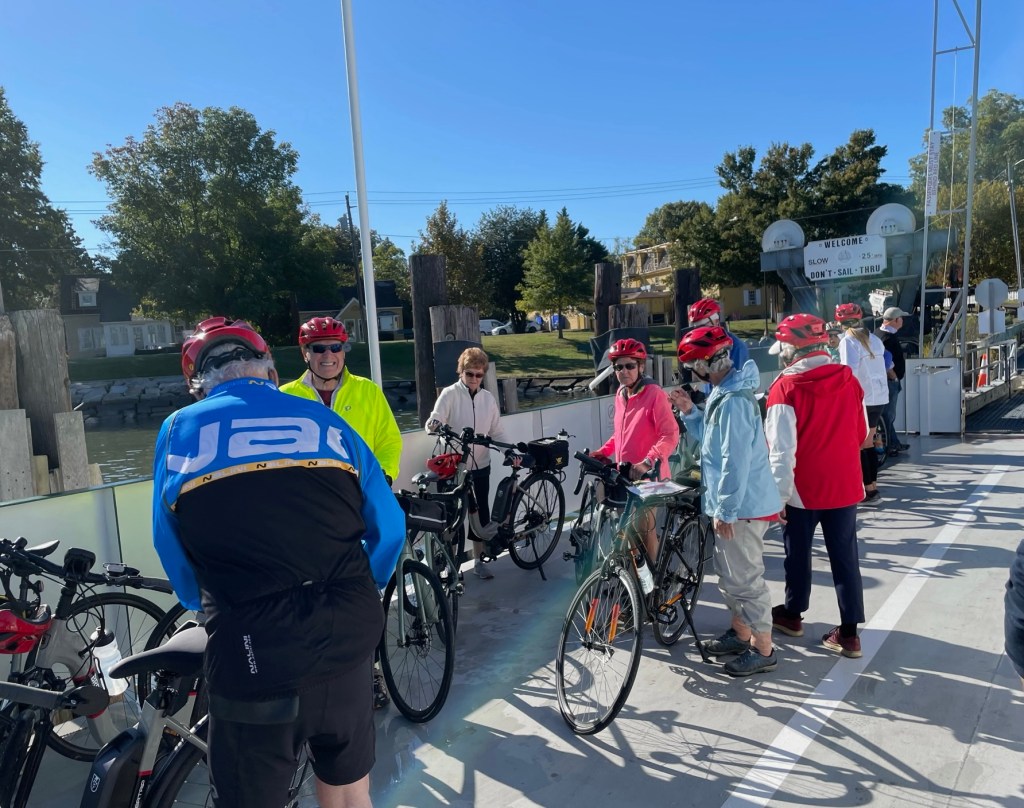
We arrive in Oxford and wait for the ferry to take us across the Tred Avon River. On this trip we are bicycling with friends Debby, Marylou, and Jerry plus 15 other people from around the U.S. Ross and I are the ones still in leg warmers.
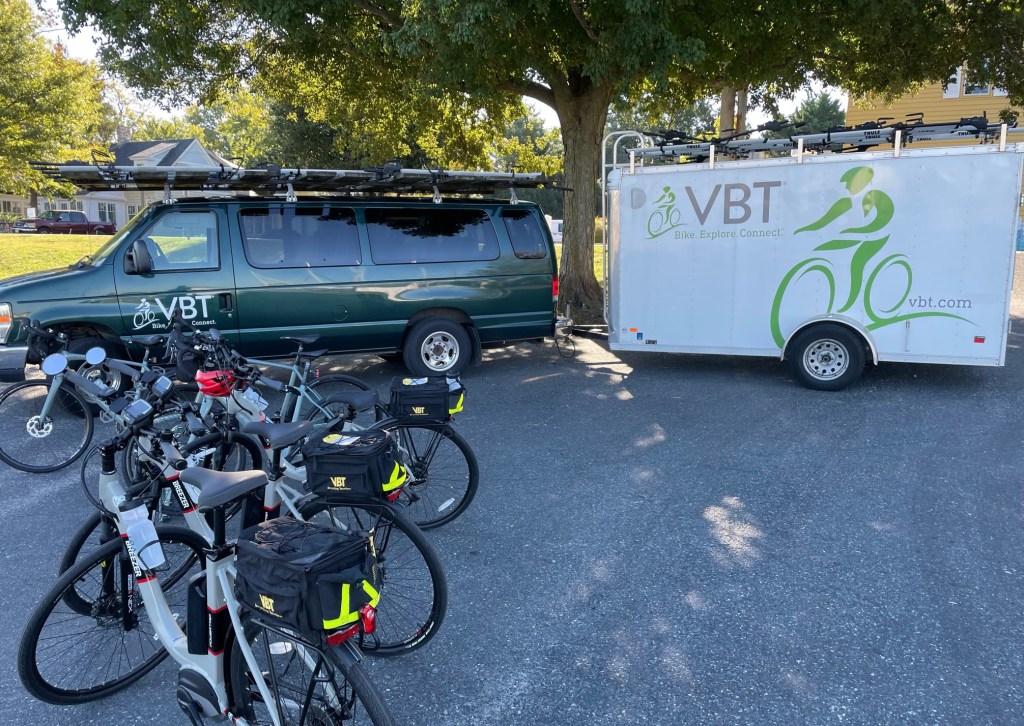
While waiting, we have a snack stop with the van, our sag wagon for the trip.
The ferry is big enough for our bicycles and for the van.
It’s a ten-minute trip across the river.
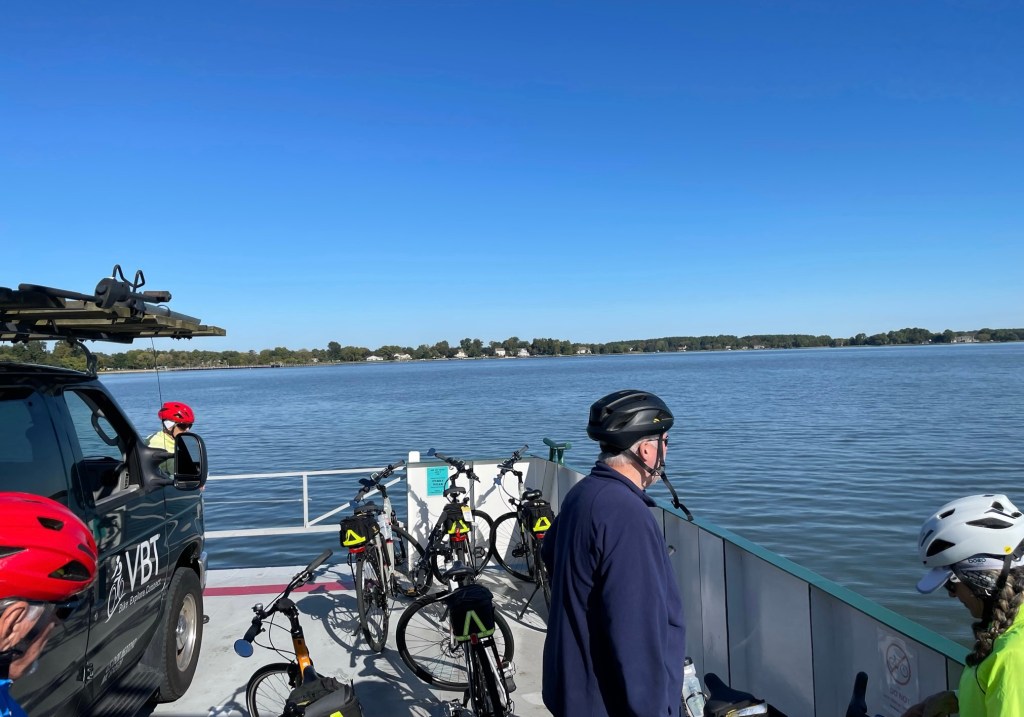
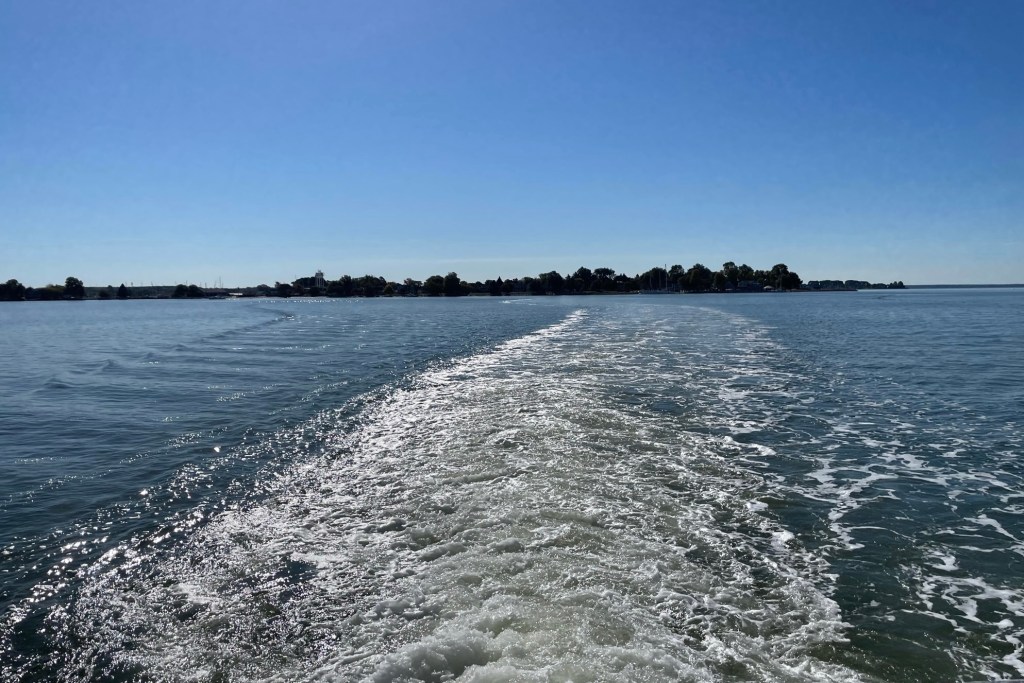
Our wake.
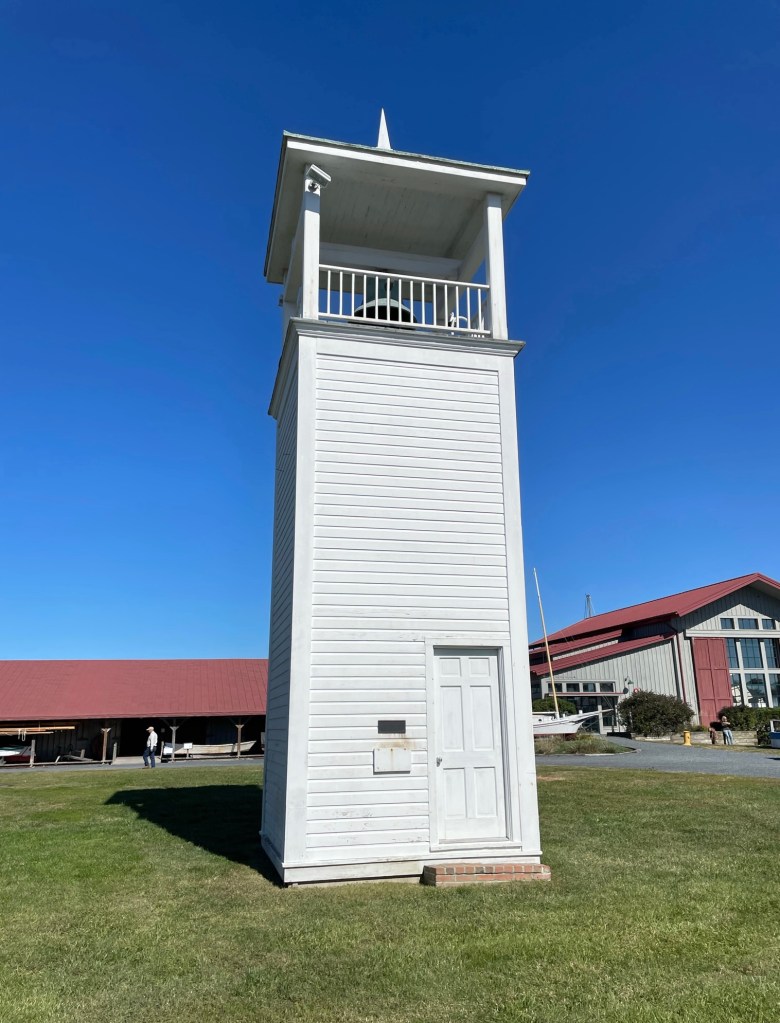
After riding a total of 19 miles, we arrive in St. Michaels and check out the Chesapeake Bay Maritime Museum including the Point Lookout Fog Bell Tower which originally stood along with the Point Lookout Lighthouse near where the Potomac River meets the Chesapeake Bay, a treacherous area apparently.
The bell tower was needed in fog and contained an 1,100 pound bell, one loud enough to be heard on the bay. The fog tower was put into use in 1873; the lighthouse was activated in 1830. Interestingly, the first lighthouse keeper died a few months after taking office and his daughter became the keeper for the next 17 years. The Point Lookout Lighthouse was deactivated in 1966 – replaced by an automated version – and the fog bell tower was moved to the Maritime Museum in 1968. The lighthouse itself, however, is presently owned by the state and is credited as the most haunted lighthouse in America with “paranormal activities” performed occasionally to help raise restoration funding.
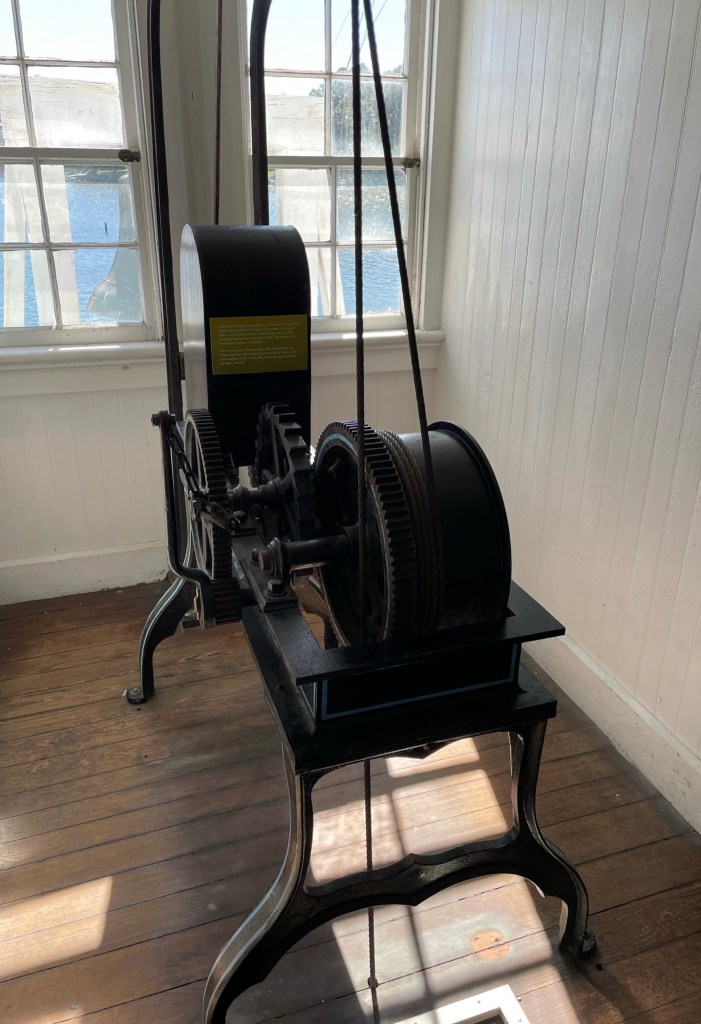
Lighthouse keepers really dreaded the fog. Whenever visibility was less than five miles, they needed to ring the bell. This machine below did it for them, but it had to be wound up first. Then it lasted for two hours and had to be cranked again. Tough duty when fog would settle in for a couple of days.
There is a lighthouse at the museum but it is the Hooper Strait Lighthouse. This one was built in 1879 to guide boats from the Chesapeake Bay through the winding Hooper Strait. It’s a “screw pile” lighthouse, built on piles that are screwed into sandy or muddy sea bottoms. Several were constructed along the Chesapeake Bay due to its estuarial soft bottom. The typical design of this type of lighthouse is a hexagon shape, 1 1/2 stories tall, with a cupola at the top for the light. It was manned until 1954 and deactivated in 1966 and moved to the museum.

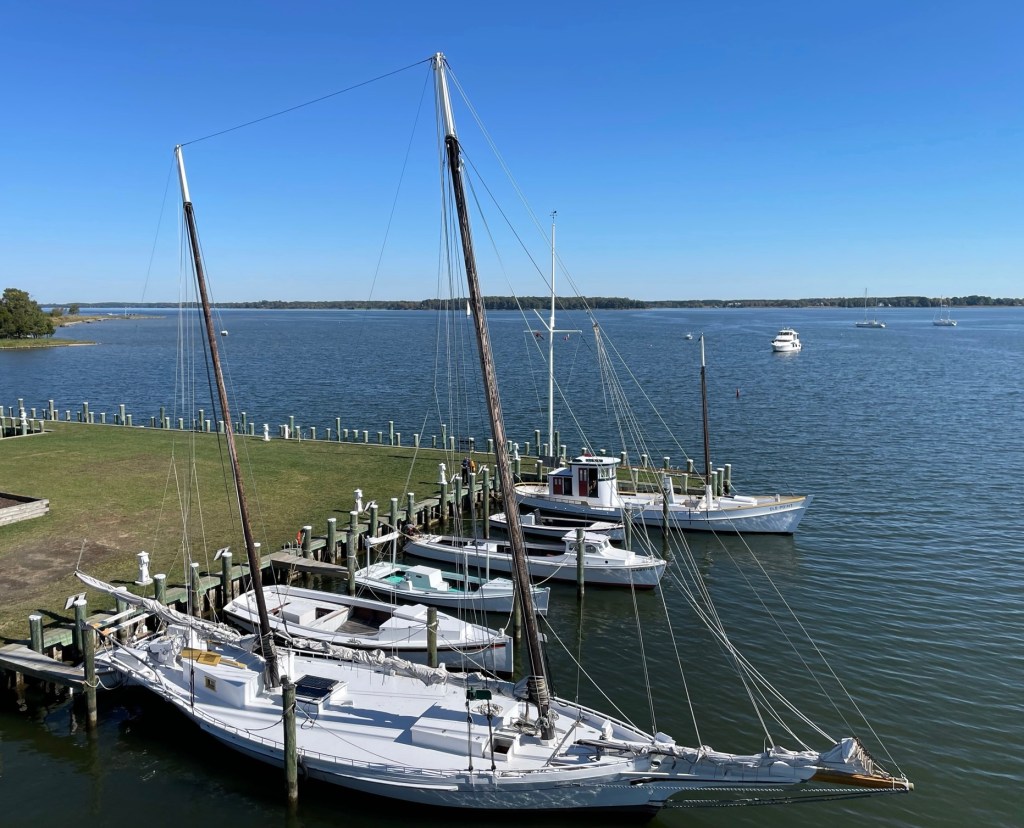
View from the top.
The light in the Hooper Strait Lighthouse used the Fresnel Lens which was developed between 1822 and 1827 and first used in Europe. It was late coming to America because of the cost but was installed in the Hooper Strait Lighthouse. The construction of prisms in the Fresnel Lens made it visible at much longer distances; its development has been credited with saving a million ships.

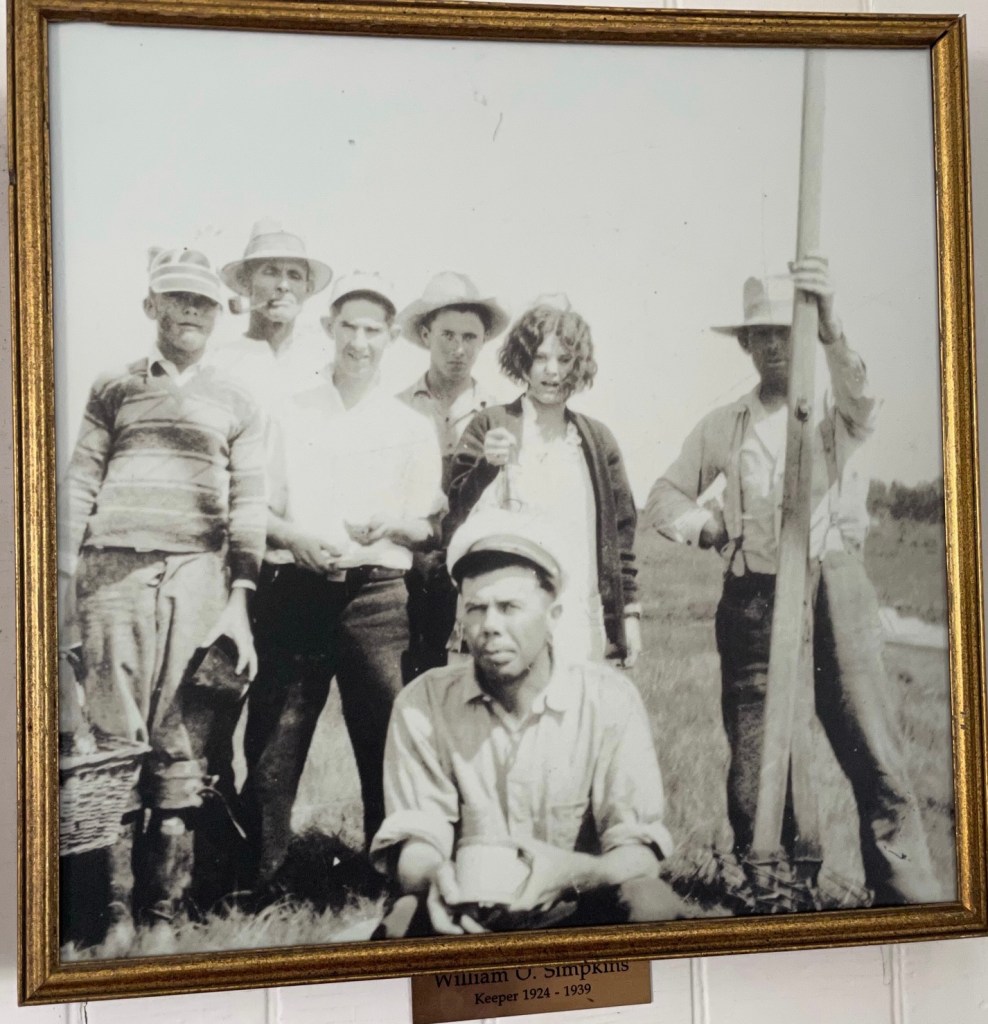
Inside the lighthouse are photos of former keepers. This one served from 1924 to 1939.
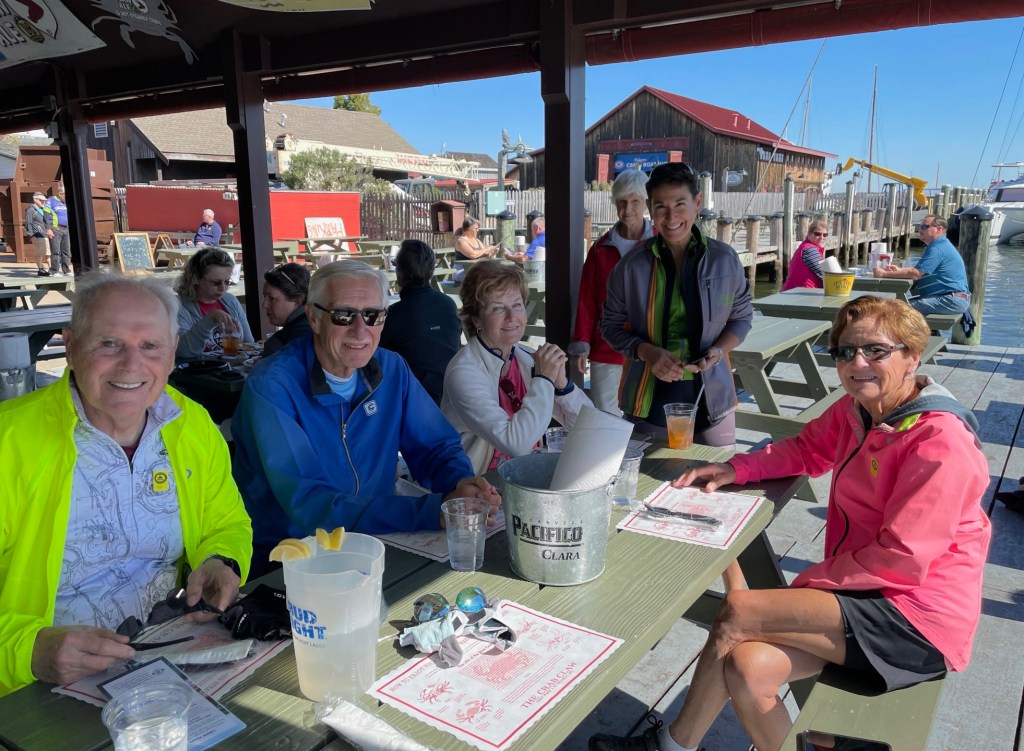
We leave the museum and walk to the nearby Crab Claw along the Miles River for lunch. We had really good crabcakes.
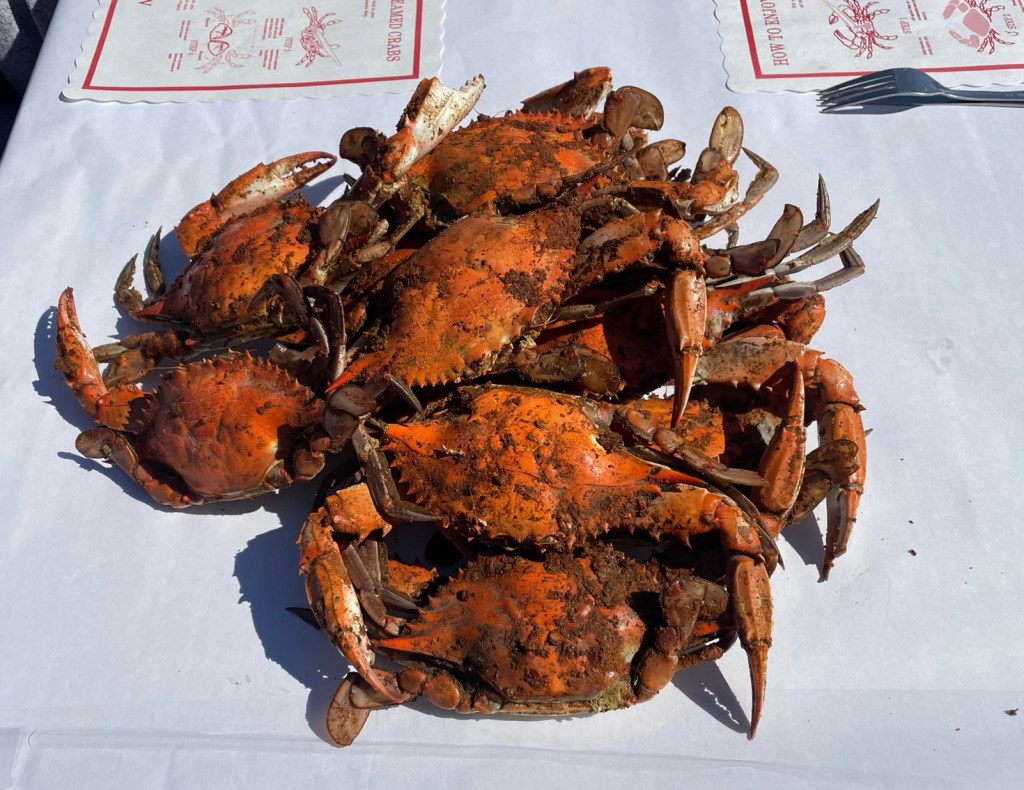
Some other guests had hard-shelled crabs.
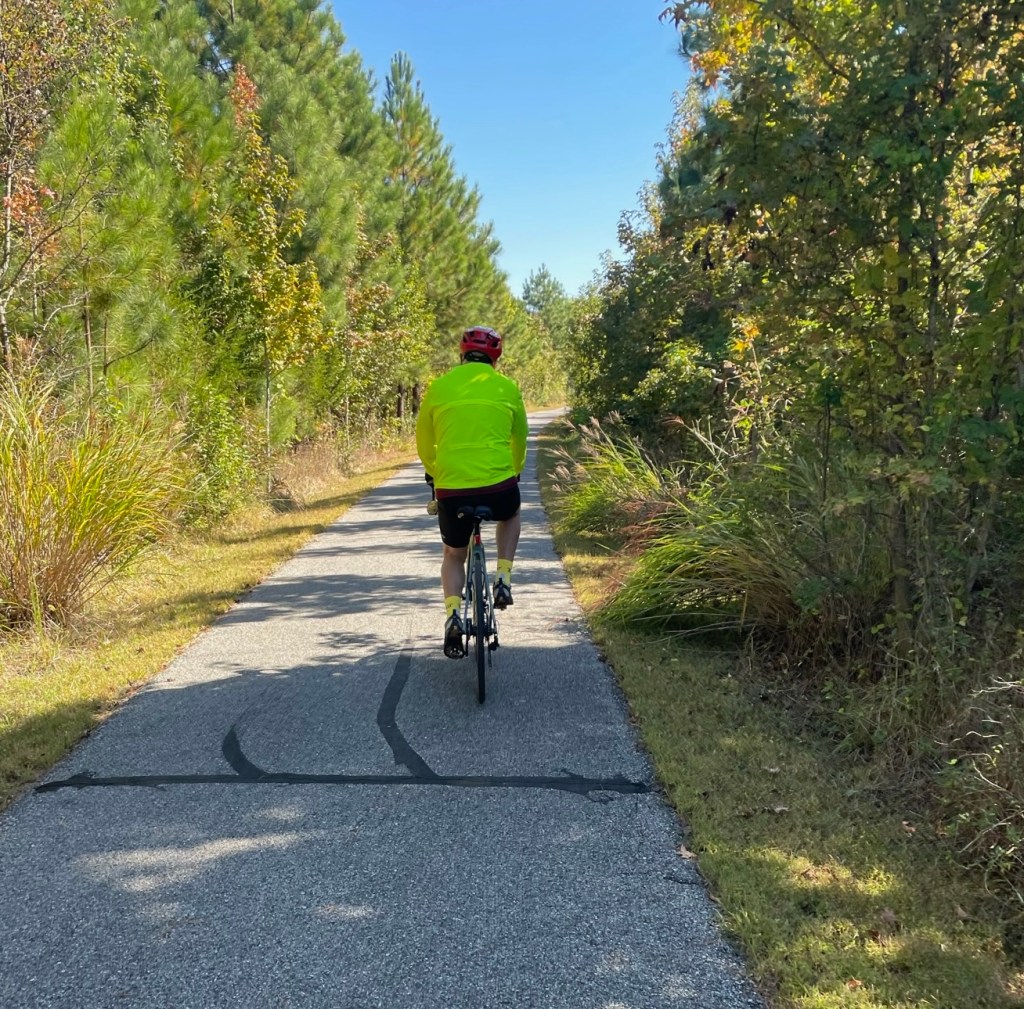
There were several options for rides after lunch; we choose a 12-mile route into Easton so we could ride directly to the hotel and would not need to rely on the van to take us. We left St. Michaels on a bike path which lasted for a couple of miles.
Then we were on St. Michaels Road, a busy, busy highway, for about 7-8 miles where the speed limit was 50 mph. I’m guessing cars were traveling even faster than that and they zoomed past, one right after another. Maybe a dozen would go by, then a respite of a few seconds, and then another dozen or so would buzz by. We had a wide bike lane but I needed to take a break on a side road a couple of times just to get some peace and quiet. Not a lot of fun here.
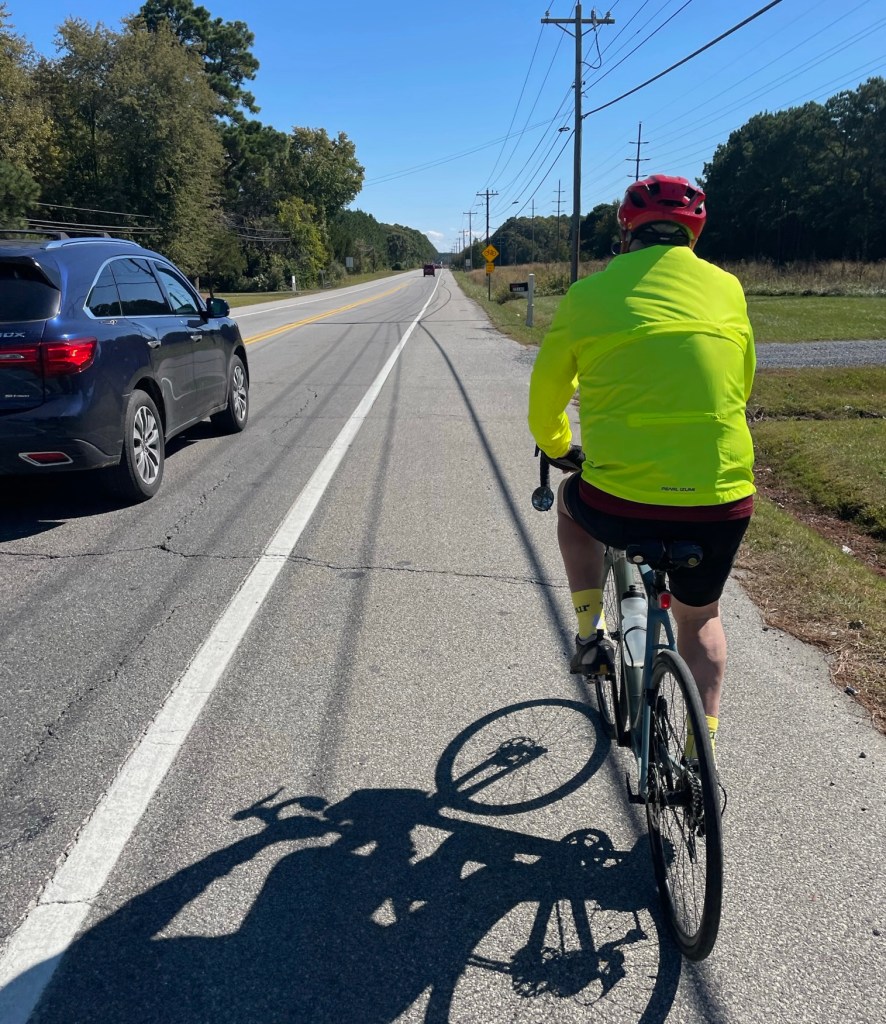
After we finally got away from St. Michaels Road and just before we turned on to Glebe Road, Ross found either some bits of quartz on the ground or dropped some Skittles. The latter has become our new go-to snack for an afternoon energy boost. Eat 10 or so. No fat to interfere with the sugar hitting your system.
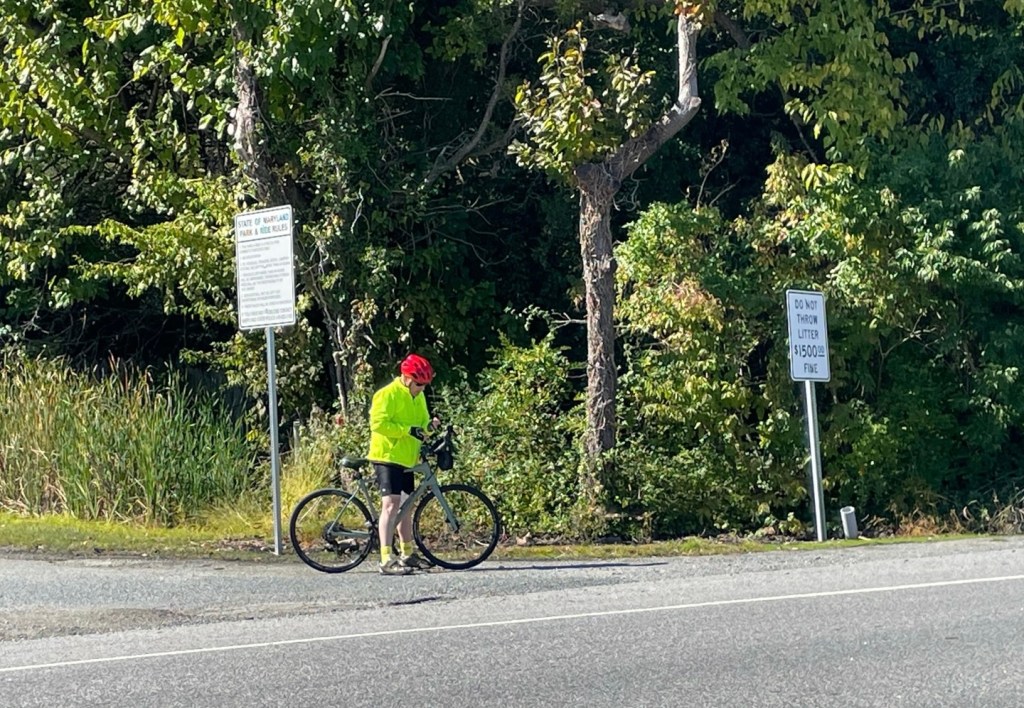
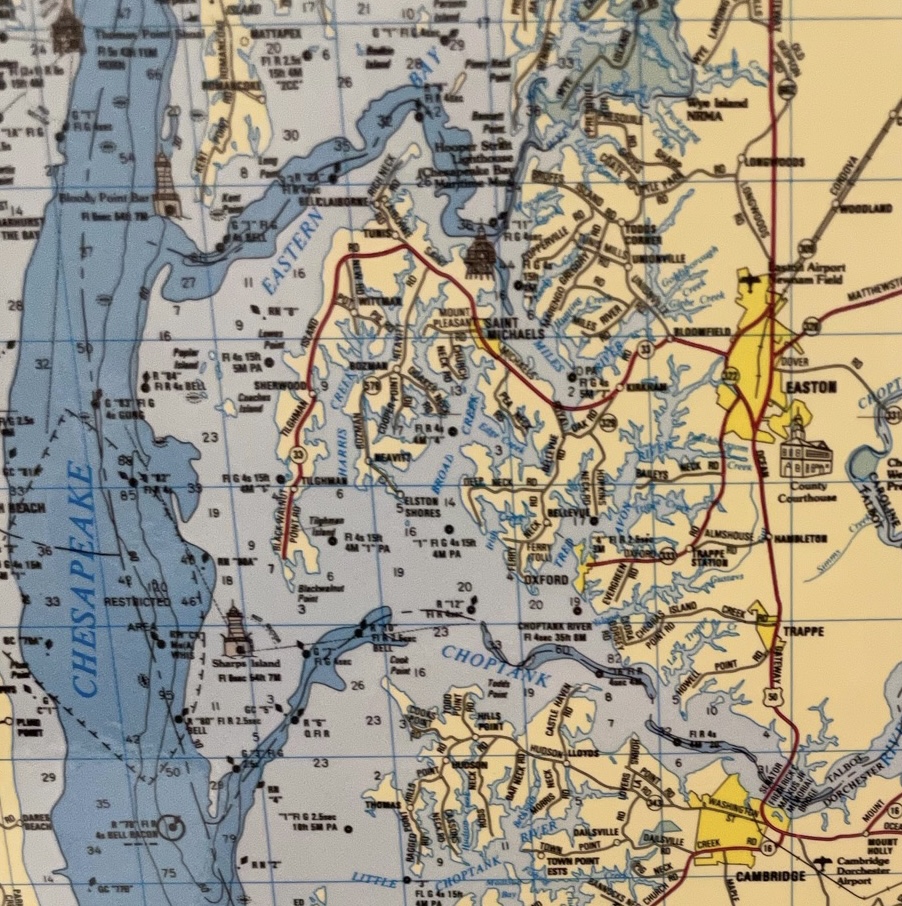
We finish our ride on a less busy road, then ride into Easton and arrive back at the Tidewater. Our route today took us from Easton down to Oxford where we crossed the river by ferry and then up to St. Michaels and back into Easton.
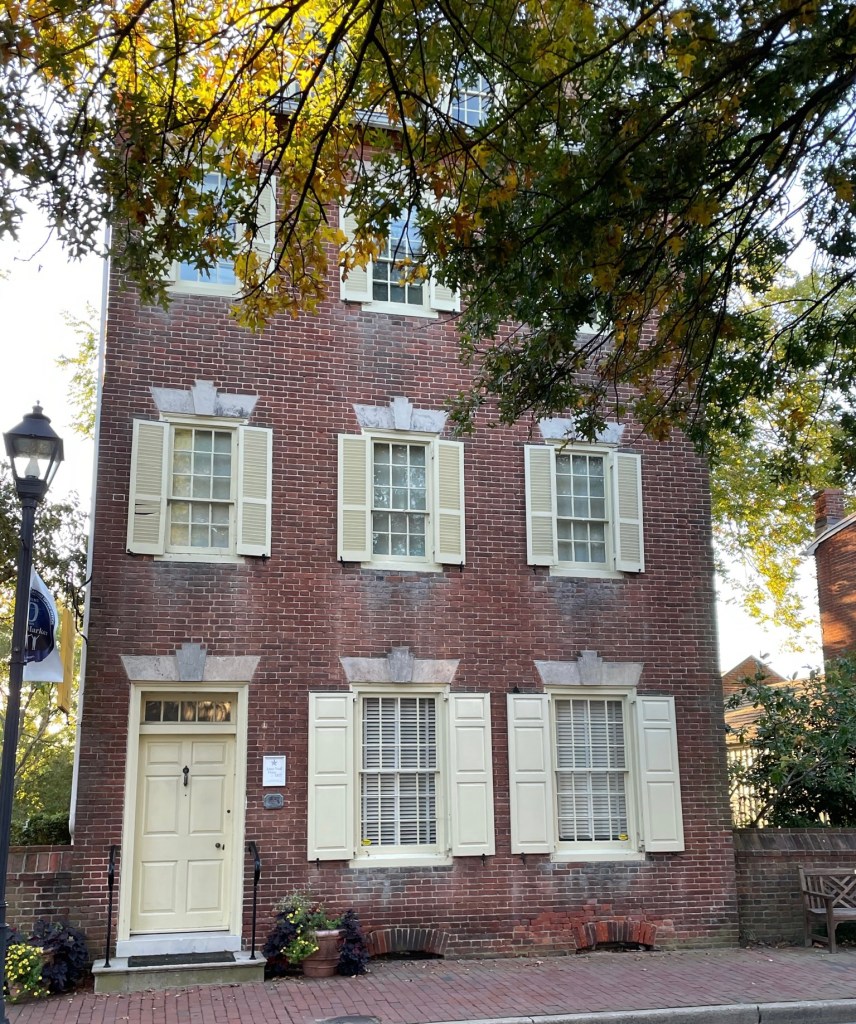
After parking our bikes, we clean up, rest a bit then a local guide leads us on a tour of downtown Easton. We learn that the town dates from the early 18th century and has a current population of about 16,000. He first pointed out the Bullitt House just across the street from our hotel. It was built in 1801 as a residence and law office for Thomas Bullitt. Our guide noted the little white storage area on the roof which was used to store sand that could be used to extinguish a fire in the chimneys.
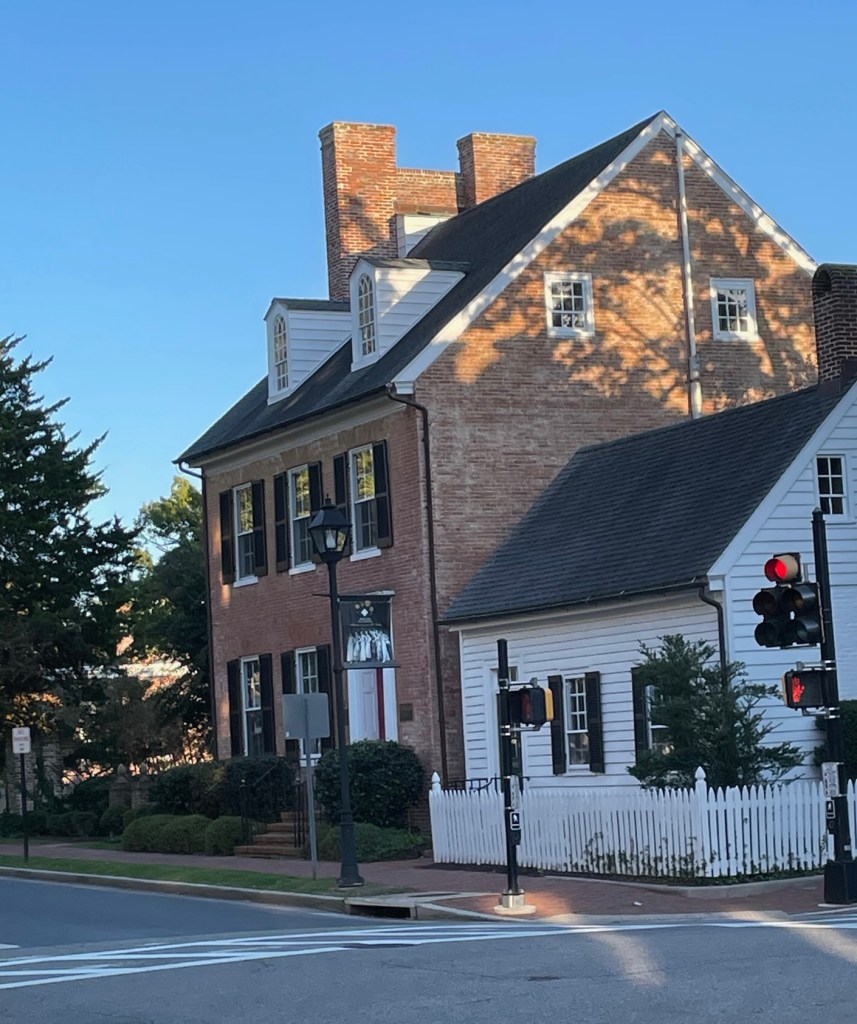
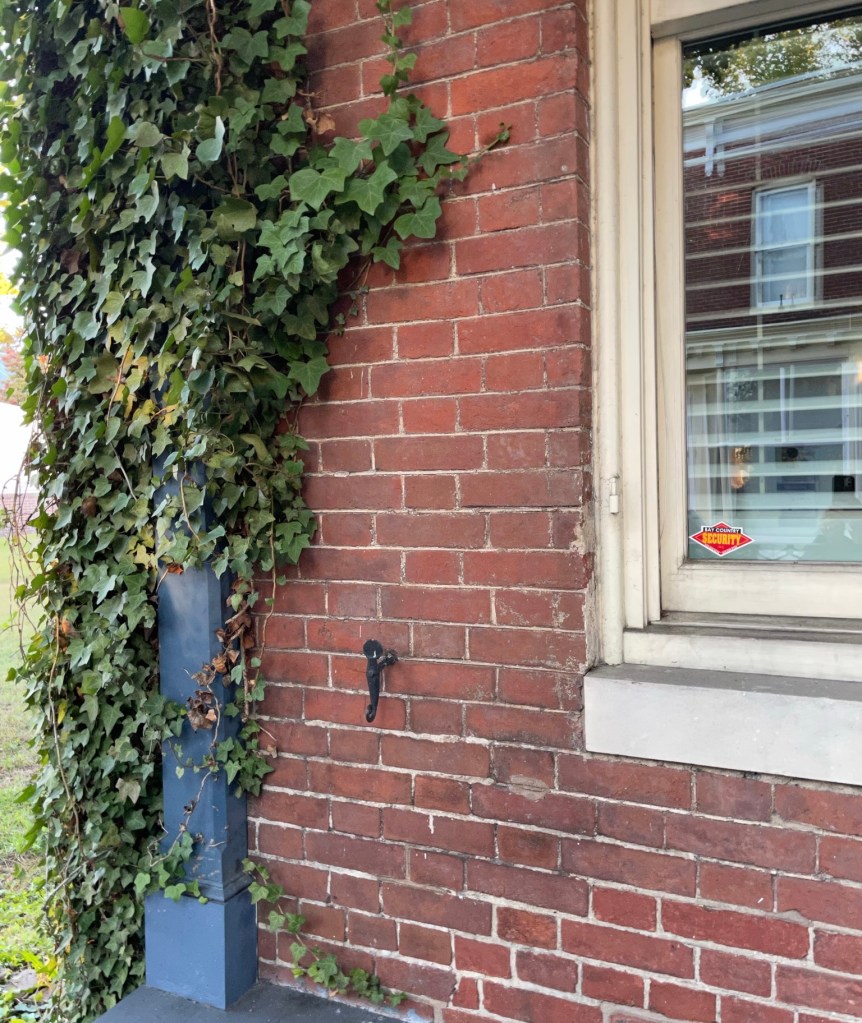
Our guide also pointed out the brick masonry laying style used in many of the buildings which was Flemish Bond and alternated headers and stretchers.
We look at many buildings which he explains are designed in the more simple Colonial style, not Federal.
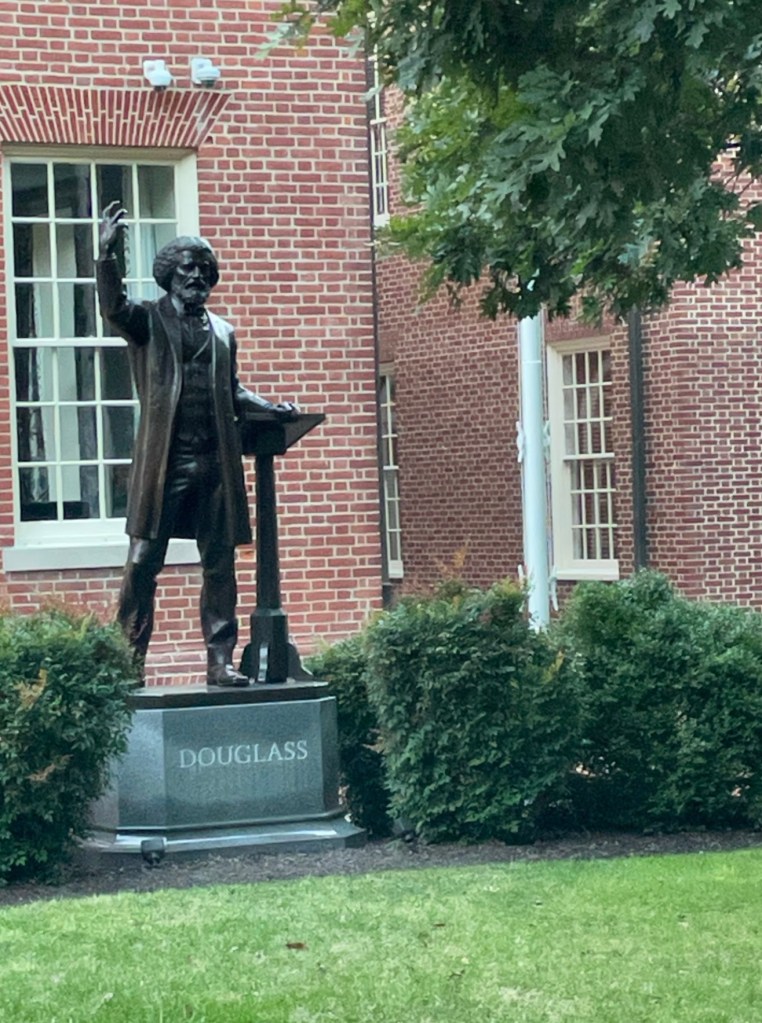
A statue of Frederick Douglas stands before the Talbot County Courthouse in Easton. He was born a slave in Talbot County in 1818 and was arrested planning to escape and held prisoner here in 1836. The statue depicts him making a speech in the main courtroom in 1878.
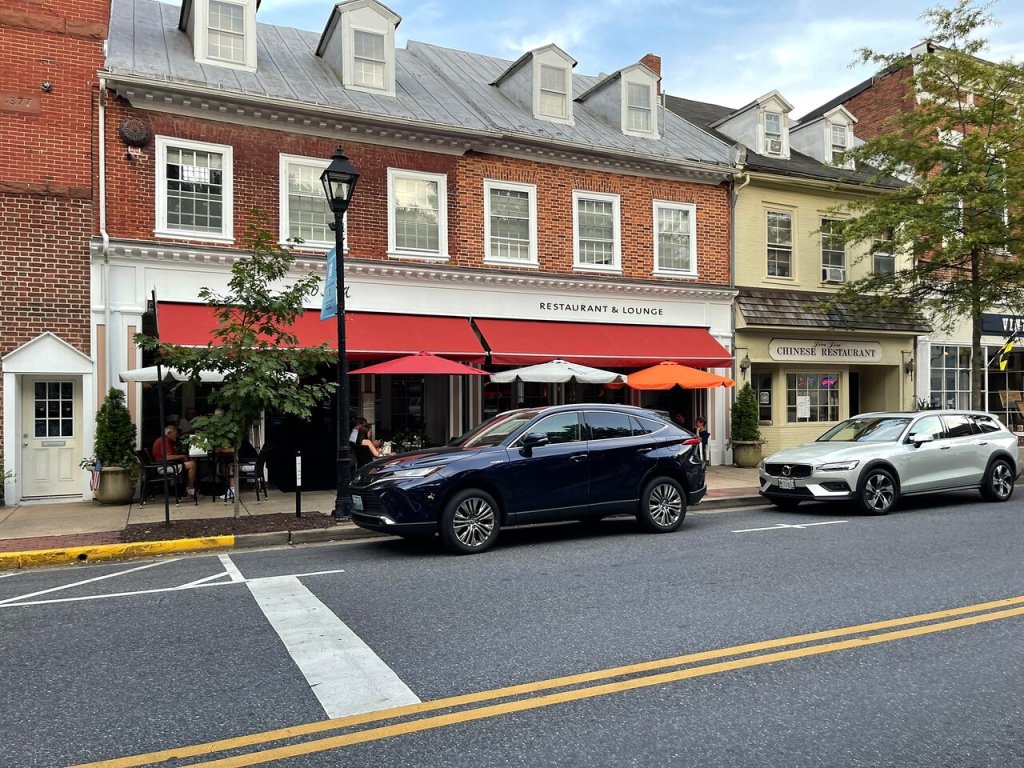
Tourist season is during the summer when visitors leave the heat of the city for the cooler climate here. The town has a resort-like atmosphere including many restaurants and small shops.
Dinner tonight was on our own and we elected to go to Scossa Restaurant and Lounge across from the courthouse on Washington Street. Their specialty is northern Italian cuisine.
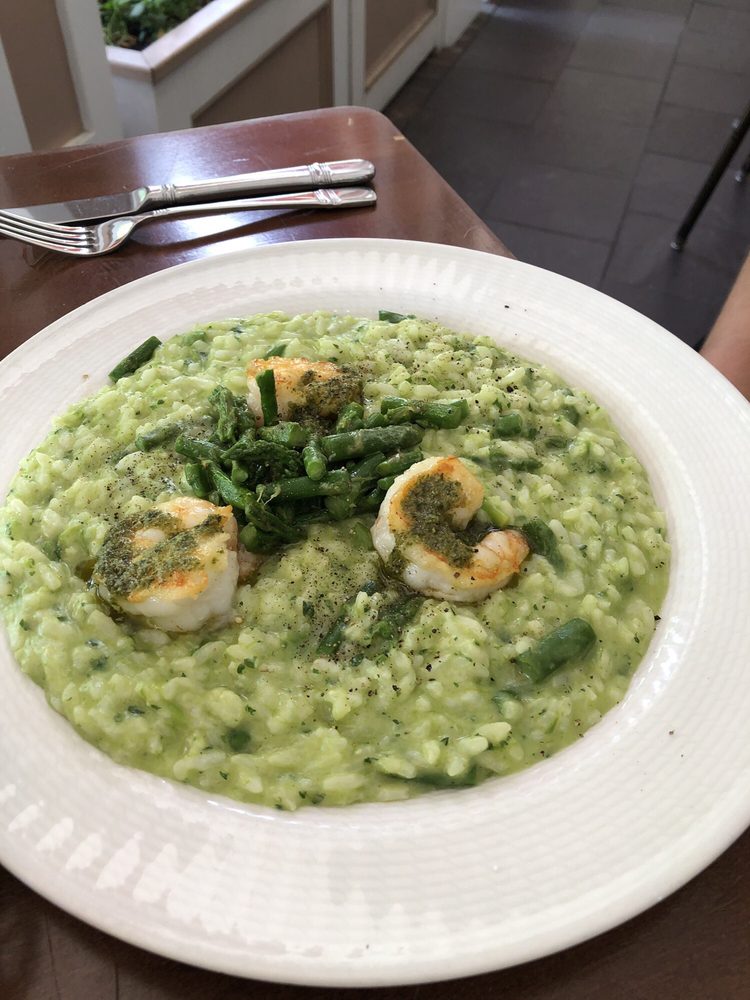
I had risotto with sautéed shrimp and asparagus and it was very good.
Back at the hotel, we get our gear lined up for tomorrow.

