This morning our guides walk us to the nearby train station for our trip into Strasbourg.
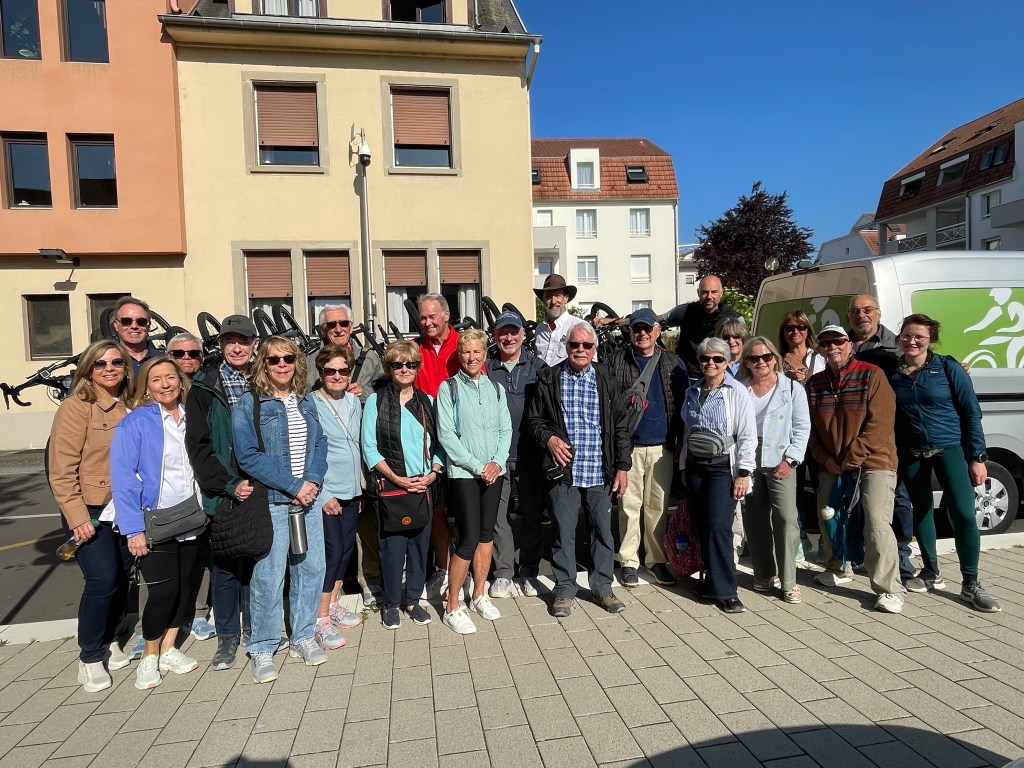
After about two hours we arrive at the Strasbourg Gare.
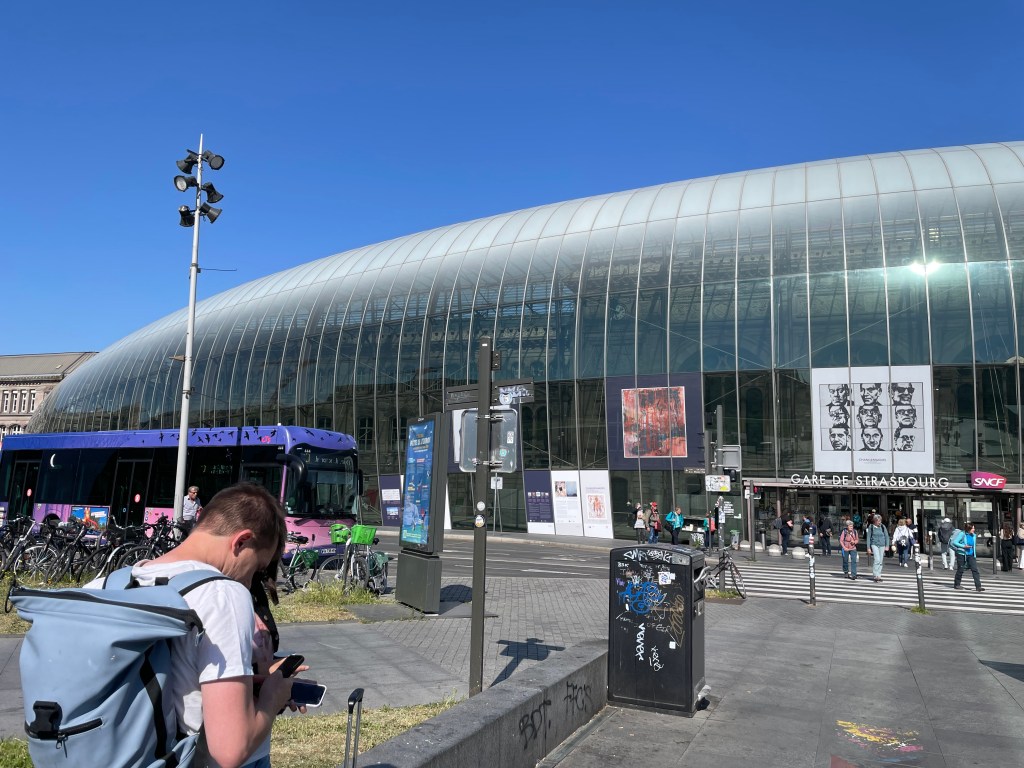
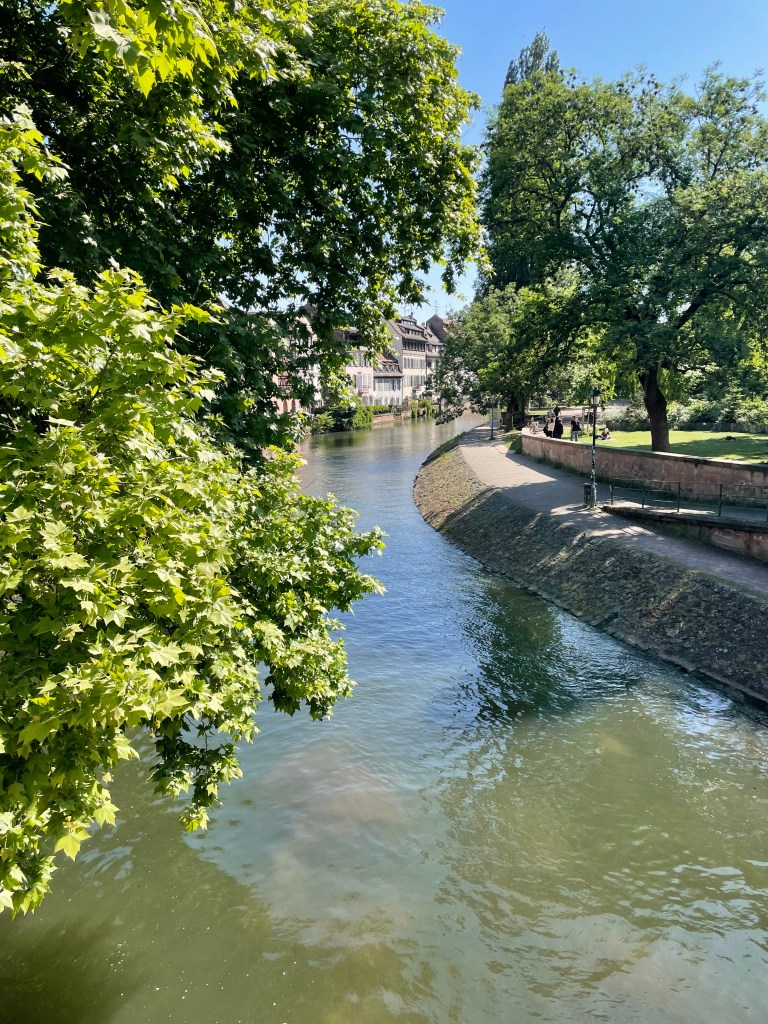
We are excited to finally make it to this city and although Ross’ grandfather wasn’t from here, he was from a small village just outside the city. We are in the heart of the Alsace area. Strasbourg was desired by both France and Germany for commerce because it’s on the Ill River which flows into the Rhine.
A local guide meets us at the train station and takes us on a walking tour of the city.
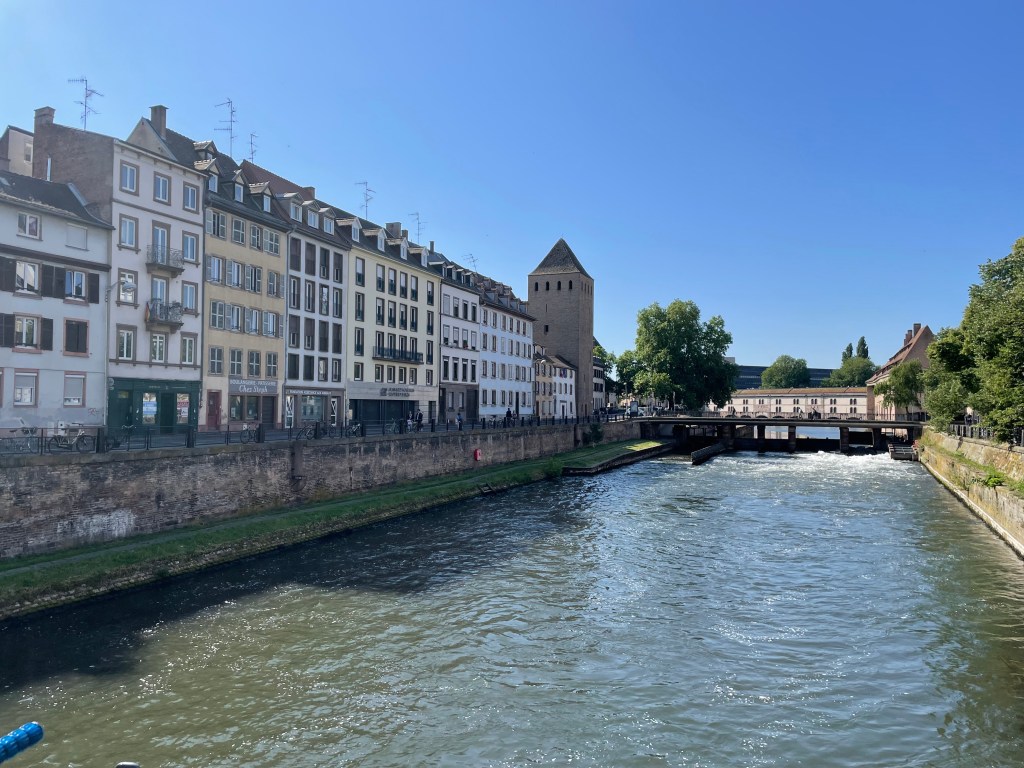
One of the first structures our guide points out is the Vauban Dam, a covered bridge, built in 1686 as a defensive fortification.
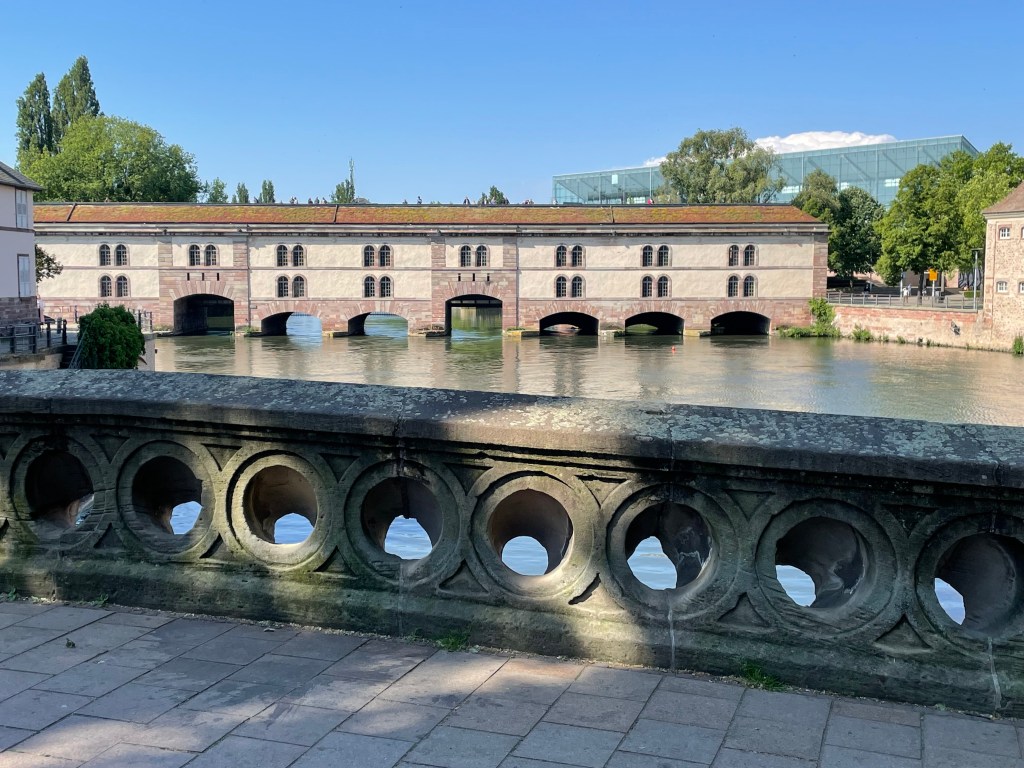
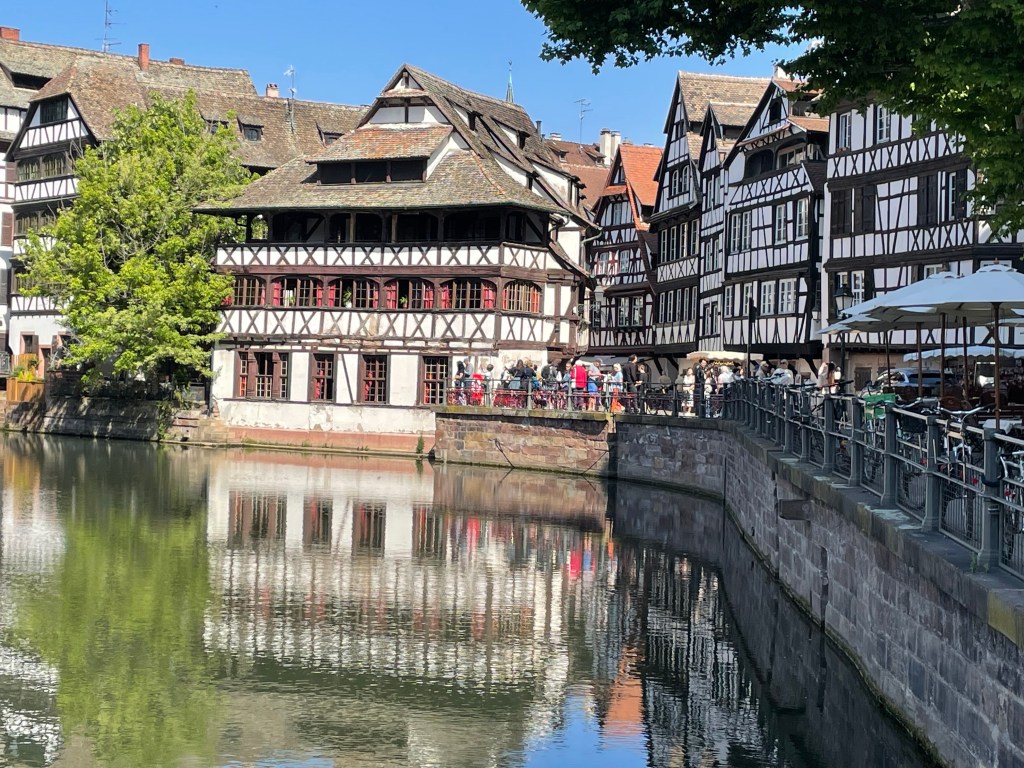
We are in the part of Strasbourg known as the Petite France, a historic area known for its half-timbered houses.
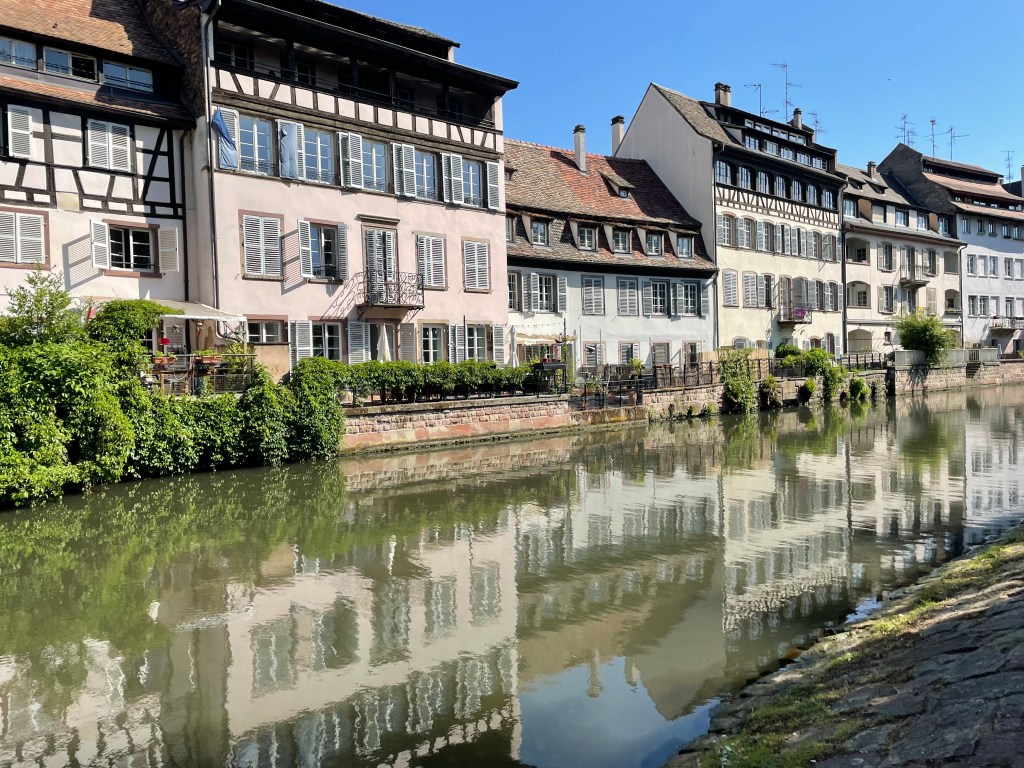
Our guide also pointed out this “stumbling stone” or Stolperstein. Embedded in the sidewalk or street, these four-inch square brass plates memorialize the name and life dates of victims of the Holocaust. They are located at the last residence where the victim lived freely before being subjected to Nazi terrorism. This project was initiated in 1992 by German artist Gunter Demnig.
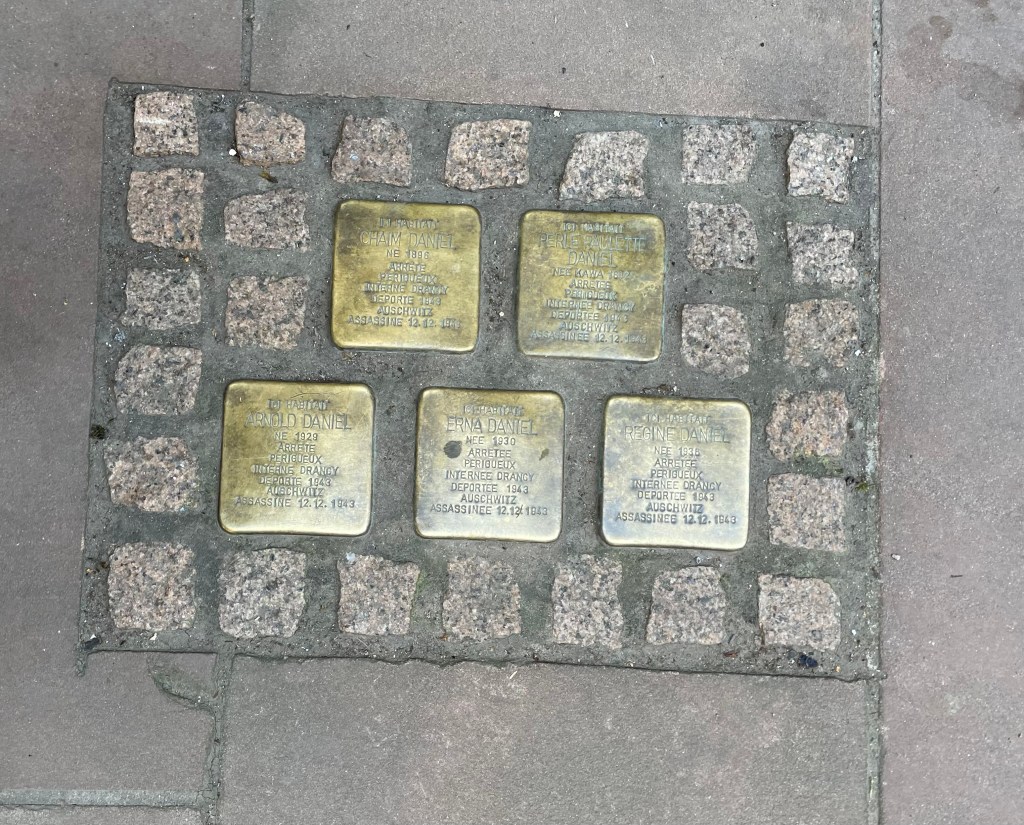
Along our path is the Maison des Tanneurs or Tanners’ House built in 1572.
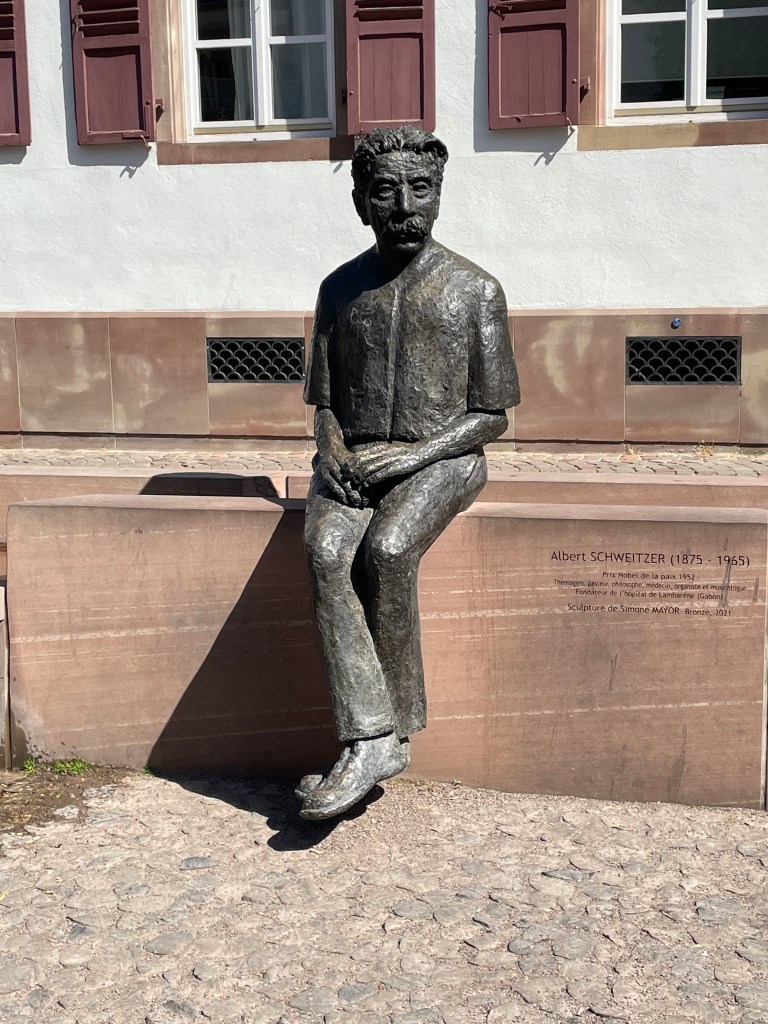
We also walk by this statue of Albert Schweitzer seated on a wall by the St. Thomas Church. He was from the Alsace area and studied in Strasbourg.
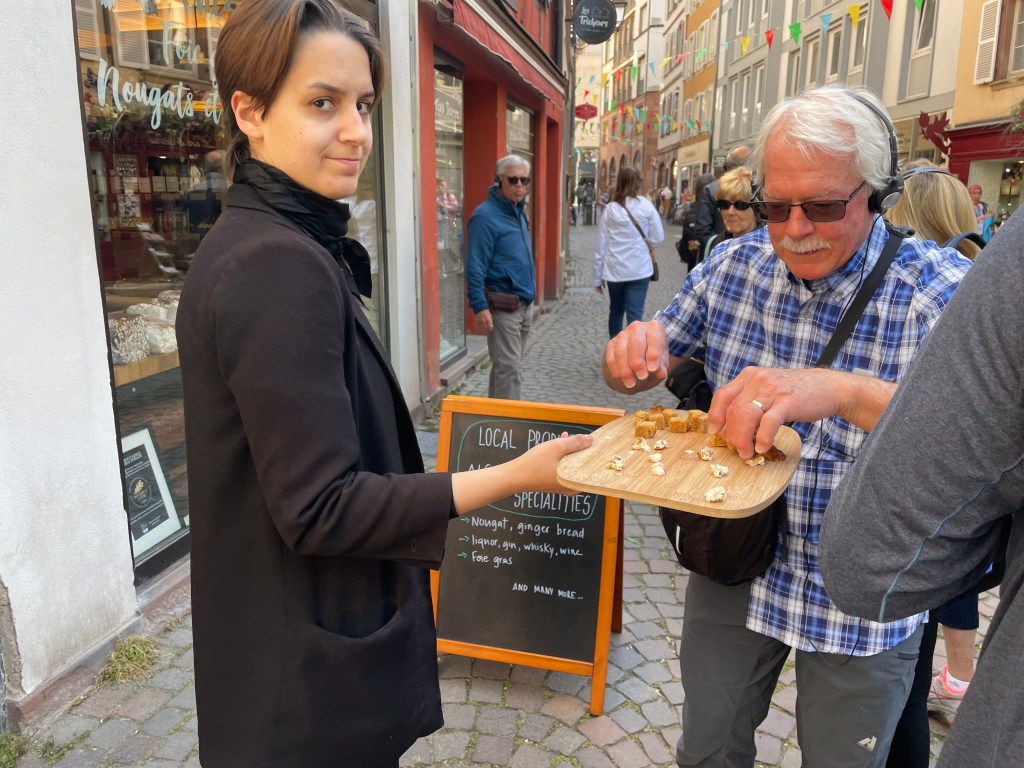
Strasbourg is also known for its food, particularly sweet treats which Tom is sampling in the photo below. The girl is probably thinking, “crazy Americans.” Don’t blame her if so.
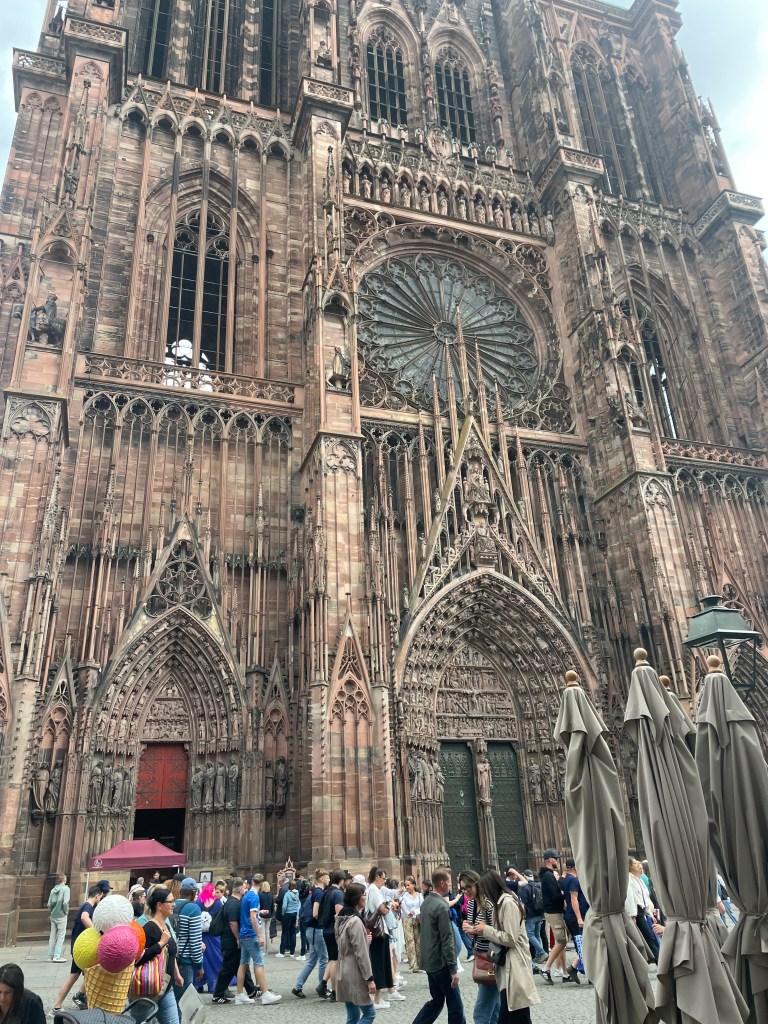
And then just around another corner we reach the Cathedral of Our Lady of Strasbourg or in French, Cathédrale Norte-Dame de Strasbourg.
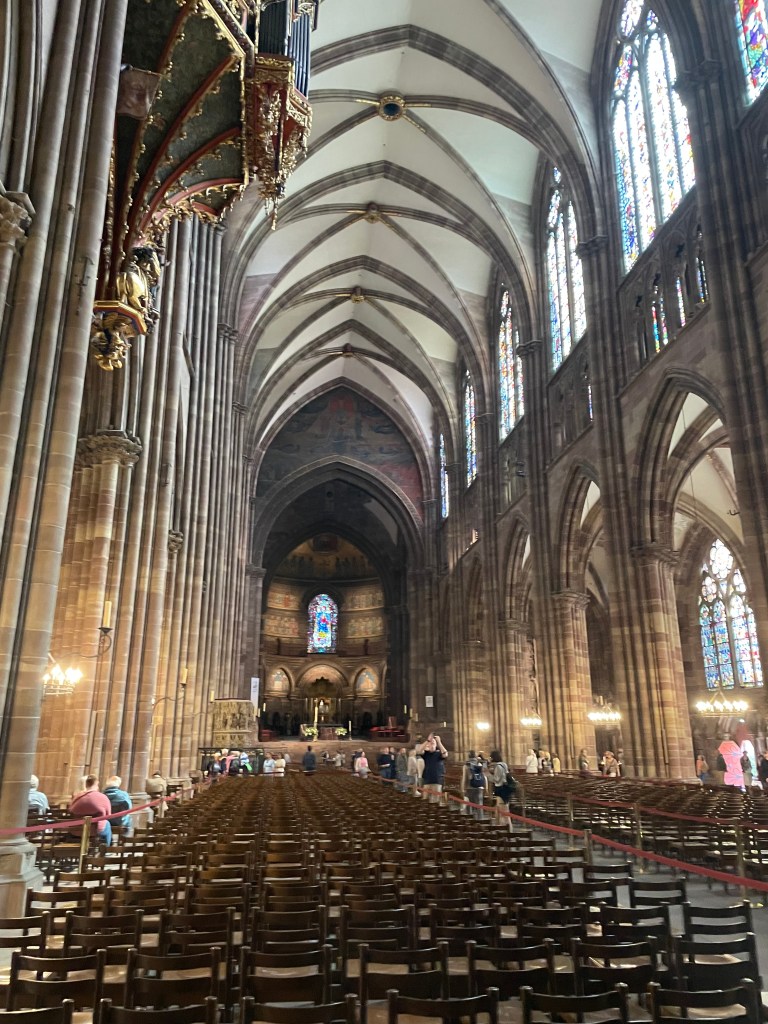
Construction commenced in 1015 and was finished in 1439. Most of the structure is in the Gothic style. The photo below shows the nave looking toward the apse.
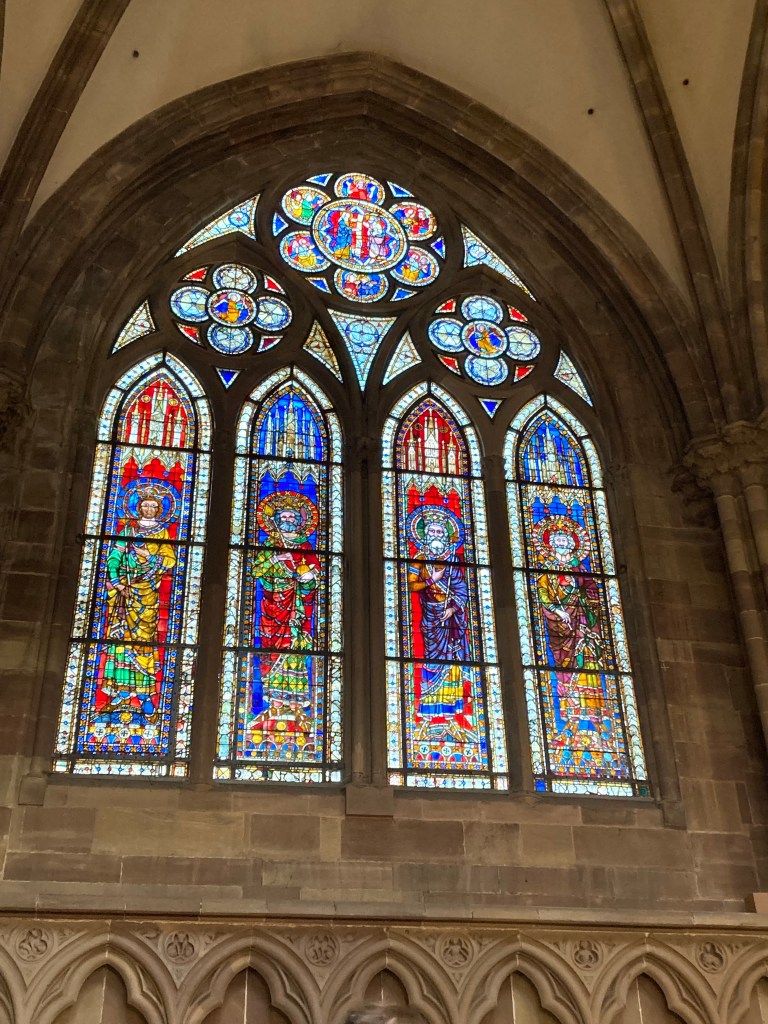
Inside, we admire one of the stained glass windows. This one is part of the “Emperor” windows.
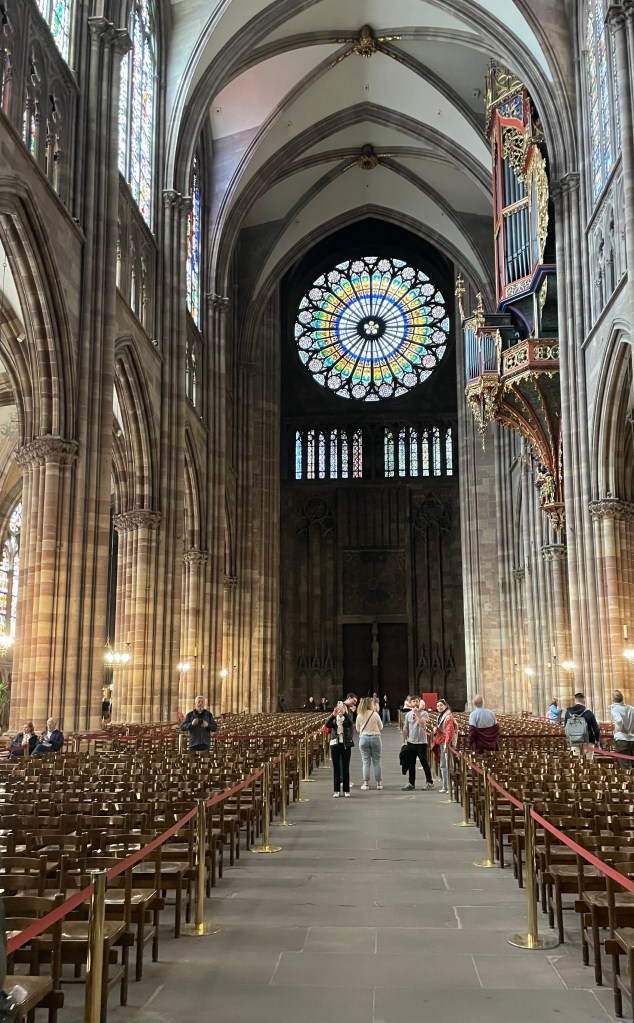
The cathedral is the sixth tallest church in the world and apparently is visible from as far away as the Vosges Mountains and the Black Forest. The photo below is of the narthex of the cathedral.
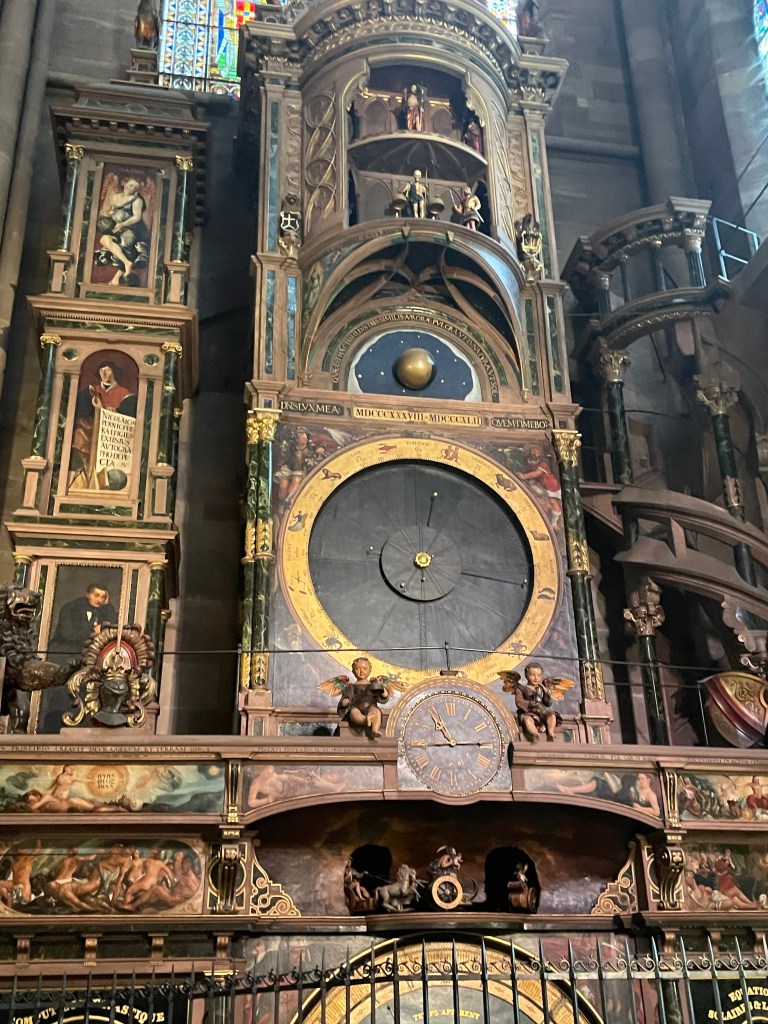
One of the most famous features of the church is the astronomical clock. Besides telling the time, the clock also has moving parts which indicate the day of the week, the phase of the moon, and the sign of the zodiac.
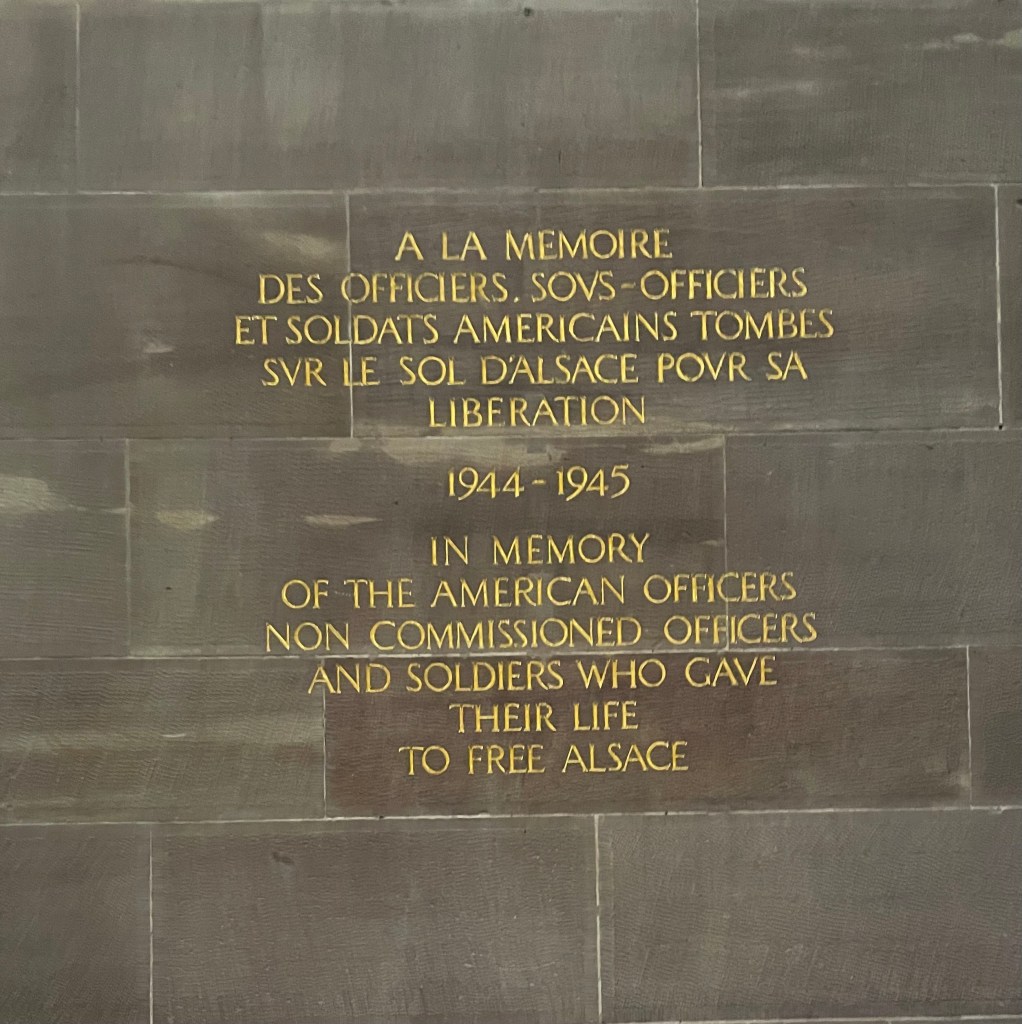
A memorial inside the cathedral to the World War II American soldiers.
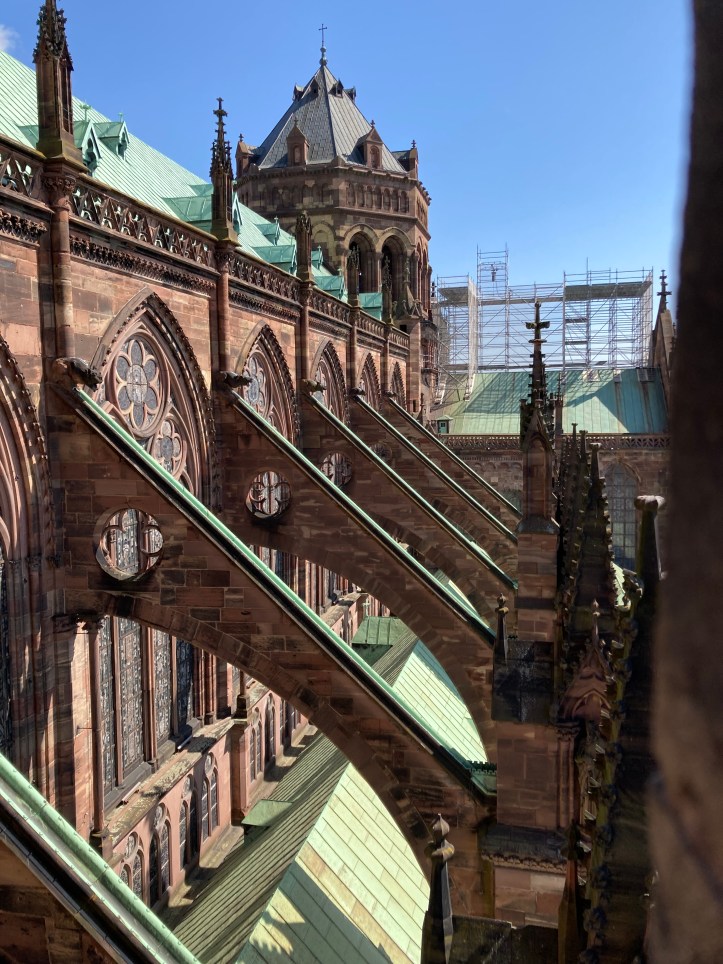
Outside, we are very impressed by the flying buttresses.
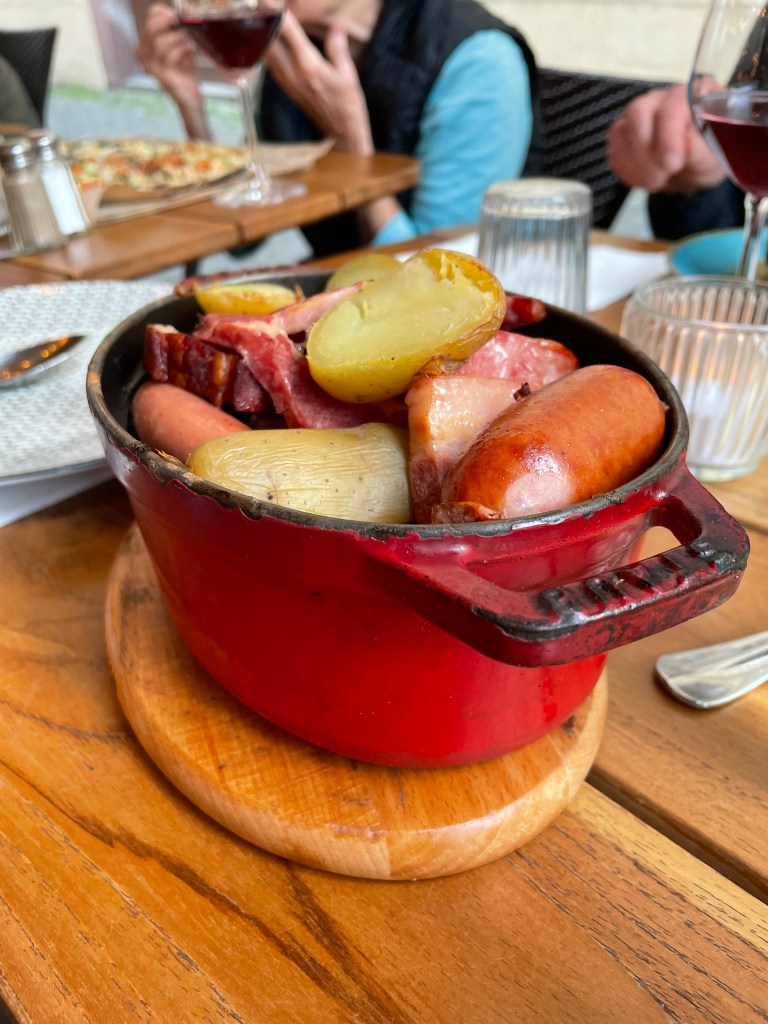
We do more exploring, check out our hotel, and return to an area with many cafes to find a place for dinner. Ross’ meal was a tasty sauerkraut with six meats, mostly pork.
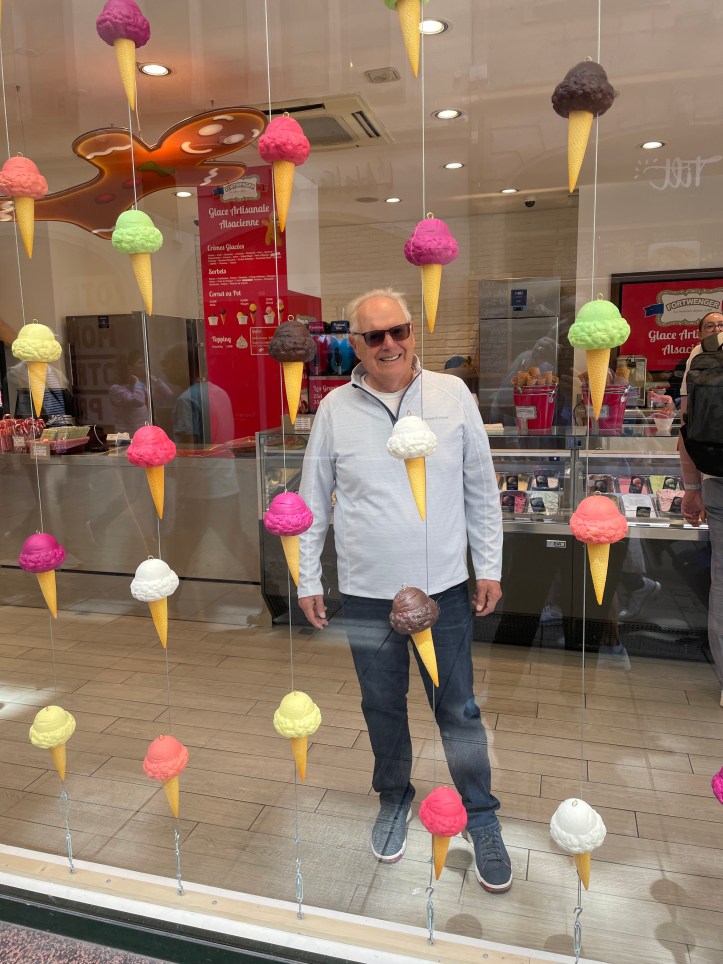
After dinner we explore a little more, at least until we find an ice cream shop.
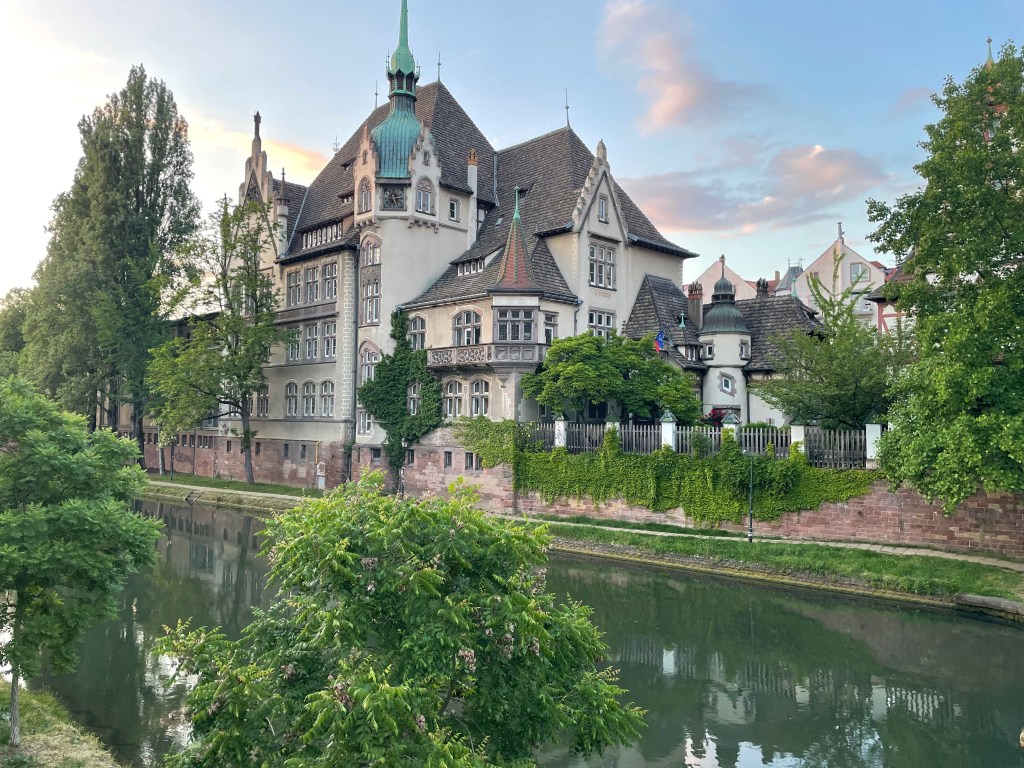
Going back to the hotel, we cross the river again on the way and pass by one of the city’s colleges. There are many students in this area, walking and riding bicycles. The building in the photo below was part of the city campus.
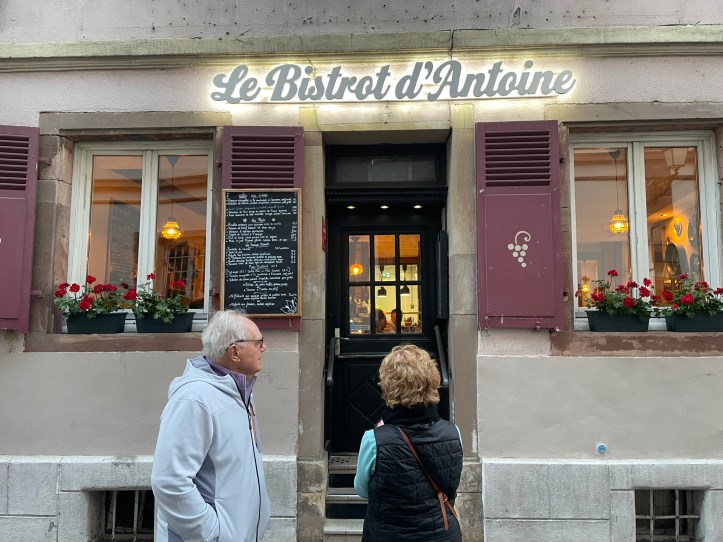
Near the hotel, we stop to check out this Michelin Star restaurant for possible dinner tomorrow night.
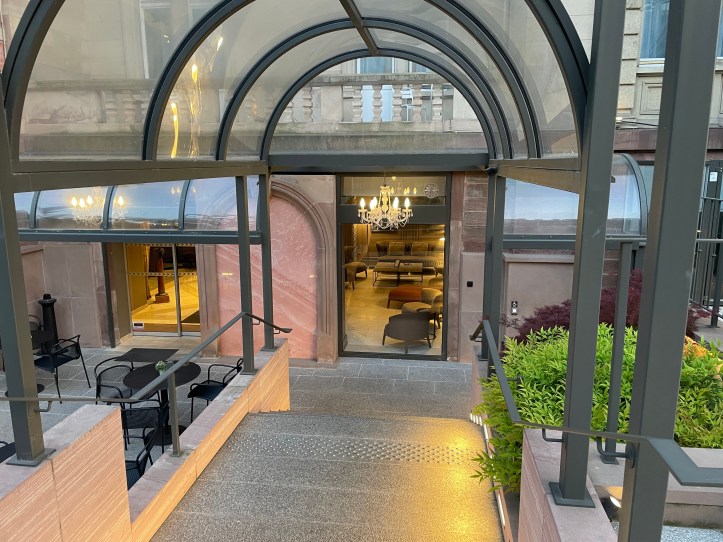
Our hotel is the Regent Contades.
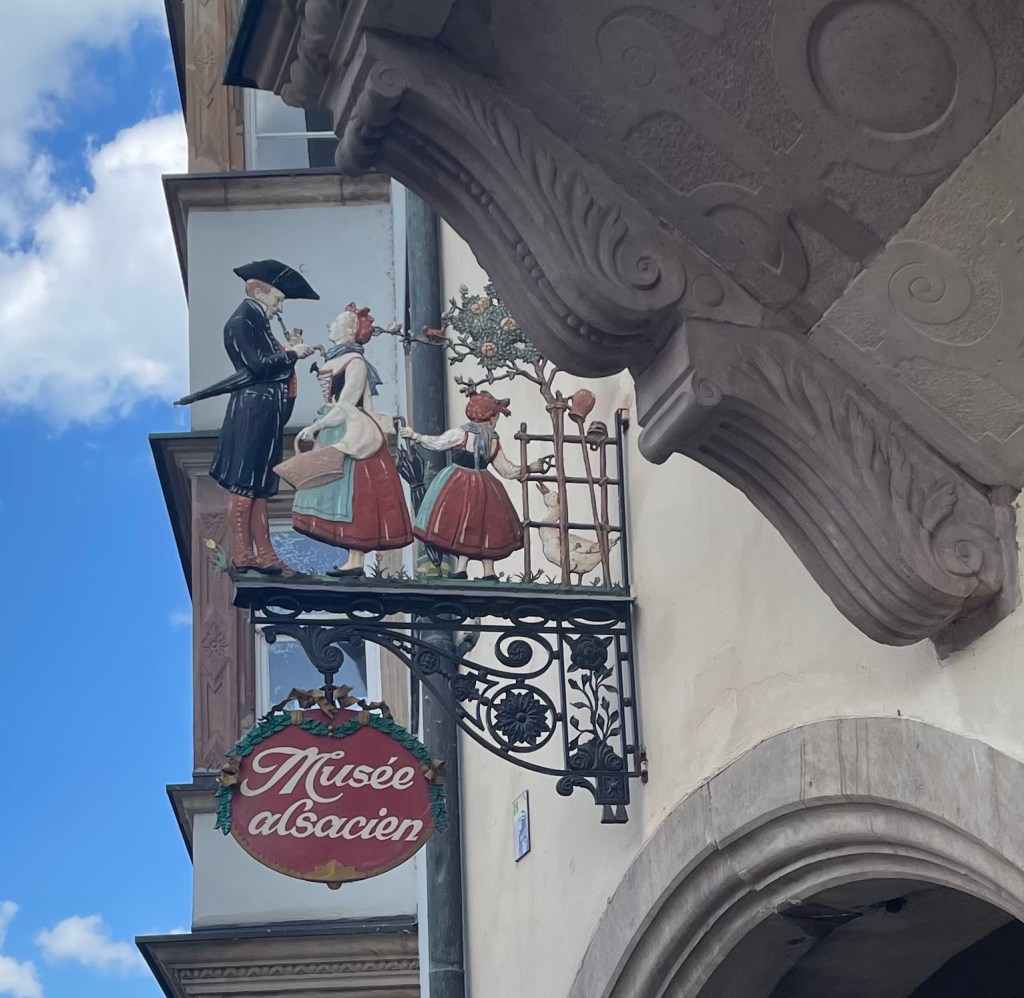
Next morning we are off to the Alsace Museum.
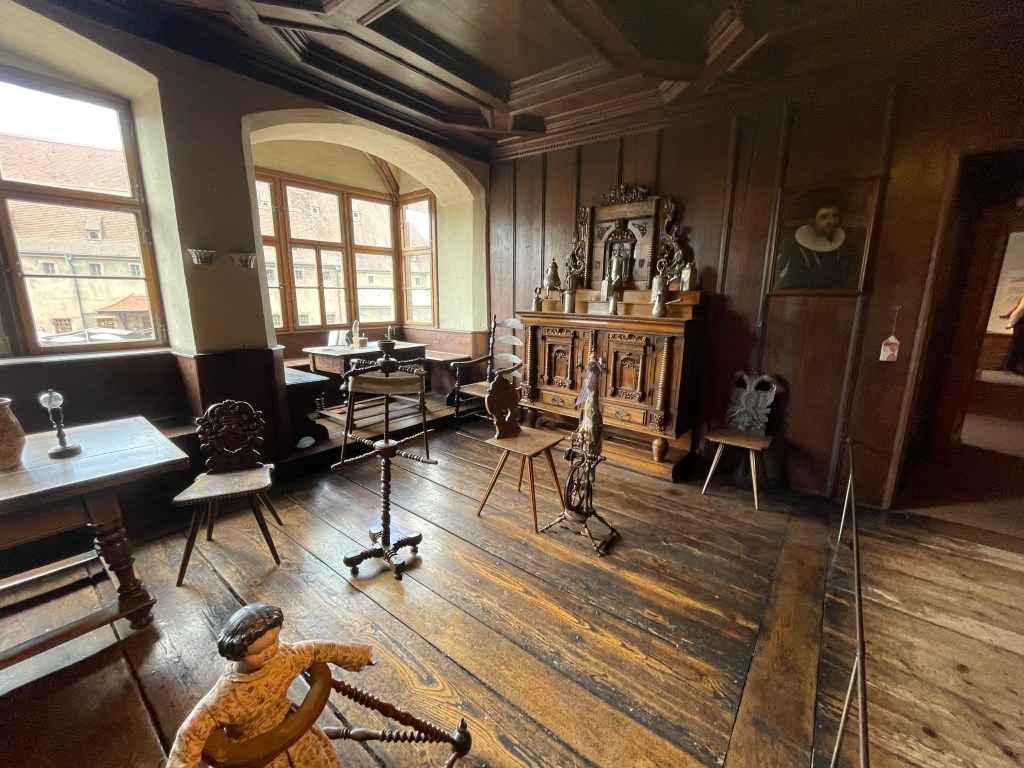
The museum contains several rooms exhibiting Alsatian culture from the 17th century to current times.
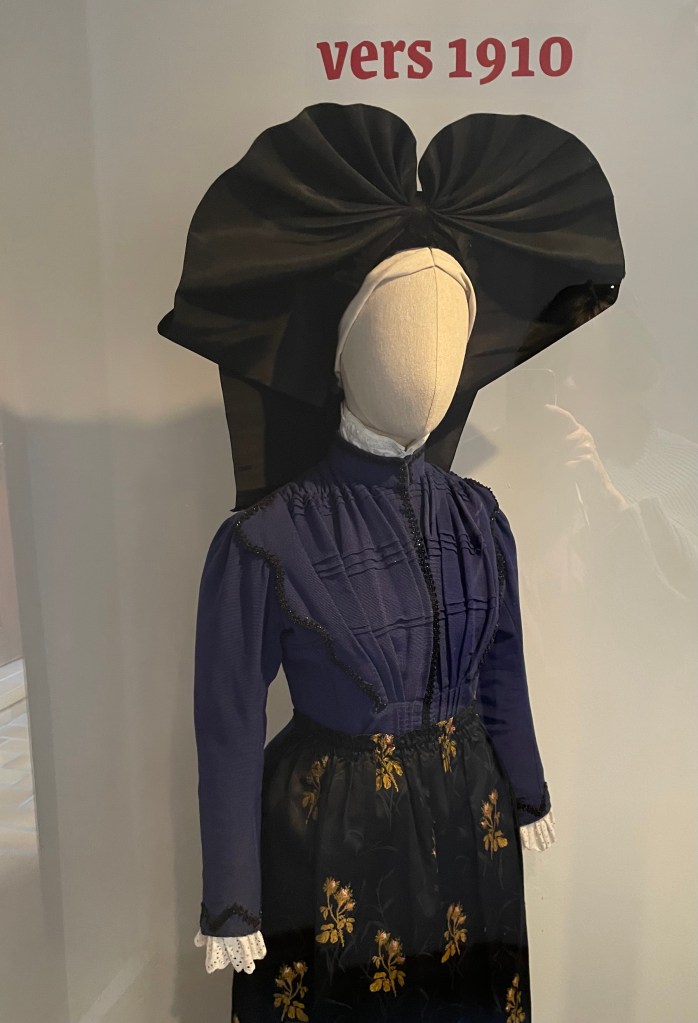
It also has examples of traditional clothing and costumes. The photo below shows typical dress for a woman in the early 1900s.
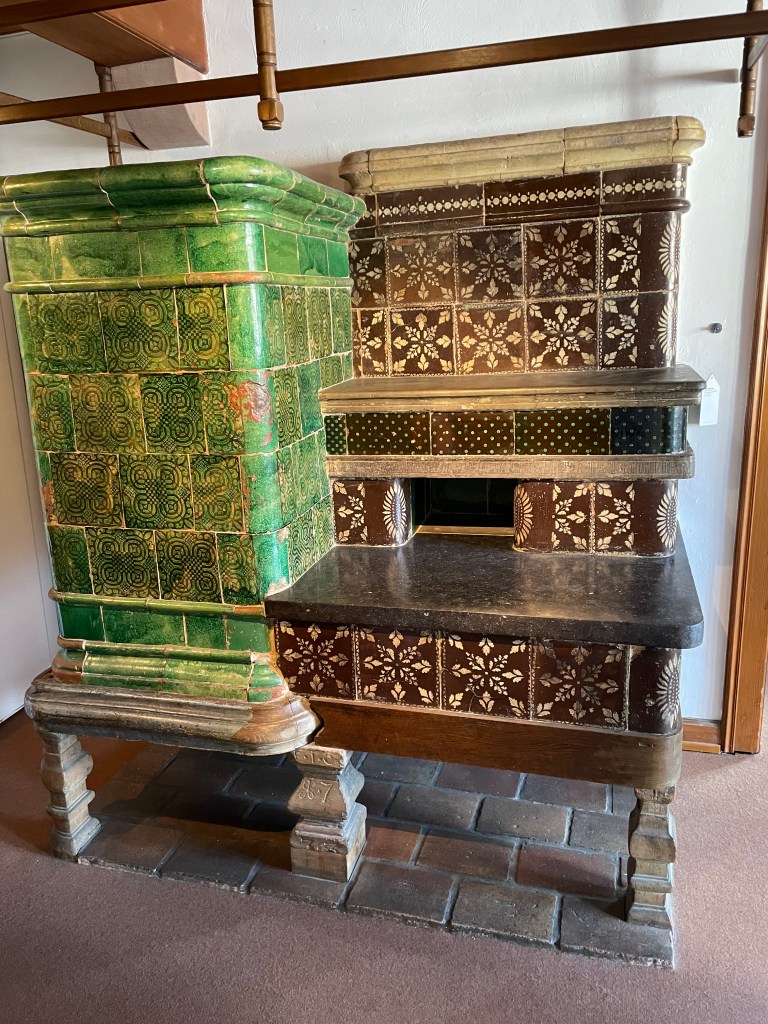
This is one example of the ceramic stoves used both for cooking as well as heat.
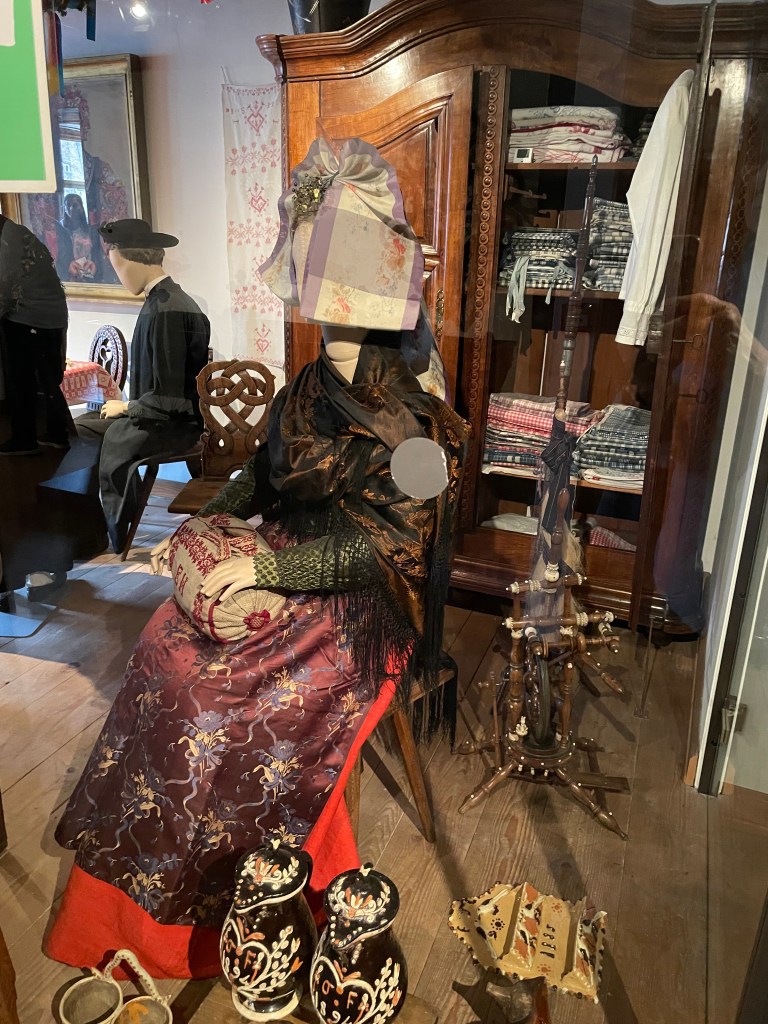
The exhibit below represented what a typical bride might wear in the early 1900s.
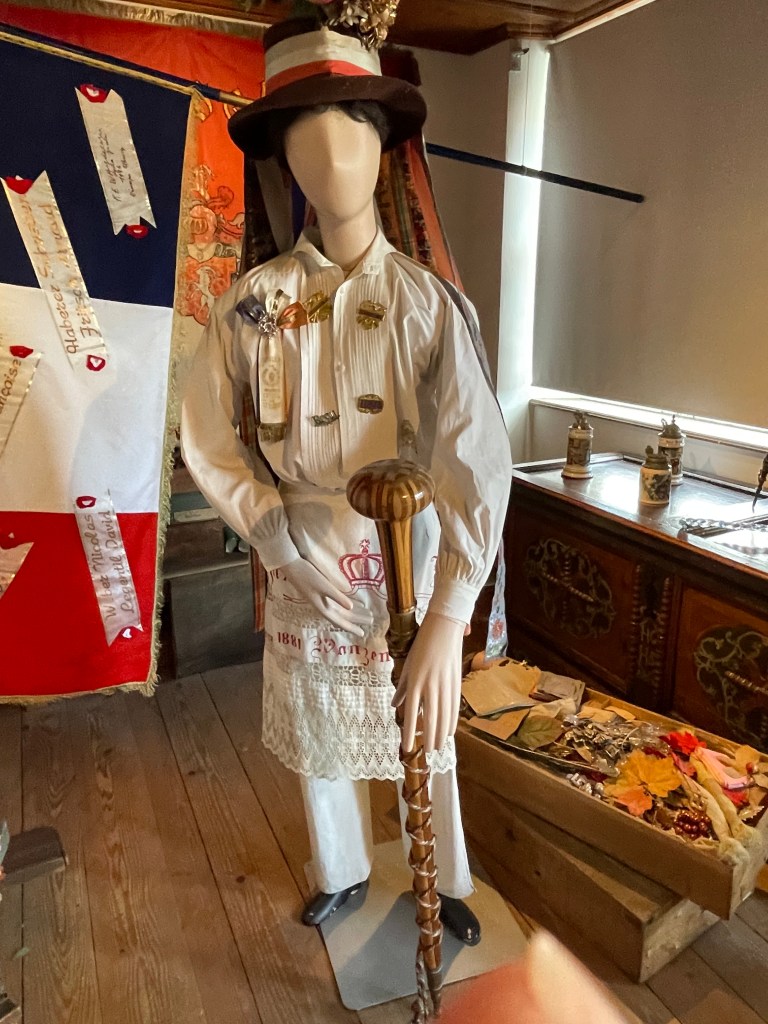
And this costume was a soldier’s outfit.
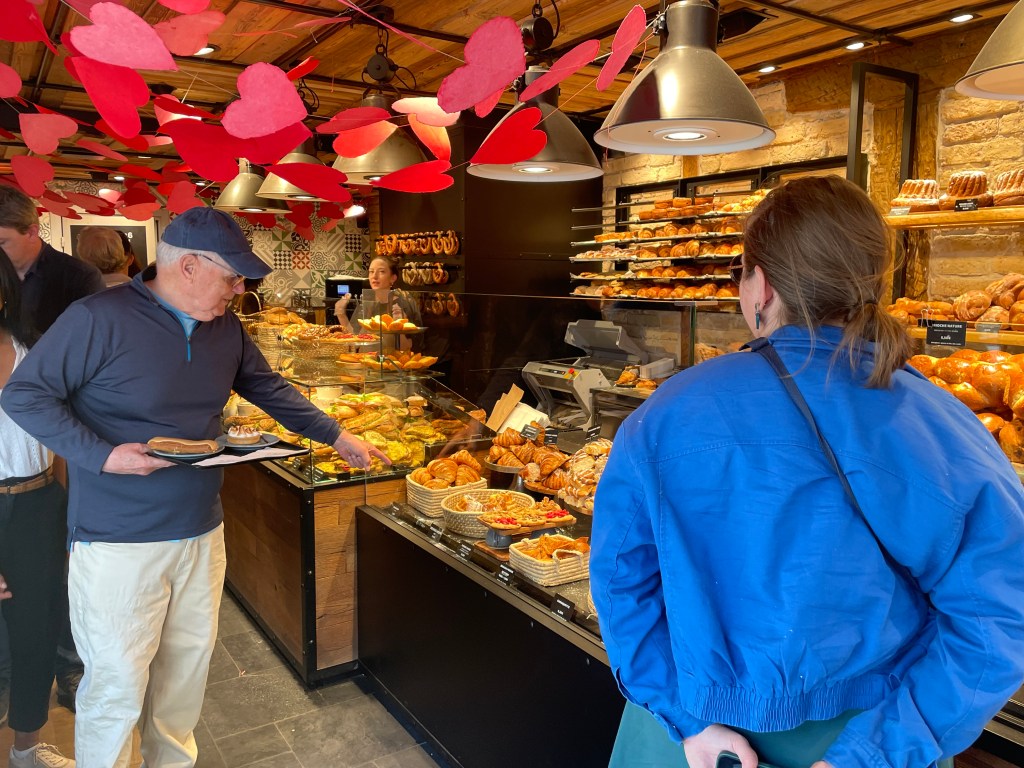
After our museum visit, we went looking for a snack at a nearby pastry shop.
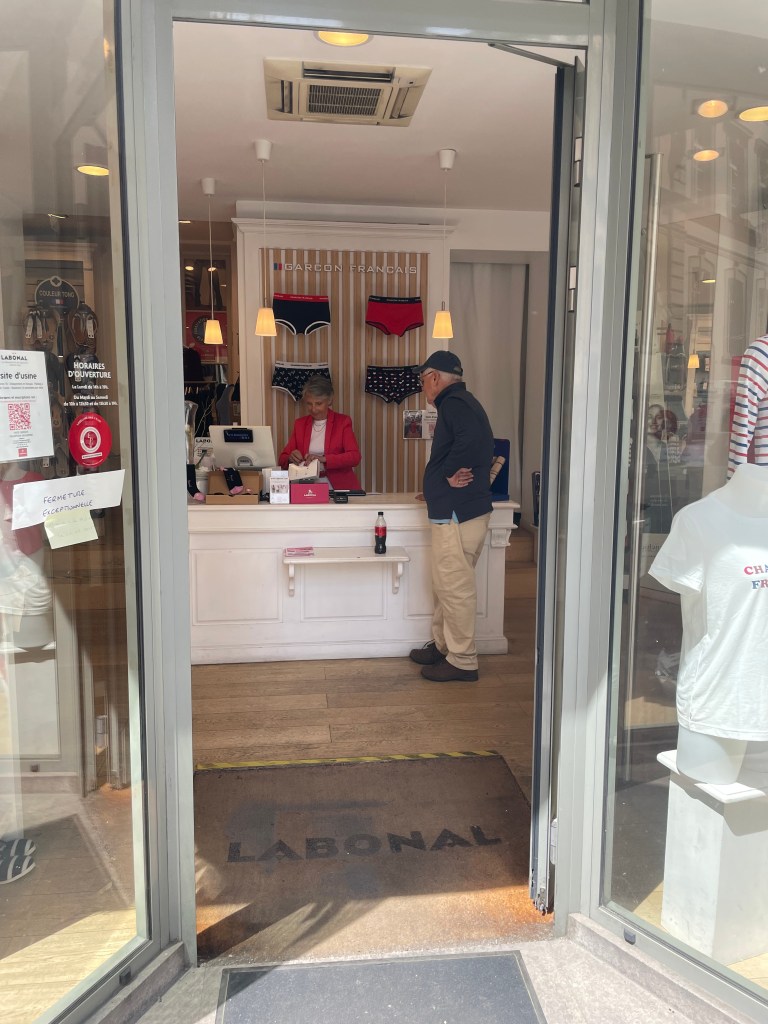
From there, we trekked to a well-known sock shop where Ross purchased one pair of socks with patterns of flying cranes and another with cathedrals. We also spent the afternoon in several craft stores and book stores in the area which made me happy.
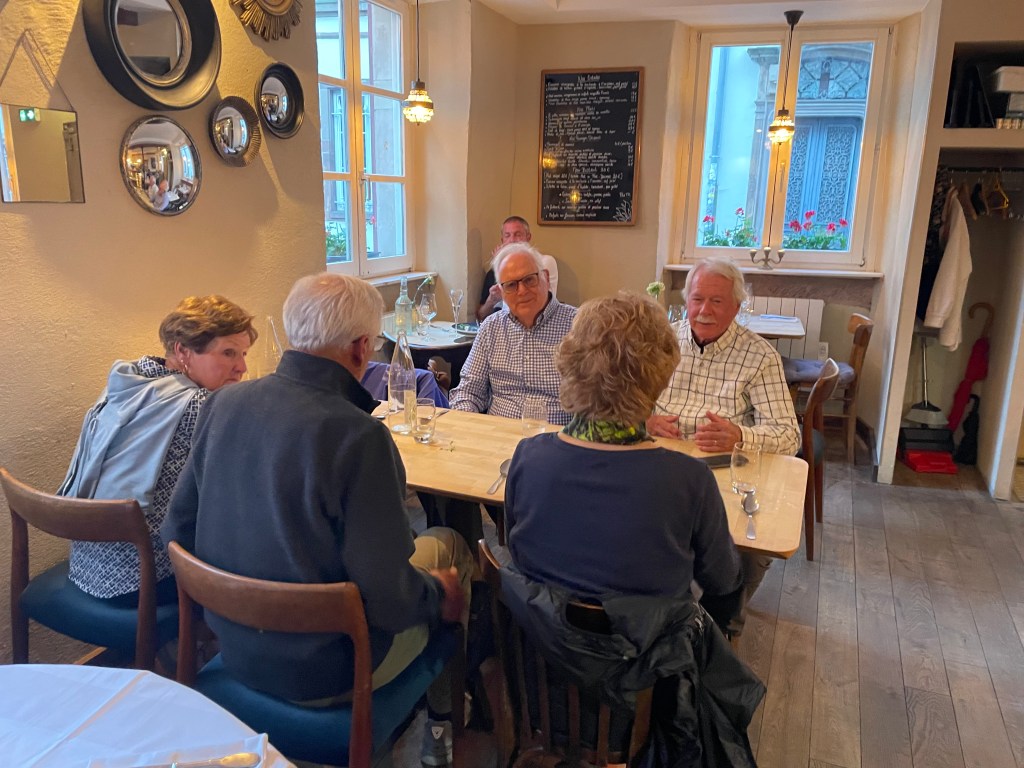
After walking several miles around the city again, we conclude our day at the Michelin restaurant we had been checking out the previous day and it was very well worth a visit. I had the most wonderful braised beef and Ross had equally delicious lamb stew.
A good thing we found this restaurant so near our hotel because it became even more important the next day. Ross had not been feeling great, thought maybe he was getting a cold. We were supposed to travel to Grindelwald, Switzerland the next day but he got so sick that night that we delayed our trip a day. I was also concerned that his “cold” would turn into bronchitis or pneumonia and tried to get an antibiotic but that did not work out. The pharmacy would not accept a prescription from the U.S.; he had to have one from a French doctor. Then I tried to get Mucinex but the pharmacy didn’t know what that was and instead I ended up with three items; a decongestant, cough syrup, and a pain killer. So we decided to come home as quickly as possible to get the medication he needed. Dinner that night was takeout from the same nearby restaurant we were at the previous night and we had exactly the same items to eat. We canceled the trip to Grindelwald, got our flight changed, and caught a train to Zurich early the next morning. We had two train changes and a long trek through the airport but arrived at our gate just in time for boarding. With no other delays, we got home and he got the antibiotics he needed for bronchitis. So, another trip to Grindelwald remains unfinished business. Also, next time we take the Mucinex and antibiotic with us.

